
Astronomical calendar February 2025
February 2025 brings a series of unmissable astronomical events for night sky lovers. From planetary conjunctions to the spectacular Snow Moon, this is the perfect time to get out your telescope and enjoy the universe. At Astrotelescopios.com, we offer you the best equipment so you can make the most of each of these events.

Highlights of February 2025
February 1: Neptune near Venus
Neptune (mag 7.9) will be near Venus (mag -4.6) in the constellation of Pisces. Venus will be visible to the naked eye, while Neptune will require binoculars or a telescope.
February 1: Moon near Saturn and lunar occultation
The Moon, with 9% illumination, will be near Saturn (mag 1.1) in the constellation of Aquarius. In some regions (western Russia), it will be possible to observe the occultation of Saturn by the Moon, a fascinating event for telescopes with an aperture of at least 90 mm.
February 1: Moon near Venus and Neptune
The Moon will be in conjunction with Venus and Neptune, providing an excellent opportunity for observation with binoculars or small telescopes.
February 5: Moon near Uranus
The Moon, with 55% illumination, will approach Uranus (mag 5.7) in the constellation of Aries. Telescopes are recommended for a better view.
February 6: Moon near the Pleiades
The Pleiades star cluster will be in conjunction with the Moon. An ideal event for observing with binoculars.
February 9: Moon near Mars and lunar occultation of Mars
The Moon, with 92% illumination, will be in conjunction with Mars (mag -0.8) in the constellation of Gemini. In some regions (Russia, China, eastern Canada, and Greenland), the occultation of Mars by the Moon will be visible.
February 12: Full Moon (Snow Moon)
The Full Moon will occur at 1:53 PM GMT in the constellation of Leo. Although its brightness makes it difficult to observe deep-sky objects, it is still a stunning visual spectacle.
February 17: Moon near Spica
The Moon will be in conjunction with the star Spica in the constellation of Virgo, a good event for observing with the naked eye or binoculars.
February 28: New Moon and Moon near Saturn
The New Moon will guarantee dark skies perfect for observing deep-sky objects. Furthermore, the Moon will be close to Saturn, which can be observed with the naked eye.
February 28: Alignment of 7 planets
Saturn, Mercury, Venus, Jupiter, Mars, Uranus, and Neptune will line up in the evening sky . The first five will be visible to the naked eye, while telescopes are recommended for Uranus and Neptune.

General Observation Tips
Seek out dark skies: Move away from light pollution to get a better view of the sky.
Check the weather: Check the weather conditions before planning an observing session.
Use astronomy apps: Apps like Stellarium or SkySafari can help you locate events in the sky.
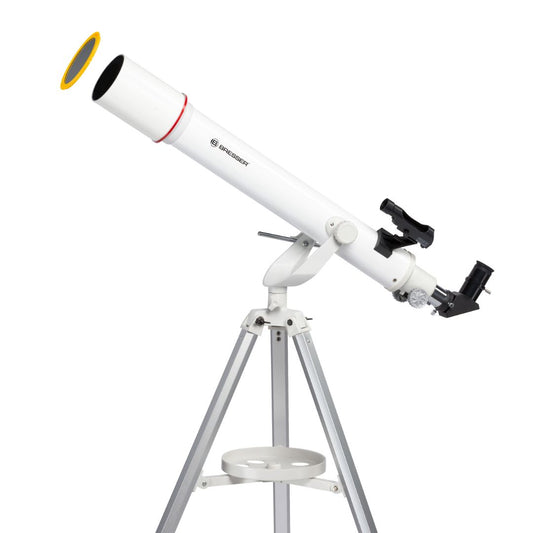
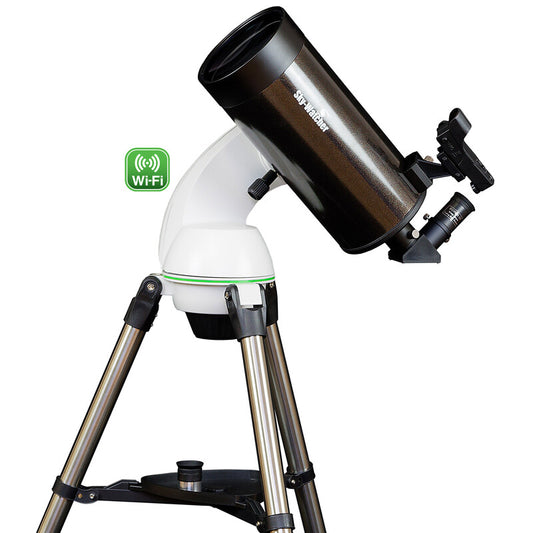
Have the right equipment: For planetary observation, a 90mm refractor or catadioptric telescope is recommended. For deep sky observations, a reflector with at least a 130mm aperture is recommended.
At Astrotelescopios.com, we have a selection of telescopes, filters, and accessories ideal for every type of observing. Don't hesitate to visit our store to find the perfect equipment for you.
Happy watching and clear skies!