
Astronomical calendar for October 2025
October is packed with astronomical events for skywatchers. Autumn is advancing in the Northern Hemisphere, and the nights are getting longer, giving us more time to enjoy the skies. On the Iberian Peninsula, the sun will rise around 8:26 a.m. and set around 7:35 p.m. in the middle of the month, leaving us with about 11 hours of daylight per day. Also, remember that on Sunday, October 26th, we change time in Spain, entering winter time. ⏱️
Below, we'll tell you about the main astronomical events this month.
Lunar phases and notable conjunctions
- October 5 (dusk): conjunction of the Moon with Saturn, visible in the constellation of Aquarius.
- October 7: Full moon.
- October 13: Last Quarter.
- October 14 (dawn): conjunction of the Moon with Jupiter, in Gemini.
- October 19 (dawn): conjunction of the Moon with Venus, the morning star.
- October 21: New Moon, ideal for dark skies and coinciding with the peak activity of the Orionids.
- October 29: First quarter moon.

Planets visible in October
Saturn: the star of the evening, visible from early evening in Aquarius. During the first half of the month, it will remain in the sky almost all night, but towards the end, it will set shortly before dawn.
Mars: observable after sunset, although dim and low above the western horizon. Visibility becomes more difficult as the month progresses.
Mercury: Very difficult to locate; it remains very low after sunset. On the 19th, it will be just 2° from Mars, an interesting challenge for binoculars or a telescope.
Venus: the brightest planet, prominent at dawn as the morning star. Each day its height above the eastern horizon will decrease.
Jupiter: bright in the constellation of Gemini, accompanying Venus in the early morning sky.
Meteor showers
Draconids (peak: October 9): This year, 2025, will be unfavorable for observing them, as the lunar brightness will make them difficult to see.
Orionids (peak: October 21): One of the most anticipated showers of autumn. This year, it coincides with the New Moon, ensuring excellent viewing conditions. Ideally, find a dark, light-polluted location during the second half of the night.
Observation recommendations
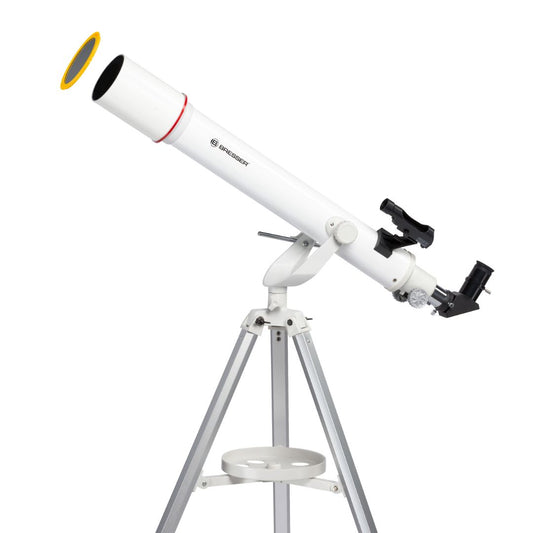
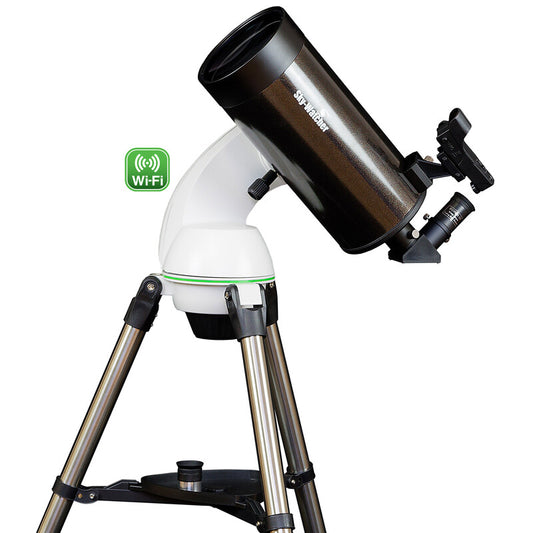
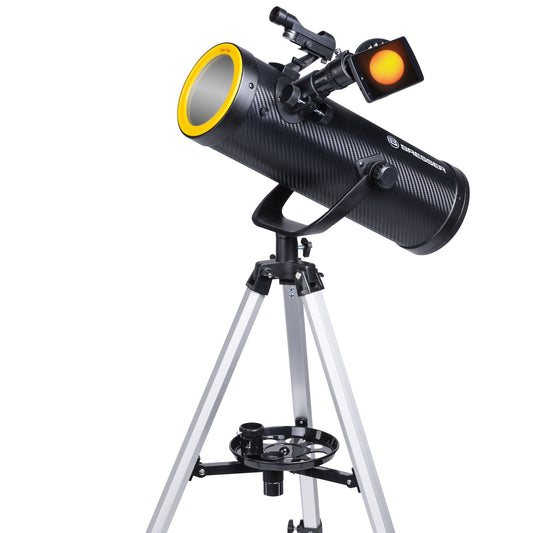
To enjoy Saturn and Jupiter, a mid-range telescope with an equatorial mount will allow you to distinguish details such as Saturn's rings or Jupiter's cloud bands.
Astronomical binoculars are great allies for locating Mars and Mercury on the low horizon.
For the Orionids, the best thing to do is bring a deck chair, warm clothing, and patience. You won't need a telescope, just a clear, dark sky.
Conclusion
The month of October 2025 offers a true celestial spectacle: conjunctions, lunar phases, visible planets, and a meteor shower in optimal conditions. It's the perfect time to get out your observing instruments and enjoy the longer nights of autumn.