
Guide to observing comets C/2025 R2 (SWAN) and C/2025 A6 (Lemmon)
The month of October promises to be unforgettable for astronomy lovers. Two comets— C/2025 R2 (SWAN) and C/2025 A6 (Lemmon) —will be at their brightest, offering a celestial spectacle that can even be observed with the naked eye from some locations on Earth.
A newly discovered comet: C/2025 R2 (SWAN)
Comet SWAN R2 was discovered on September 12 by NASA's Solar Wind Anisotropies (SWAN) instrument, part of the Solar Dynamics Observatory. Detected by Ukrainian amateur astronomer Vladimir Bezugly , the object orbits the Sun every 22,554 years , and its tail stretches the length of five full Moons.
Over the next few weeks, the comet will travel close to Mars , and from October 21st it will reach its closest point to Earth: just 0.27 astronomical units away, or a quarter of the distance between our planet and the Sun. In dark skies, its brightness could reach magnitude 4 , making it visible without the need for optical instruments.
C/2025 A6 (Lemmon): The second bright visitor
The second star of the month is Comet Lemmon , discovered in January by the Mount Lemmon Survey in Arizona. This object will reach its closest approach to Earth on October 21 , at about 0.6 astronomical units . Calculations indicate it could also reach magnitude 4 , visible to the naked eye under dark conditions.
Both comets could be observed during the same period, an unusual phenomenon that excites both professional and amateur astronomers.

Coincidence with the Orionid meteor shower
The spectacle will be enhanced by the Orionid meteor shower , which is active during the second half of October and peaks between the 20th and 21st . With the new moon falling on those dates, the sky will remain dark and clear of moonlight, offering ideal conditions for viewing.
We will be able to enjoy two comets simultaneously and up to 20 meteors per hour , an astronomical event worth remembering.
Tips for observing them
- Choose a dark, elevated location away from city lights.
- Look west after sunset for SWAN R2 and east before sunrise for Lemmon.
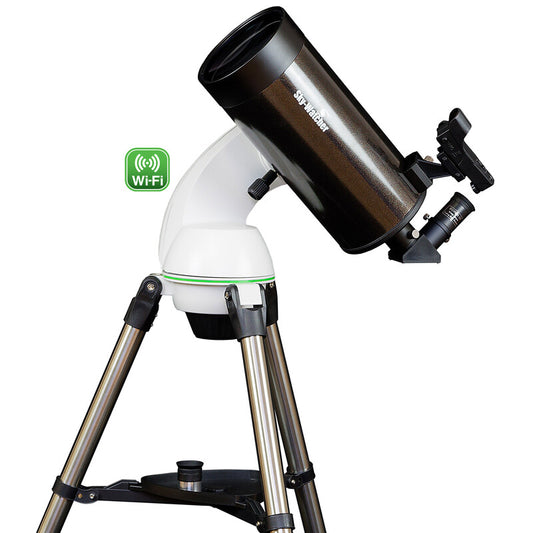
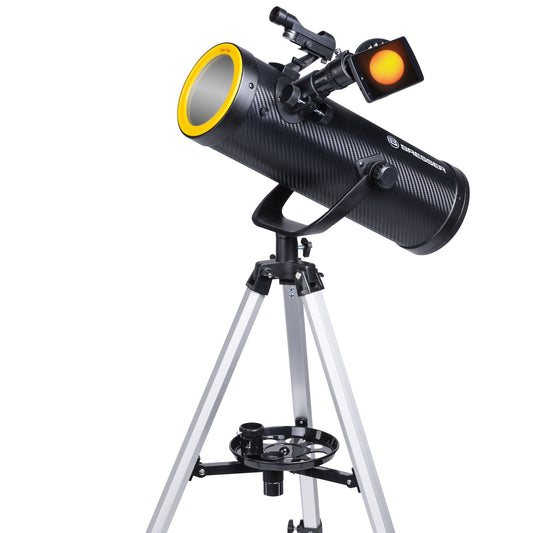
- Use binoculars or an astronomical telescope to better appreciate the structure of their tails.
- Check out apps like SkySafari or Stellarium to keep track of their current position.
A show that won't be repeated soon
The last comet visible to the naked eye was C/2020 F3 (NEOWISE) in the summer of 2020. Since then, few events have generated such excitement. The coincidence of two bright comets , a new moon , and a meteor shower makes October 2025 a truly special month for all skywatchers.
Get ready, sharpen your telescope, and don't miss this double cosmic spectacle.
If you don't have suitable equipment yet, visit AstroTelescopios.com You'll find a wide selection of telescopes, binoculars, and accessories to enjoy astronomical observation at its best.