

The nova T Coronae Borealis: A celestial spectacle waiting to happen
In a matter of months, astronomers and astronomy enthusiasts around the world will be able to witness a rare celestial event: the explosion of the recurrent nova T Coronae Borealis (T CrB). This phenomenon, which has only been observed twice in the last 150 years, promises to be a spectacle visible to the naked eye from Earth.
What is a recurrent nova?
Recurrent novae are binary stars that experience periodic explosions. In the case of T CrB, the system is composed of a red giant and a white dwarf. The red giant, at the end of its life, releases gas that is attracted to the white dwarf. This accumulated material heats up and detonates, creating an explosion that considerably increases the brightness of the system.
When and how can the T CrB explosion be observed?
The T CrB explosion is estimated to peak between June and September 2024. During this period, the nova will be visible as a bright new star in the constellation Corona Borealis, visible to the naked eye in dark skies. It is expected to reach a magnitude of about 2, similar to the brightness of the North Star.
A unique event to observe and understand the universe
The T CrB explosion offers a unique opportunity to observe and better understand these binary star systems. Astronomers will be able to study the explosion process in detail, as well as the chemical composition of the nova and its surroundings. Furthermore, this event will allow astronomy enthusiasts to witness a truly extraordinary celestial phenomenon.
Recommendations for observing the T CrB explosion
To observe the T CrB explosion, it is recommended to find a location with dark skies and little light pollution. Starting in June, the nova will be visible with the naked eye as a bright star in the constellation Corona Borealis. Binoculars or telescopes will allow you to appreciate additional details of the event.


An event to remember
The explosion of the nova T CrB will undoubtedly be a memorable event for astronomers and astronomy enthusiasts. This celestial spectacle reminds us of the vastness of the universe and the constant evolution of stars.
Guide to observing the nova T CrB
To observe the nova T CrB, look between the constellations of Hercules and Bootes, where the constellation Corona Borealis is located. It is composed of a semicircle of stars.

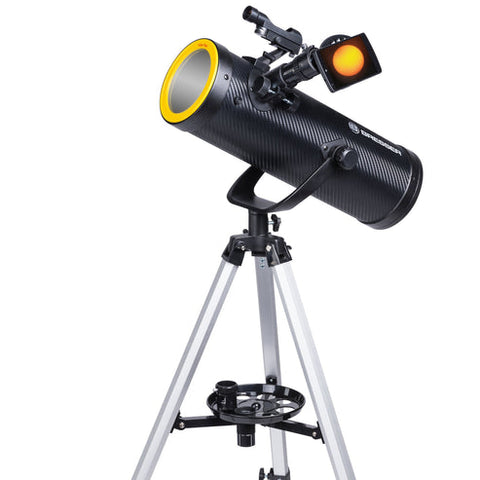
Using binoculars or a small telescope with a short focal length will help you get a better experience during the event.
To correctly identify the star T Corona Borealis, use an app on your mobile phone. For example, in Stellarium, you can find the star by searching for its scientific name, which is HD 143454.

Don't expect a huge explosion unless it happens just as you observe and identify the star brightening considerably.