

Meade
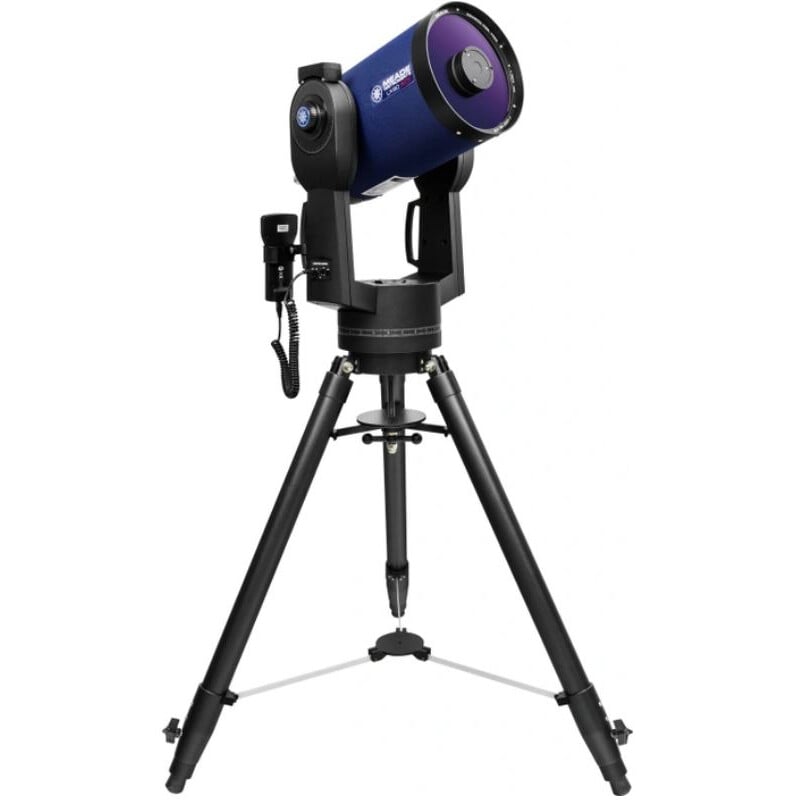
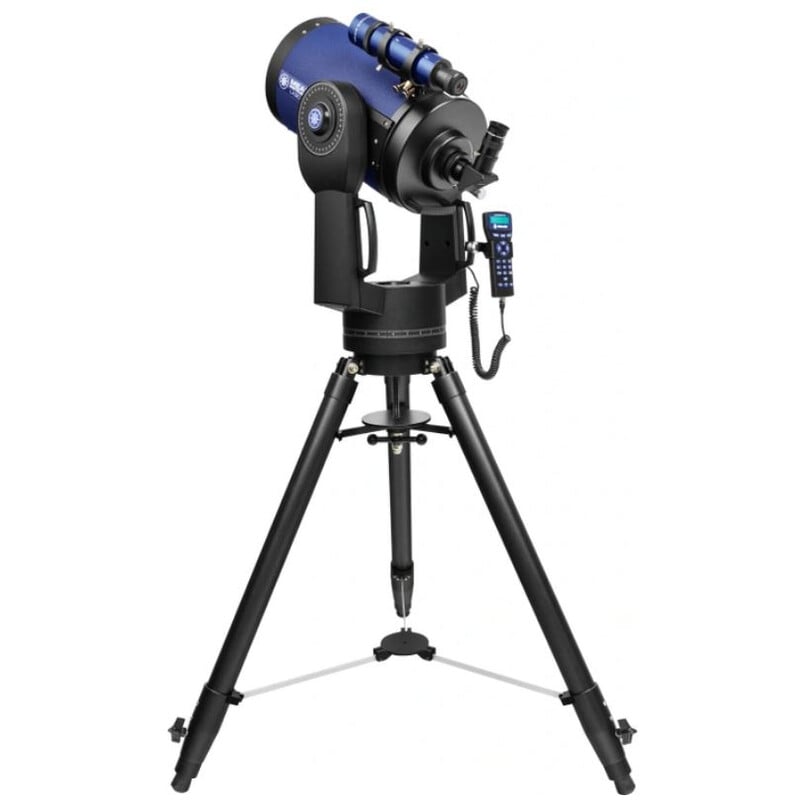
ACF-SC 203/2000 UHTC LX90 GoTo Telescope
ACF-SC 203/2000 UHTC LX90 GoTo Telescope
Out of stock
Couldn't load pickup availability
- SECURE PAYMENT
- FAST SHIPPING AVAILABLE
- EXPERT CONSULTING
LX90 mount:
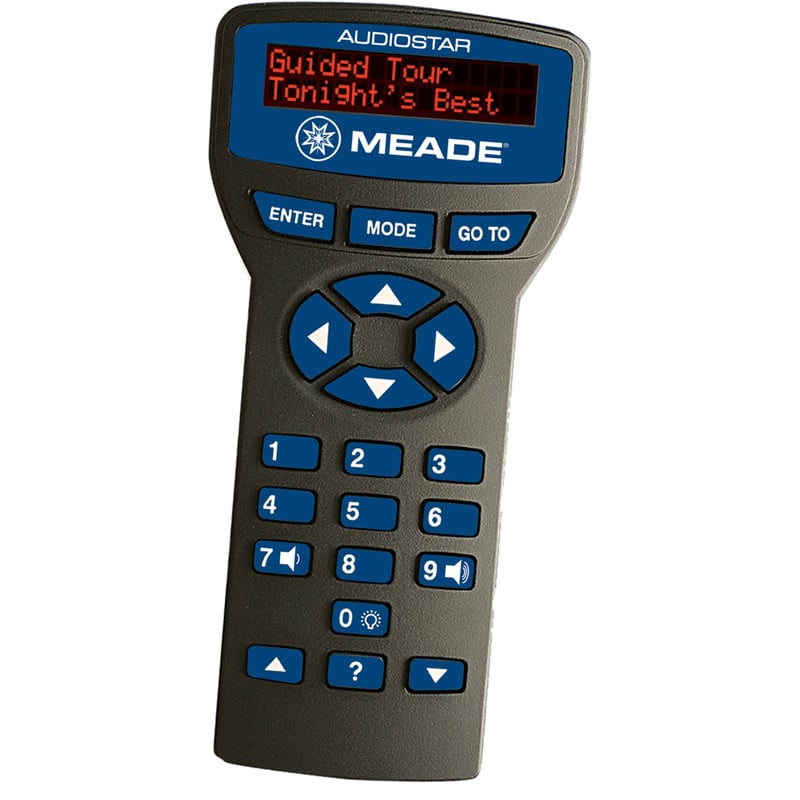
Now it is even easier to observe the starry sky, even without knowledge... Assemble it and enjoy! All you have to do is select a reference star from those suggested and confirm its position. The mount works on the same principle as professional observatories. Your AutoStar Handbox device (included) has the coordinates of about 30,000 astronomical objects stored in its memory: 13,235 Deep Sky objects, 16,888 stars arranged by name and SAO number, 8 planets, the Moon, 26 asteroids, 15 comets, etc. Additionally, you can include 200 objects of your choice. The system quickly and silently locates and positions itself towards these objects: the GoTo function works at 9 different positioning speeds: 6.5°/s, 3°/s, 1.5°/s or the stellar speeds 128x, 64x, 16x , 8x, 2x and 1x.
The AutoStar Handbox software is updated online. In addition, data banks on comets, asteroids, satellites, etc. They can be downloaded from the Meade website. This way, you will have updated coordinates and the LX90 will be as accurate as the first day.
A 125mm diameter worm gear on both axes ensures precise tracking of objects even during long astrophotography sessions.
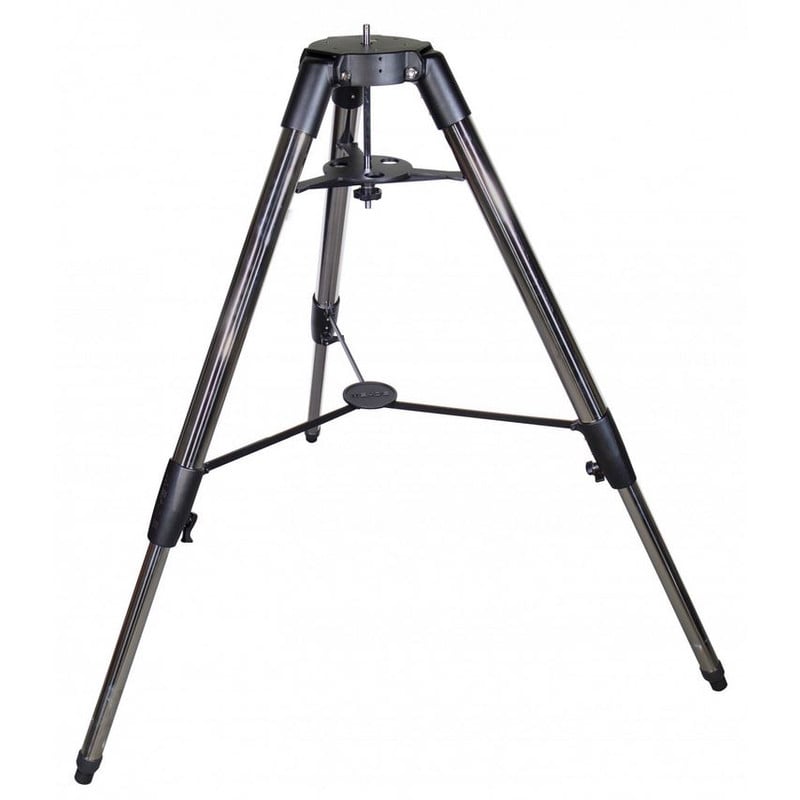
The frame is light, but provides great stability. The height-adjustable tripod also contributes to the stability of the equipment. Compatible with altazimuthal or parallactic mount.
AutoStar Suite software (included) allows you to control the LX90 from a computer.
Connection for the autoguide is optional. It works by power supply, with 12V batteries or through the car battery.
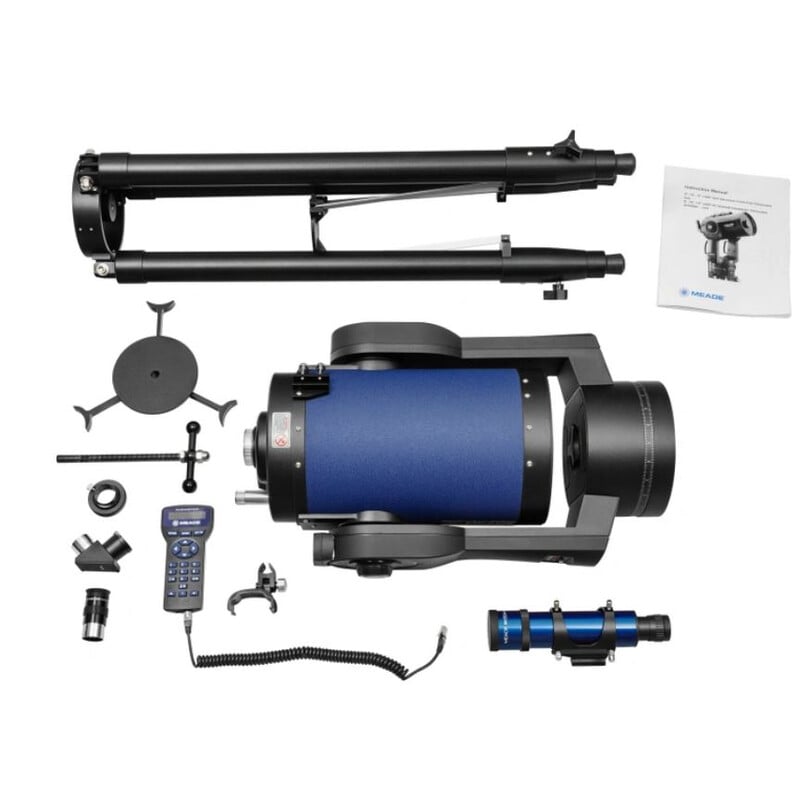
Includes:
- AutoStar Handbox with software.
- GoTo function with 30,223 objects.
With its Schmidt-Cassegrain style optics this telescope leaves nothing to the imagination. And SC telescopes are suitable for any application. It doesn't matter if you are looking for planets, distant nebulae or galaxies, and it doesn't matter if you want to observe or photograph them, because with an SC everything is possible.
The compact optic ensures limited leverage on the mount and is perfect for transport. As focusing is carried out internally, the focus plane can be adjusted so well that the perfect sharpness can be found even for astrophotography accessories.
SC telescopes are equipped with a spherical main mirror. This is a disadvantage, because only parabolic mirrors, such as those found in Newton telescopes, bend light rays off-axis toward the focal point. That is why the optical designer Bernhard Schmidt (1879-1935) developed a special correction plate that is placed at the front of the tube. Equipped with the Schmidt plate, the SC telescopes display a sharp image free of spherical aberration. Furthermore, by being closed in this way, the main mirror is protected from dirt and undesirable turbulence caused by the air.
In the center of the correction plate there is a secondary mirror that returns light to the primary mirror and then, through a hole, reaches the back of the tube. This position of the light outlet owes its name to Laurent Cassegrain (1629-1693). Professional telescopes take advantage of this design advantage: heavier accessories do not exert leverage and the telescope's viewfinder remains intact, even when viewing objects of different heights. That's why no ladder is needed and even the little ones can take a look comfortably and safely, something not inconsiderable for those watching from the balcony!
ACF (Advanced Coma-free) Optical Tubes: Meade's ACF optical design reduces the image errors typical of all mirror tubes, so stars look sharp right down to their outlines, without star-shaped distortions. trail that is more reminiscent of a comet. The image looks flatter than with classic Schmidt-Cassegrain telescopes. ACF optics are spatially useful for astrophotography.
Ultra-High Transmission Coatings: This special multi-layer treatment of the front corrector plate guarantees up to 15% more light transmittance. The result is clearer star clusters, finer details on nebulous objects, and better-defined surfaces on planets.
The AudioStar manual control offers a database of 30,000 celestial objects. By simply pointing it at the sky, AudioStar can point the telescope at these objects and keep them centered on the target (obviously, as long as they are above the horizon). This feature, called GoTo, is accompanied by other functionalities, such as guided tours, position indicator and PC connection.
One of the most notable features of the AudioStar control is the integrated speaker. Astronomer Inside technology is an astronomer that offers more than four hours of voice broadcast (only in English) with interesting facts about the celestial objects captured by the control.
Optical system
Type: Reflector
Construction type: ACF-Cassegrain
Aperture (mm): 203
Focal length (mm): 2000
Aperture ratio (f/): 10
Resolution capacity: 0.68
Limit value (mag): 13.3
Light collecting capacity: 840
Maximum useful magnification: 406
UHTC Bonus: Tube ConstructionFull Tube
Reflector:
Correction plate material: Float glass
Main mirror material: Pyrex glass
Secondary mirror material: Pyrex glass
Secondary mirror design: hyperbolic
Main mirror design: spherical
Primary mirror vent: no
Corrective lens treatment: UHTC
Telescopic eyepiece tube
Connection (eyepiece side): 1.25"
Construction type: Internal
Mount
Mount type: altazimuth
GoTo: yes
Tracking speed: 6.5 - 3 - 1.5
Tracking speed: 128 - 64 - 16 - 8 - 2 - 1
Electrical power consumption (mA)1200
Power supply: 12
Type of construction
LX90: Encoderno
GoTo
Database: 30,223
SoftwareAutoStar #497
Accuracy: 3
GPS: yes
Alignment process: AutoAlign, 2 stars
GoTo system language: English
Tripod
Type: Tripod
Height (cm): 76-112
Material: Steel
Accessories included
1.25" eyepieces: 26mm
Viewing telescope: 8x50
Deflection optical system
Amici Prism 1.25" - 90°
Software: AutostarSuite
In general
Series: LX90
Special recommendation: yes
heaviest component (kg): 15
Total weight (kg): 24
Applications
Astrophotography
Moon and planets
Nature observation
Nebulae and galaxies
Sun (only with appropriate sunscreen)
⚠️ NOTAS DE ADVERTENCIA
GAFAS PARA LA OBSERVACIÓN DE ECLIPSE
- INSTRUCCIONES: Revise antes de cada uso. No utilice ni deseche si está dañado, rasgado, perforado o separado de alguna manera del marco. No lo use con otros dispositivos ópticos. No es un juguete. Los niños deben usarlo solo bajo la supervisión de un adulto. Limítese a 3 minutos de uso continuo, con interrupciones durante varias horas. No se mueva mientras usa este producto, no conduzca un vehículo ni opere maquinaria. No lo use si tiene un ojo enfermo o después de una operación ocular.
- ADVERTENCIA: Nunca mire directamente al sol sin protección ocular especial. Siempre use gafas de eclipse al observar el eclipse solar, especialmente si una parte del sol es visible. Mirar directamente al sol puede causar daños permanentes si no se toman las precauciones adecuadas. Se debe usar protección ocular adecuada, diseñada específicamente para la observación solar, para evitar que los rayos dañinos del sol lleguen a los ojos. Deséchelo después de 3 años y no lo utilice después de ese tiempo.
OBSERVACIÓN SOLAR CON TELESCOPIO
- Nunca mire al sol a través de un ocular/telescopio sin un filtro de protección verificado. Un filtro lunar nunca puede usarse para la observación solar. El filtro lunar solo es adecuado para la observación de la luna. El filtro solar debe montarse en la apertura del telescopio, no en el ocular. De lo contrario, el rayo de luz concentrado por la óptica destruirá inmediatamente la película del filtro, lo que provocará daños oculares graves e incluso ceguera total.
- Revise el filtro solar antes de cada observación solar y asegúrese de que no esté dañado. Manténgalo frente a una fuente de luz intensa para poder detectar posibles grietas y/o agujeros. No use el telescopio para la observación solar, incluso si el filtro solar está solo ligeramente dañado. En este caso, comuníquese con el fabricante para obtener las piezas de repuesto correspondientes.
- Siempre use el filtro solar cuando observe el sol. Asegúrese de que este filtro esté colocado correctamente en el telescopio según las instrucciones. El uso del filtro solar está destinado únicamente para su uso con este telescopio.
- Revise el ajuste del filtro solar antes de cada observación solar. Si se suelta accidentalmente de la abertura del objetivo, esto puede causar daños oculares inmediatos y permanentes, e incluso ceguera.
- Si el filtro solar no puede montarse de manera suficientemente firme en el tubo, mejore el ajuste colocando varias tiras de fieltro autoadhesivas o similares entre el filtro solar y la abertura del objetivo. Nunca use el filtro solar si no puede colocarse correctamente en el telescopio. En tal caso, siempre contacte primero con nuestro servicio al cliente.
- Tenga mucho cuidado al observar el sol. Incluso una mirada corta a través de la óptica sin protección puede causar daños oculares graves e incluso ceguera total.
- Los niños, incluso con el filtro montado correctamente, no deben mirar al sol a través del telescopio. Nunca deje a los niños sin supervisión.
- Nunca deje la óptica sin supervisión. Los niños y los adultos inexpertos podrían dirigir el telescopio hacia el sol sin las precauciones adecuadas y perder la vista.
- No realice observaciones solares sin la consulta previa de un médico después de una operación ocular o cualquier otra enfermedad ocular.
- Las ondas/pliegues en la película son normales y no constituyen un defecto del producto.
- No exponga el dispositivo a altas temperaturas.
ADVERTENCIAS Y SEGURIDAD DE LAS PILAS
- NO USE pilas falsas en los productos. Use solo las pilas proporcionadas. Use la pila EXCLUSIVAMENTE para el propósito previsto.
- Guarde las pilas fuera del alcance de los niños y mascotas.
- NO USE pilas que parezcan tener la carcasa dañada, inflada o modificada. No use pilas que hayan goteado, huelan, estén hinchadas o derretidas o presenten abolladuras, óxido, grietas o rayones.
- La pila NO debe ser desmontada, aplastada, perforada, triturada ni manipulada de ninguna otra forma.
- La pila NO debe exponerse a líquidos.
- No debe intentar secar una pila mojada o húmeda con un dispositivo o fuente de calor.
- El dispositivo o la pila NO deben ser colocados cerca de una fuente de calor o bajo la luz solar directa.
- La pila NO debe tocar objetos metálicos.
- La pila NO debe ser almacenada junto a materiales peligrosos o inflamables. Guarde la pila en un lugar fresco, seco y bien ventilado.
- La pila NO debe insertarse incorrectamente al cargarla.
- La pila NO debe cargarse bajo luz solar directa ni a temperaturas extremas. Cárguela a temperatura ambiente (20 °C – 26 °C).
- Evite dejar caer la pila o el producto. Si sospecha que la pila está dañada, reemplácela.
- Nunca deje su dispositivo conectado a la corriente más de 24 horas. Deje que la pila se agote y luego recárguela.
- Para obtener los mejores resultados, reemplace las pilas según el uso después de 12 meses o antes.
- Siga las regulaciones locales para la eliminación de las pilas usadas. NO arroje la pila al fuego ni al agua.