

Unistellar
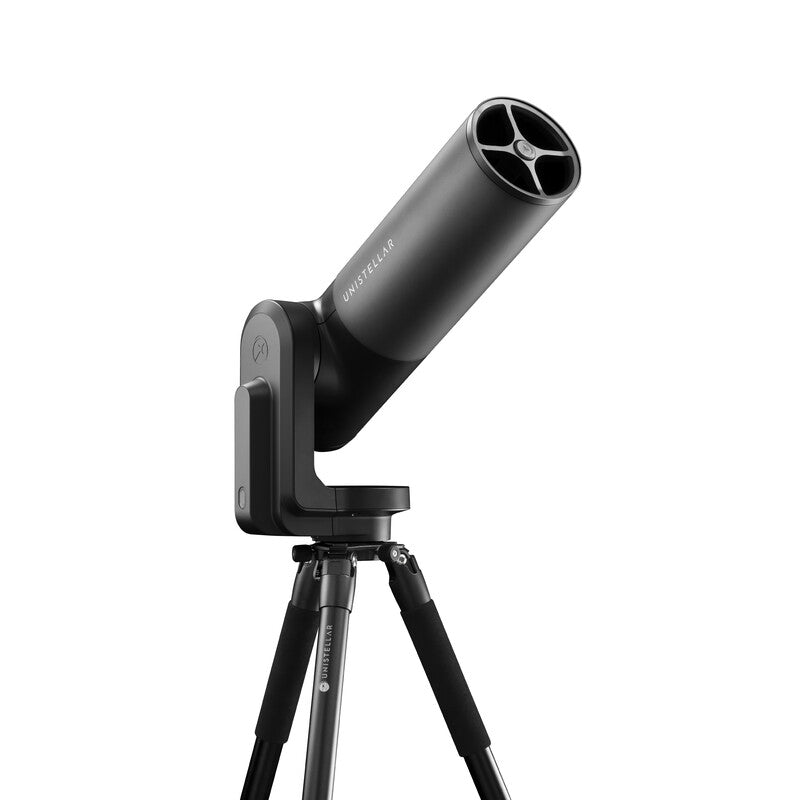
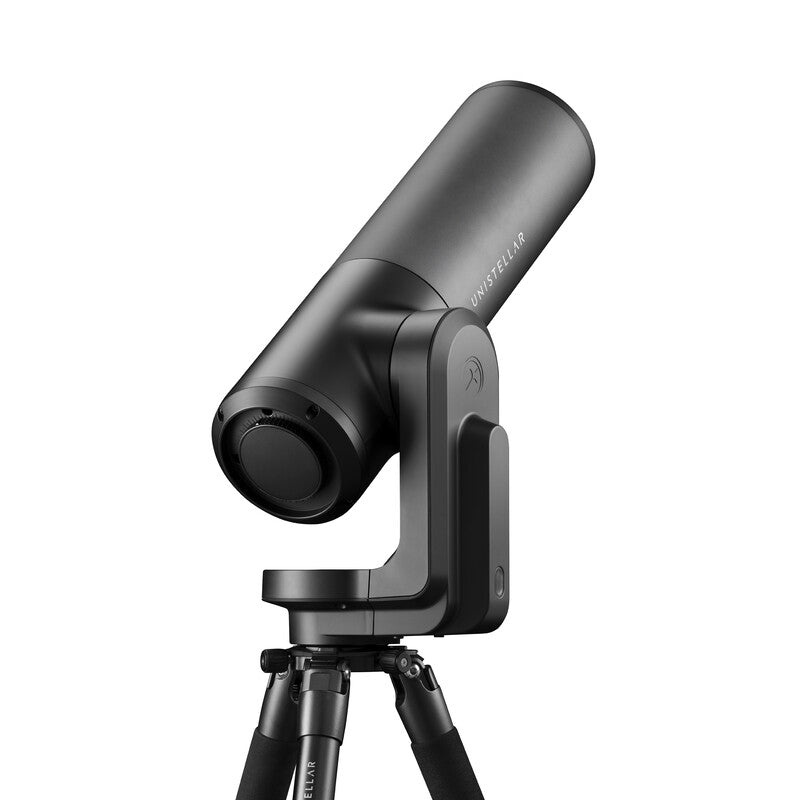
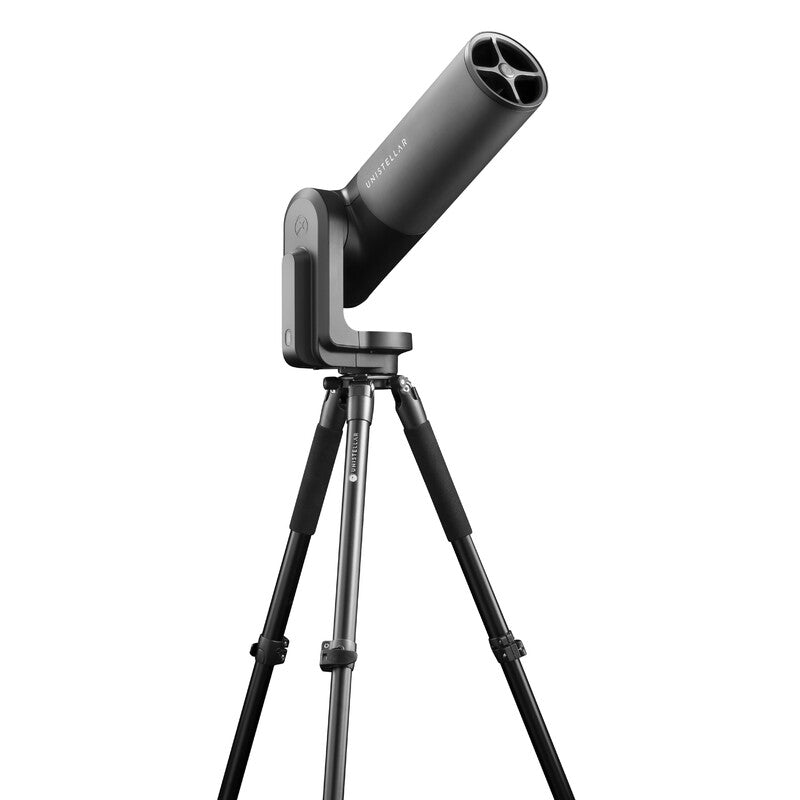
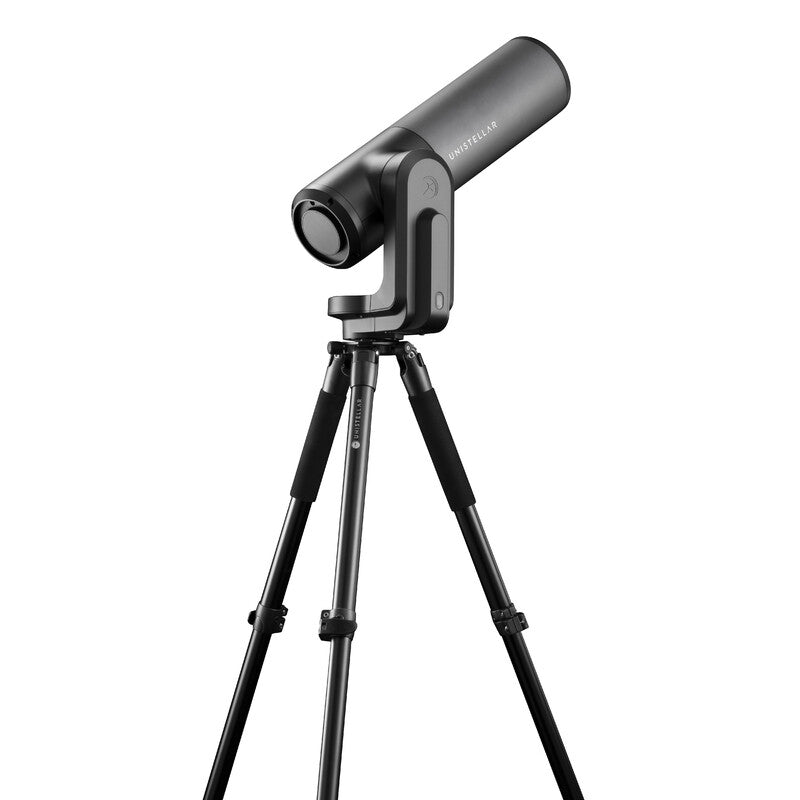
Unistellar eVscope EQUINOX2 Smart Telescope
Unistellar eVscope EQUINOX2 Smart Telescope
Low stock
Couldn't load pickup availability
- SECURE PAYMENT
- FAST SHIPPING AVAILABLE
- EXPERT CONSULTING
Explore the Universe from anywhere. With precision. With ease. With wonder.
Unistellar eVscope EQUINOX2: the smart telescope for areas with high light pollution
Discover the universe with the eQuinox 2 smart telescope. Thanks to Unistellar's cutting-edge technology, you can see galaxies and nebulae in full color, even in densely populated urban areas.
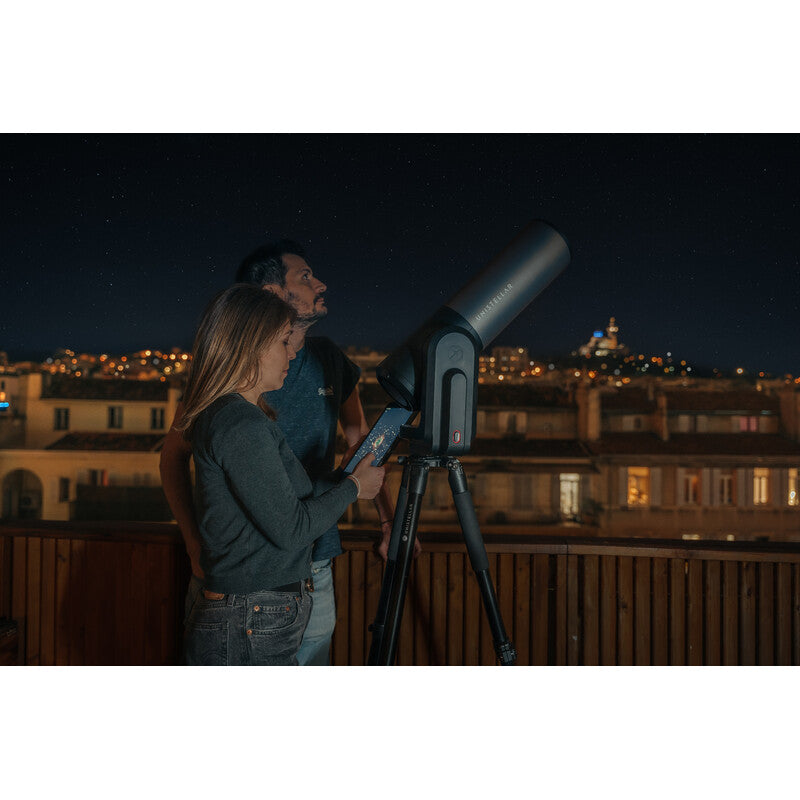
Click and be amazed: in two minutes your telescope will be ready for space observation. In one minute, you'll have the eQuinox 2 unpacked and set up, and just one minute later you'll be able to admire galaxies on a screen rich in colors and details.
Thanks to Unistellar's partnerships with renowned scientific organizations such as the SETI Institute and NASA, you can become a citizen astronomer with your eQuinox 2.
Smart Light Pollution Reduction
Allows you to see the universe even in urban areas with high light pollution.
Enhanced Vision
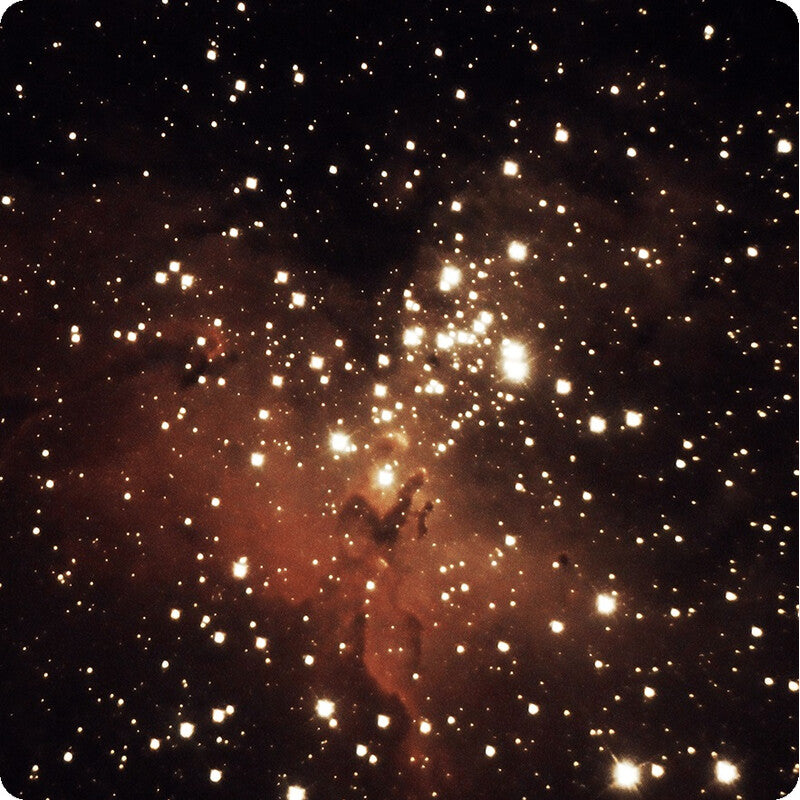
Displays in real-time the impressive colors of Jupiter's Great Red Spot, the dazzling pink and purple hues of the Orion nebula, our nearest star nursery, and the Whirlpool galaxy colliding with a smaller neighboring galaxy.
Autonomous Field Detection
With this function you can quickly and comfortably explore the tail of Comet Neowise, the rings of Saturn or the vibrant colors of the Dumbbell nebula, for example, no matter where you are.
Smart Telescope
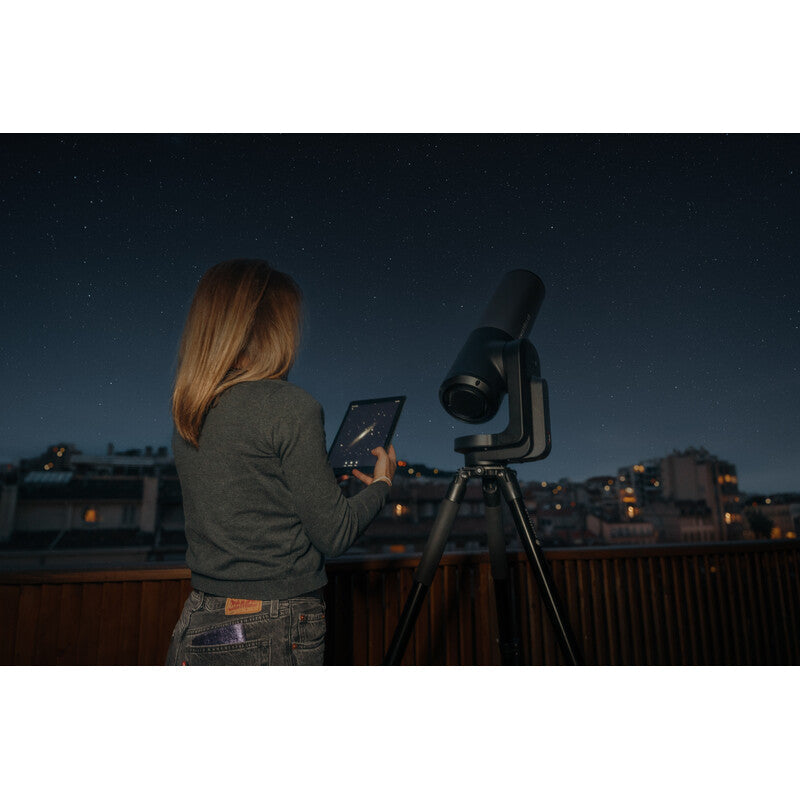
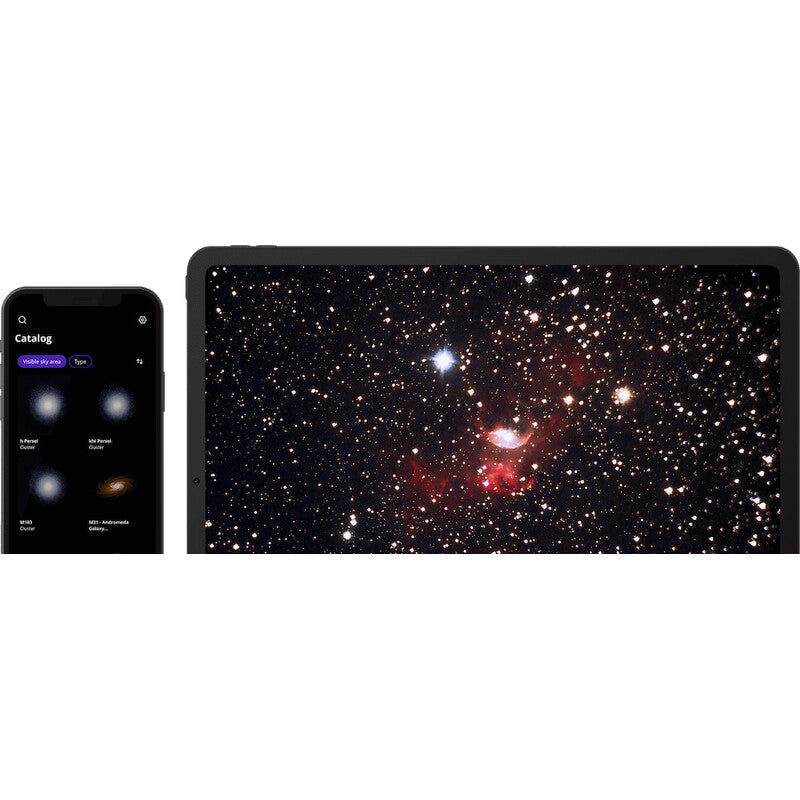
With an app, you'll have absolute control of the telescope, so your mobile phone becomes the control center for your observations.
Citizen Science
Whether observing the asteroid Apophis, searching for exoplanets, or following NASA missions, with your telescope you can contribute to relevant scientific discoveries about space and become a true citizen astronomer.
How does the eQuinox 2 differ from the eQuinox?
The eQuinox 2 has a higher resolution sensor than the eQuinox. Thanks to this new sensor and its larger field of view, you will be able to see the full moon and capture all three galaxies of the Leo Triplet in a single observation.
Optical Equipment
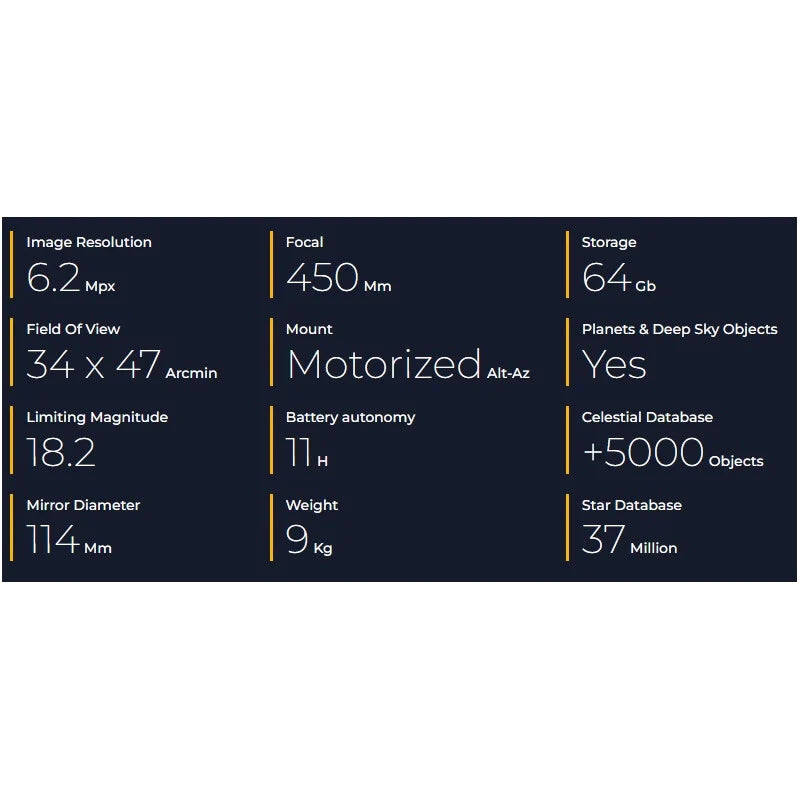
The combination of a 114mm mirror and a 450mm focal length makes this telescope fast and versatile, perfect for observing nebulae, galaxies, and planets. The field of view is 34 × 47 arc minutes, wide enough to capture the entire full moon.
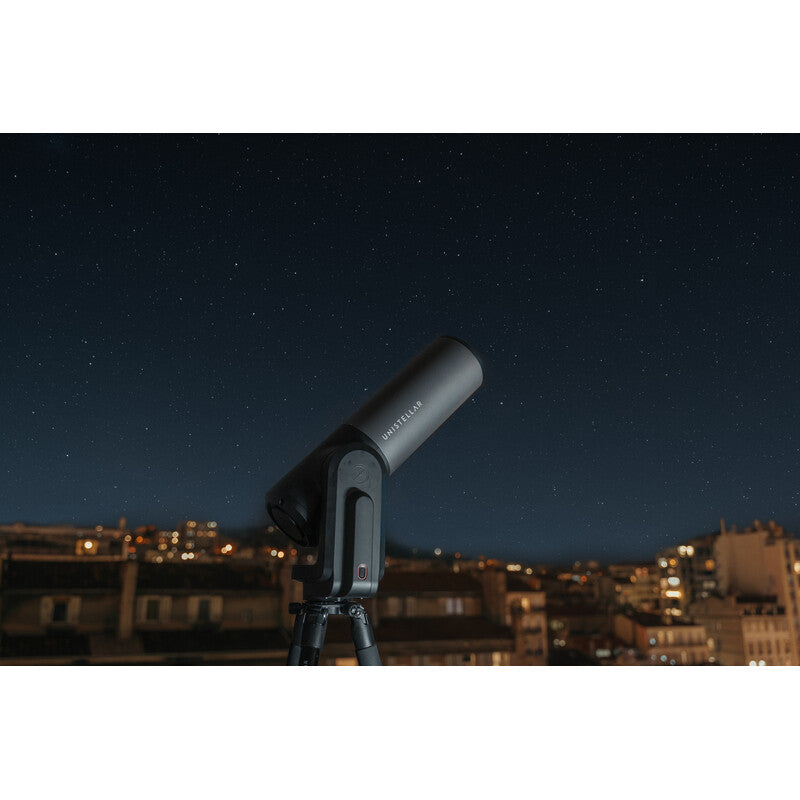
Now you can also explore the universe in urban areas
The eQuinox 2 features an unprecedented combination of advanced technology and stunning design that makes space accessible even in urban environments with high light pollution.
Thanks to Smart Light Pollution Reduction technology, based on Unistellar's patented state-of-the-art image processing, the eQuinox 2 automatically filters out the effects of city lighting. Your telescope will show you unparalleled high-resolution images (even in the middle of urban agglomerations) of, for example, the brilliant blues and reds of the Ring Nebula in Lyra.
Discover the hidden colors and details of galaxies and nebulae in real time
Unistellar's Enhanced Vision technology offers unique experiences. Images captured by the telescope are stacked and processed in real time to reveal the wonders of space.
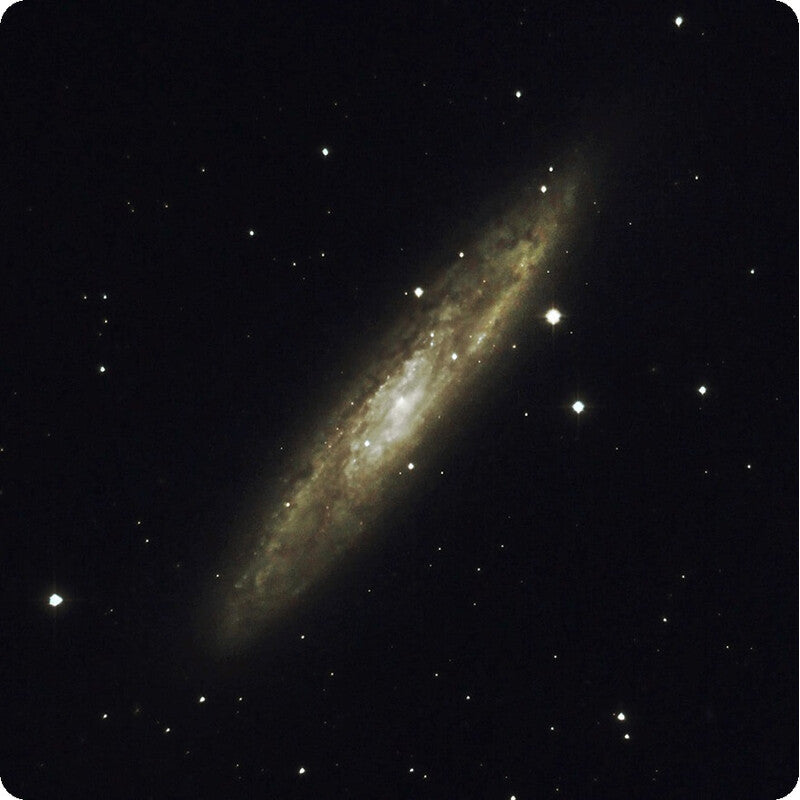
With the eQuinox 2, you can now unveil the secrets of the universe. Immerse yourself in the impressive color diversity of the Dumbbell Nebula or the Cigar Galaxy 11.4 million light-years away.
Delight in the wonders of the planets in our solar system
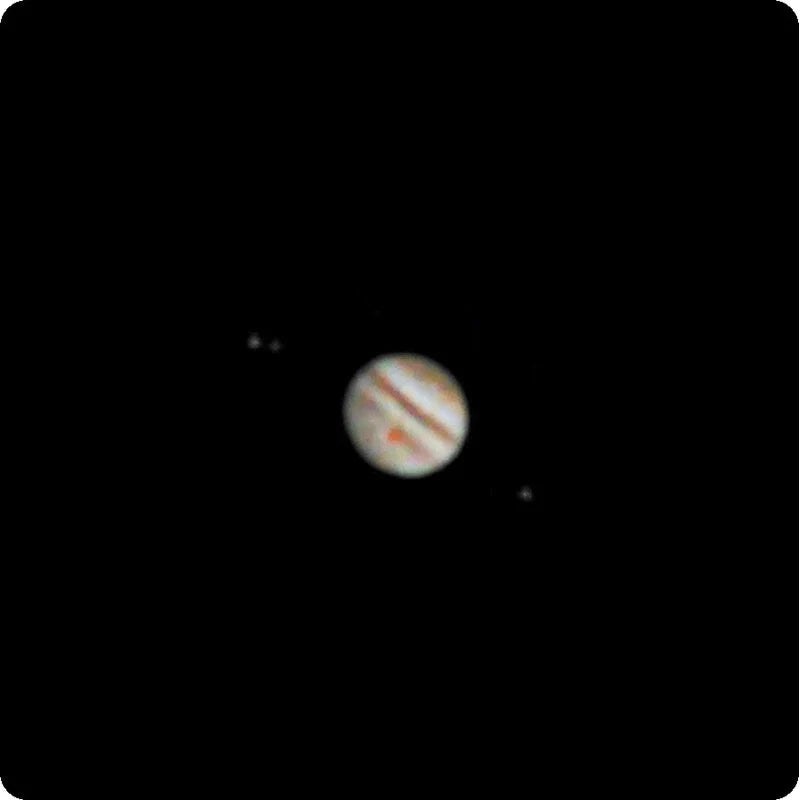
The eQuinox 2 is fast, simple, and precise enough to observe the planets of the Solar System, such as Mars, the Red Planet, in maximum detail. Thanks to Unistellar's Enhanced Vision technology, which optimizes planetary observation, users can now easily see Jupiter, Saturn, and Mars. In just a few seconds, Jupiter's Great Red Spot and its different color bands are presented before the viewer's eyes. The eQuinox 2 constantly captures images of the planet, selects the best ones, and merges them to provide a significant improvement in contrast and color representation.
Smart and Connected
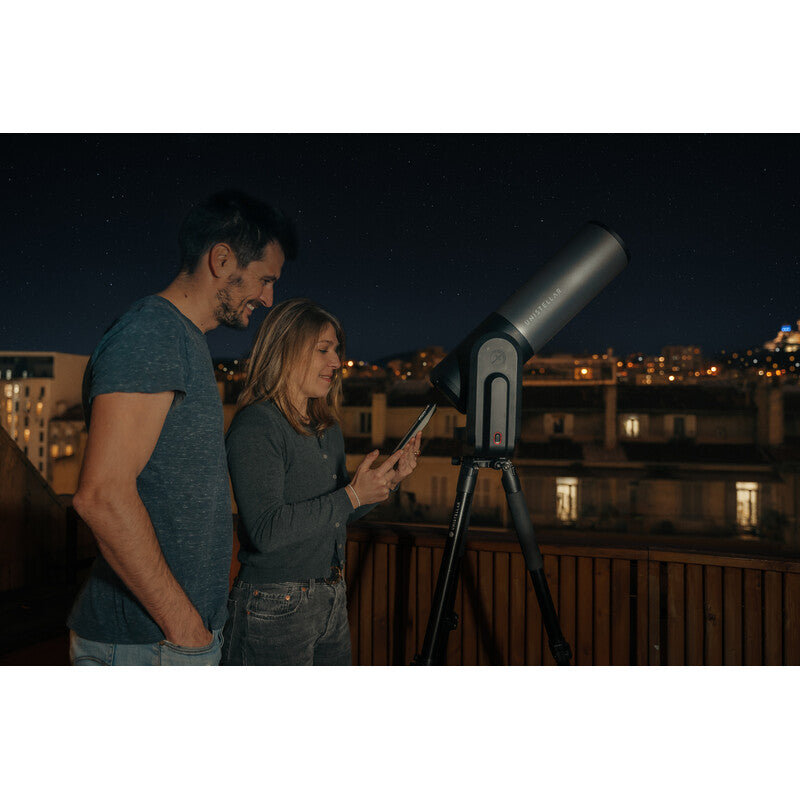
Turn your mobile phone or tablet into a control center for your space observations. With the Unistellar app, with just one click you can select Jupiter or the great Hercules cluster for your observation. The eQuinox 2 catalog includes more than 5000 objects and provides you with detailed information about each of your targets.
Start exploring space today: you won't need to spend countless hours mastering the operation of complex instrument installations.
Even if only a few visible stars are available, the eQuinox 2 determines the user's position on Earth in the blink of an eye using the mobile phone's GPS function: it can automatically orient itself in the sky in a few seconds thanks to autonomous field detection technology.
The eQuinox 2 contains its own database of 37 million stars. Unlike the human eye, which cannot distinguish most stars at night, the smart telescope is able to recognize stellar objects and match their respective positions with its database through autonomous field detection. This automatically gives the eQuinox 2 a very precise idea of its orientation.
Become a citizen astronomer
Thanks to Unistellar's partnerships with prestigious scientific organizations such as the SETI Institute and NASA, supporting their exoplanet discovery program, users can also become citizen astronomers with their eQuinox 2 and contribute to cutting-edge research on exoplanets, asteroids, comets, and more. Join the active international community of over 10,000 citizen astronomers and become a space explorer.
Your contribution to NASA missions
With your eQuinox 2, you can directly contribute to important space missions. In the United States, Citizen Astronomers from the Unistellar community who supported the Lucy mission to the Trojan asteroids received an invitation from NASA to attend the mission launch. Citizen astronomers from the Unistellar community were among the few people who could observe and record the impact of the DART spacecraft, the first planetary defense system in human history. Join the Unistellar network of citizen astronomers now and become a space explorer.
Vivid Vision Technology
Following a software/app update, Unistellar smart telescopes are now equipped with so-called "Vivid Vision technology."
What does this mean? First, a more powerful signal processing function that allows these telescopes to reproduce the colors of space more clearly. Second, an advanced image processing system that makes corrections with the finesse of an experienced astrophotographer.
| Technical Specifications | |
|---|---|
| Type | Reflector Smart Telescope |
| Aperture | 114 mm |
| Focal length | 450 mm |
| Focal ratio | f/4 |
| Resolution | 1.7" (arcseconds) |
| Mount | Automatic GoTo Altazimuth |
| Motorization | Servomotors |
| Database | 5,000 objects |
| Connectivity | Integrated Wi-Fi |
| Power supply | Internal battery (11 h autonomy) |
| Tripod | Aluminum with spherical level |
| Total weight | 9 kg |
| Applications | Astrophotography, Moon, planets, nebulae and galaxies |
| Solar observation | Only with appropriate solar filter |
| Recommended level | Beginners |
⚠️ NOTAS DE ADVERTENCIA
GAFAS PARA LA OBSERVACIÓN DE ECLIPSE
- INSTRUCCIONES: Revise antes de cada uso. No utilice ni deseche si está dañado, rasgado, perforado o separado de alguna manera del marco. No lo use con otros dispositivos ópticos. No es un juguete. Los niños deben usarlo solo bajo la supervisión de un adulto. Limítese a 3 minutos de uso continuo, con interrupciones durante varias horas. No se mueva mientras usa este producto, no conduzca un vehículo ni opere maquinaria. No lo use si tiene un ojo enfermo o después de una operación ocular.
- ADVERTENCIA: Nunca mire directamente al sol sin protección ocular especial. Siempre use gafas de eclipse al observar el eclipse solar, especialmente si una parte del sol es visible. Mirar directamente al sol puede causar daños permanentes si no se toman las precauciones adecuadas. Se debe usar protección ocular adecuada, diseñada específicamente para la observación solar, para evitar que los rayos dañinos del sol lleguen a los ojos. Deséchelo después de 3 años y no lo utilice después de ese tiempo.
OBSERVACIÓN SOLAR CON TELESCOPIO
- Nunca mire al sol a través de un ocular/telescopio sin un filtro de protección verificado. Un filtro lunar nunca puede usarse para la observación solar. El filtro lunar solo es adecuado para la observación de la luna. El filtro solar debe montarse en la apertura del telescopio, no en el ocular. De lo contrario, el rayo de luz concentrado por la óptica destruirá inmediatamente la película del filtro, lo que provocará daños oculares graves e incluso ceguera total.
- Revise el filtro solar antes de cada observación solar y asegúrese de que no esté dañado. Manténgalo frente a una fuente de luz intensa para poder detectar posibles grietas y/o agujeros. No use el telescopio para la observación solar, incluso si el filtro solar está solo ligeramente dañado. En este caso, comuníquese con el fabricante para obtener las piezas de repuesto correspondientes.
- Siempre use el filtro solar cuando observe el sol. Asegúrese de que este filtro esté colocado correctamente en el telescopio según las instrucciones. El uso del filtro solar está destinado únicamente para su uso con este telescopio.
- Revise el ajuste del filtro solar antes de cada observación solar. Si se suelta accidentalmente de la abertura del objetivo, esto puede causar daños oculares inmediatos y permanentes, e incluso ceguera.
- Si el filtro solar no puede montarse de manera suficientemente firme en el tubo, mejore el ajuste colocando varias tiras de fieltro autoadhesivas o similares entre el filtro solar y la abertura del objetivo. Nunca use el filtro solar si no puede colocarse correctamente en el telescopio. En tal caso, siempre contacte primero con nuestro servicio al cliente.
- Tenga mucho cuidado al observar el sol. Incluso una mirada corta a través de la óptica sin protección puede causar daños oculares graves e incluso ceguera total.
- Los niños, incluso con el filtro montado correctamente, no deben mirar al sol a través del telescopio. Nunca deje a los niños sin supervisión.
- Nunca deje la óptica sin supervisión. Los niños y los adultos inexpertos podrían dirigir el telescopio hacia el sol sin las precauciones adecuadas y perder la vista.
- No realice observaciones solares sin la consulta previa de un médico después de una operación ocular o cualquier otra enfermedad ocular.
- Las ondas/pliegues en la película son normales y no constituyen un defecto del producto.
- No exponga el dispositivo a altas temperaturas.
ADVERTENCIAS Y SEGURIDAD DE LAS PILAS
- NO USE pilas falsas en los productos. Use solo las pilas proporcionadas. Use la pila EXCLUSIVAMENTE para el propósito previsto.
- Guarde las pilas fuera del alcance de los niños y mascotas.
- NO USE pilas que parezcan tener la carcasa dañada, inflada o modificada. No use pilas que hayan goteado, huelan, estén hinchadas o derretidas o presenten abolladuras, óxido, grietas o rayones.
- La pila NO debe ser desmontada, aplastada, perforada, triturada ni manipulada de ninguna otra forma.
- La pila NO debe exponerse a líquidos.
- No debe intentar secar una pila mojada o húmeda con un dispositivo o fuente de calor.
- El dispositivo o la pila NO deben ser colocados cerca de una fuente de calor o bajo la luz solar directa.
- La pila NO debe tocar objetos metálicos.
- La pila NO debe ser almacenada junto a materiales peligrosos o inflamables. Guarde la pila en un lugar fresco, seco y bien ventilado.
- La pila NO debe insertarse incorrectamente al cargarla.
- La pila NO debe cargarse bajo luz solar directa ni a temperaturas extremas. Cárguela a temperatura ambiente (20 °C – 26 °C).
- Evite dejar caer la pila o el producto. Si sospecha que la pila está dañada, reemplácela.
- Nunca deje su dispositivo conectado a la corriente más de 24 horas. Deje que la pila se agote y luego recárguela.
- Para obtener los mejores resultados, reemplace las pilas según el uso después de 12 meses o antes.
- Siga las regulaciones locales para la eliminación de las pilas usadas. NO arroje la pila al fuego ni al agua.