
Astronomical calendar for August 2026: eclipses, Perseids, and the best sky-gazing events
August 2026 will be one of the most spectacular months for astronomy enthusiasts. The sky will treat us to a total solar eclipse visible from Spain, one of the best meteor showers of the year, a partial lunar eclipse, as well as numerous conjunctions between the Moon and the brightest planets.
If you enjoy skygazing or want to get started in astronomy, this month offers unique opportunities that won't come around again for many years.
The main event: Total Solar Eclipse on August 12
Without a doubt, the most important astronomical event of the summer will be the total solar eclipse on August 12, 2026.
The Moon's shadow will traverse the Iberian Peninsula from northwest to southeast during the late afternoon, allowing numerous localities to enjoy a total or partial eclipse depending on their location.
In areas within the path of totality, the Sun will be completely hidden for nearly two minutes, offering an exceptional spectacle:
- The solar corona will be visible to the naked eye.
- The sky will darken as if it were dusk.
- The temperature will drop slightly.
- It will be possible to observe some stars and planets.
This is the first in a historic series of solar eclipses visible from Spain:
- August 12, 2026: Total Solar Eclipse.
- August 2, 2027: Another Total Eclipse.
- January 26, 2028: Annular Solar Eclipse.
Observe the eclipse with complete safety
You should never look directly at the Sun without adequate protection.
To enjoy the eclipse, it is essential to use:
- Approved eclipse glasses (ISO 12312-2).
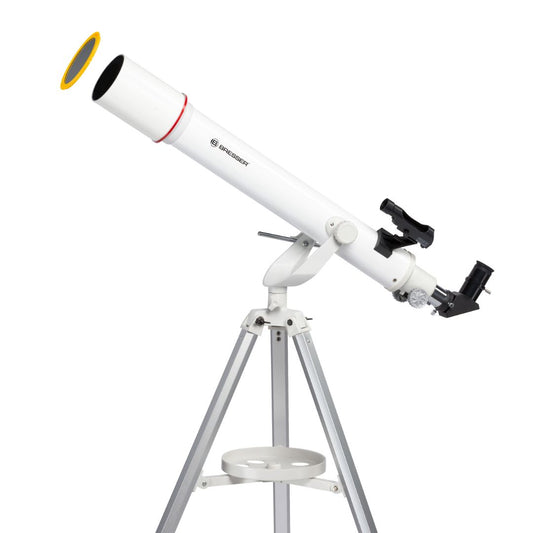
- Specific solar filters for telescopes and binoculars.
- Indirect projection methods.
Never use:
- Sunglasses.
- Smoked glass.
- X-rays.
- CDs or DVDs.
- Conventional photographic filters.
Incorrect observation can cause permanent eye damage.
Perseids 2026: one of the best nights for observing shooting stars
The night of August 12-13 will coincide with the peak activity of the famous Perseids, also known as the "Tears of St. Lawrence."
This year, conditions will be especially favorable because the Moon will be in its new phase, leaving a completely dark sky.
In skies away from light pollution, dozens of meteors per hour can be observed.
Tips for observing the Perseids
- Find a dark place.
- Avoid artificial lights.
- Do not use a telescope.
- Bring a lounge chair or blanket.
- Allow your eyes to adapt to the darkness for about 20 minutes.
Although the peak will be in the early hours of the 13th, the days before and after will also offer great activity.
Venus dominates the sunsets
Throughout August, Venus will remain the brightest object in the sky at dusk.
It will be observed very low on the western horizon shortly after sunset, although it will gradually lose altitude as the month progresses.
On August 15 and 16, a thin crescent Moon will pass very close to Venus, forming a beautiful conjunction with the bright star Spica, in the constellation Virgo.
It will be one of the best moments of the month for sky photography.
Saturn, the star of the night
Saturn continues to gain prominence throughout August.
The ringed planet will appear earlier and earlier on the eastern horizon and will remain visible for a good part of the night.
The Moon will visit Saturn twice:
- August 4, with a waning gibbous Moon.
- August 31, when it approaches again before the full moon.
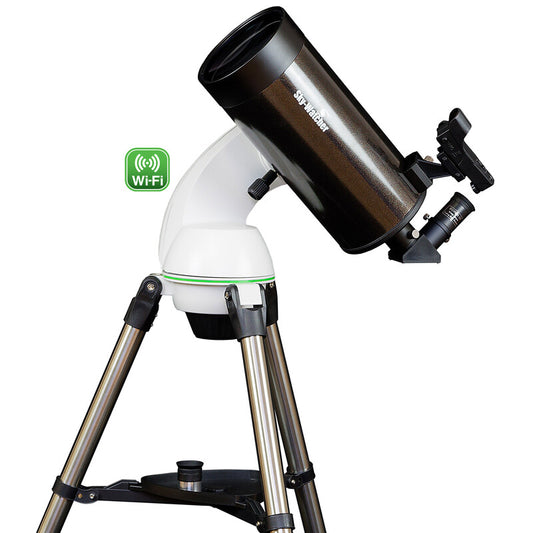
With a beginner's telescope, it is already possible to clearly distinguish its rings.
Mars returns to the dawns
Mars will be visible in the late morning and during dawn.
Although it will still appear quite low on the eastern horizon, it will stand out for its characteristic reddish color.
On August 9, it will feature a beautiful conjunction with a thin waning Moon.
Mercury, visible during the first days of the month
Mercury is often one of the most difficult planets to observe.
However, during the first days of August, it will offer a good opportunity.
On August 4 and 5, it will reach about 7° above the eastern horizon, being the best time to locate it before sunrise.
On August 11, it will share the sky with a very thin waning Moon.
Partial Lunar Eclipse on August 28
The month will conclude with another prominent phenomenon: a partial lunar eclipse.
It will be visible during the early hours of August 28, coinciding with the full moon.
With the naked eye, it will be possible to appreciate how a part of the lunar disk progressively enters the Earth's shadow.
The maximum eclipse will occur at 06:12 (Spanish peninsular time).
Although it will not be a total eclipse, it will be easily observable without the need for instruments.
Astronomical Calendar for August 2026
| Date | Event |
|---|---|
| August 4 | Moon-Saturn Conjunction |
| August 4-11 | Morning Conjunctions of the Moon with Saturn, Mars, and Mercury |
| August 6 | Last Quarter Moon |
| August 9 | Moon-Mars Conjunction |
| August 11 | Moon-Mercury Conjunction |
| August 12 | Total Solar Eclipse |
| August 12-13 | Perseids Peak |
| August 12 | New Moon |
| August 15-16 | Moon-Venus Conjunction |
| August 20 | First Quarter Moon |
| August 28 | Partial Lunar Eclipse and Full Moon |
| August 31 | Moon-Saturn Conjunction |
A unique month for skygazing
August 2026 will be remembered as one of the best astronomical months in recent decades. The spectacular total solar eclipse, combined with a Perseids meteor shower without lunar interference and the partial lunar eclipse at the end of the month, make these weeks a unique opportunity to enjoy astronomy.
If you are planning to observe any of these phenomena, remember to prepare your equipment in advance and, especially for the solar eclipse, always use approved eclipse glasses or certified solar filters. With the appropriate safety measures, August will offer us some of the most impressive sky images of the entire year.