

Celestron
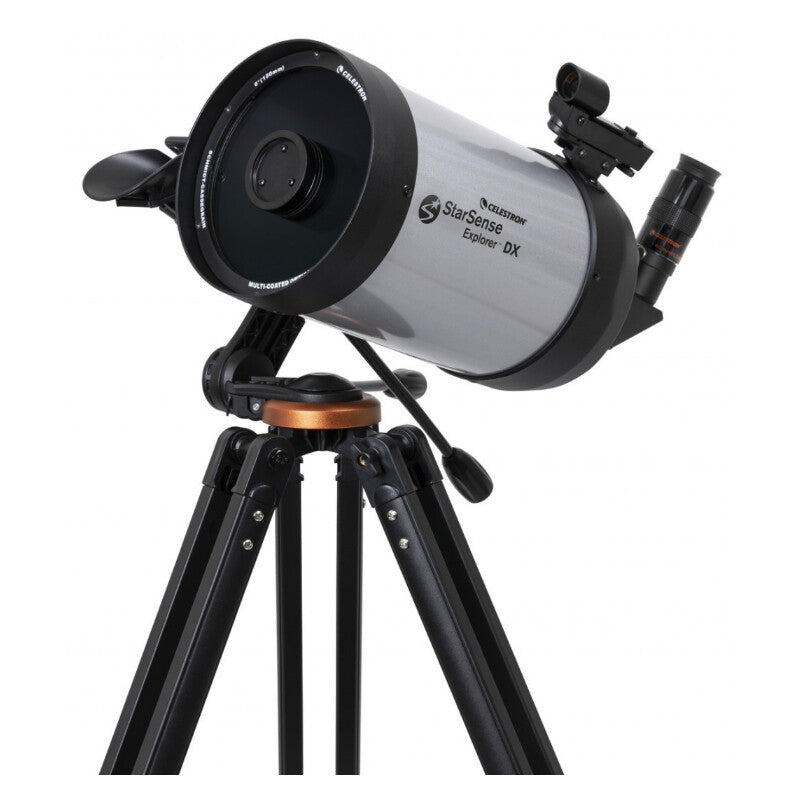
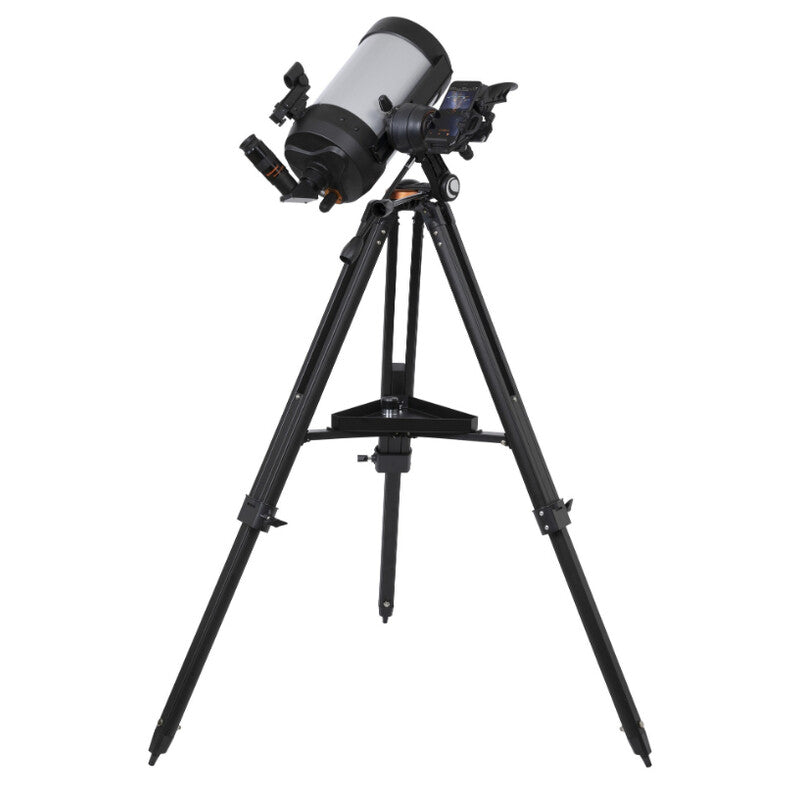
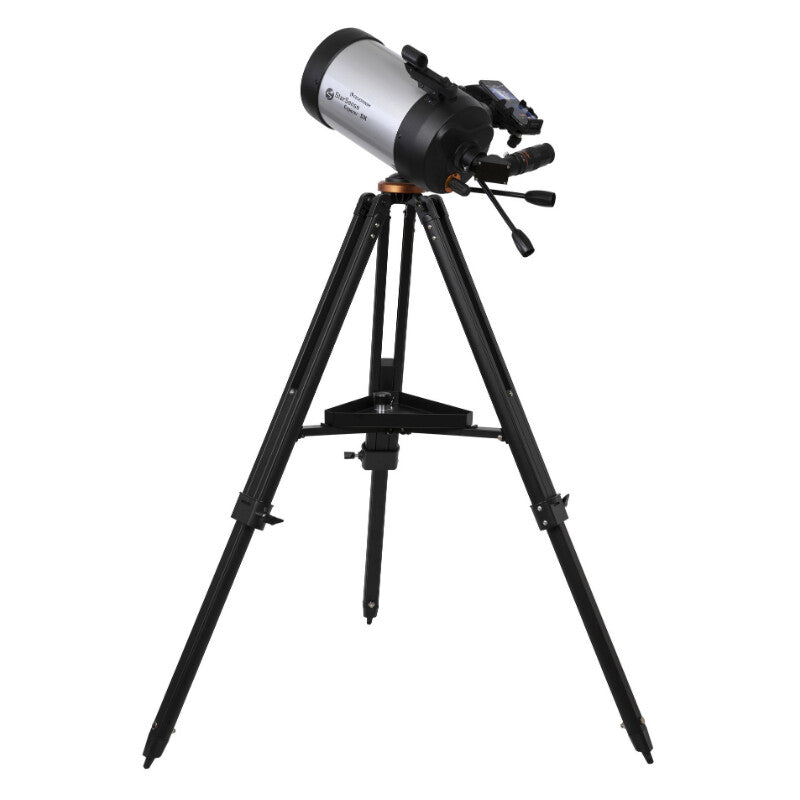
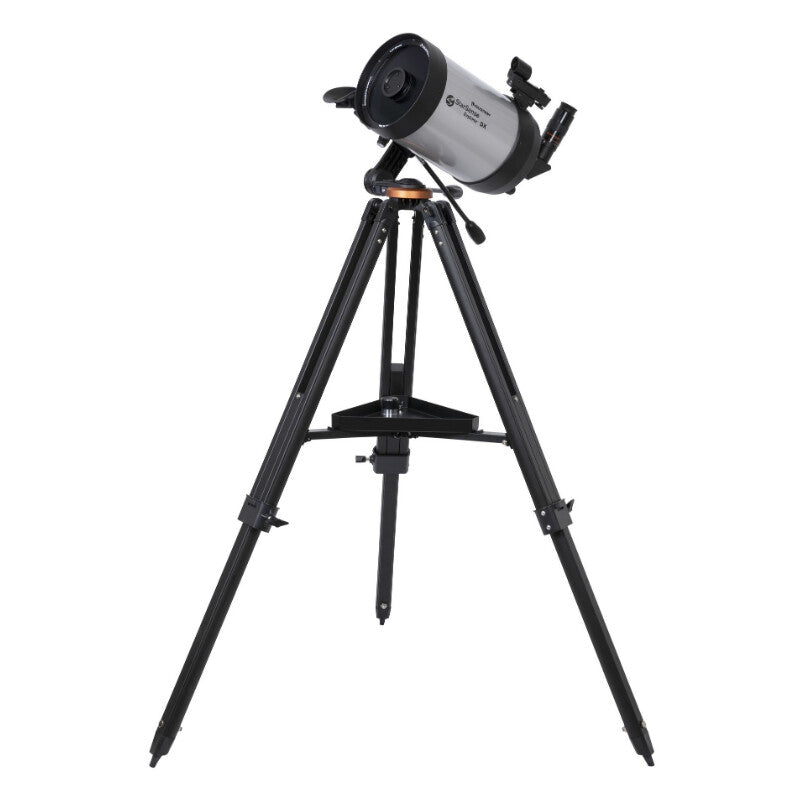
Schmidt-Cassegrain SC 150/1500 StarSense Explorer DX 6 AZ Telescope
Schmidt-Cassegrain SC 150/1500 StarSense Explorer DX 6 AZ Telescope
Couldn't load pickup availability
- SECURE PAYMENT
- AVAILABLE ON REQUEST
- ESTIMATED DELIVERY: 3 WEEKS
With the telescopes of the series With StarSense Explorer , anyone can easily find the best viewing objects in the sky—no star charts needed!
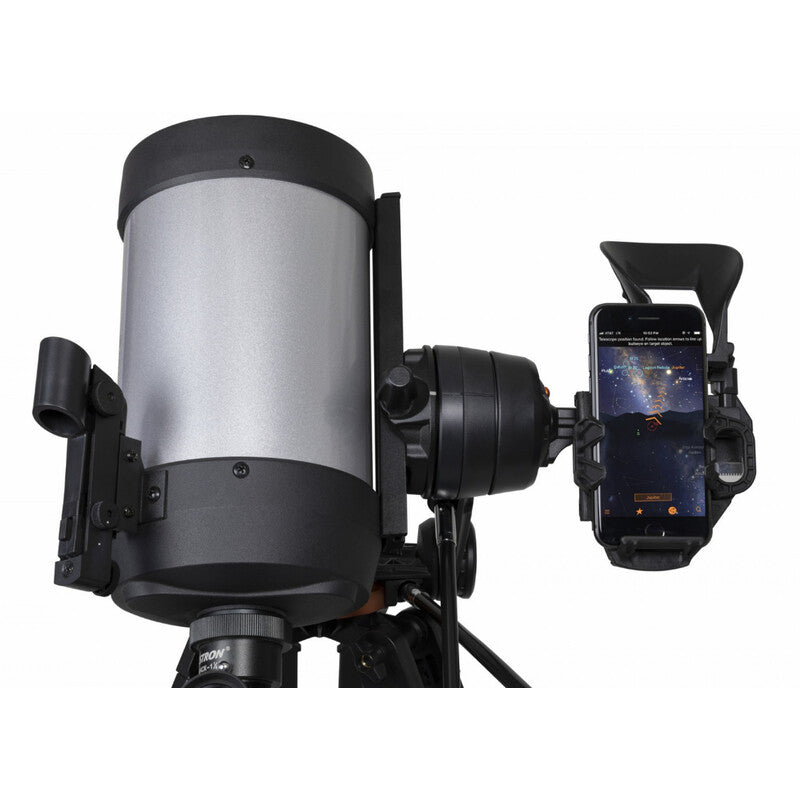
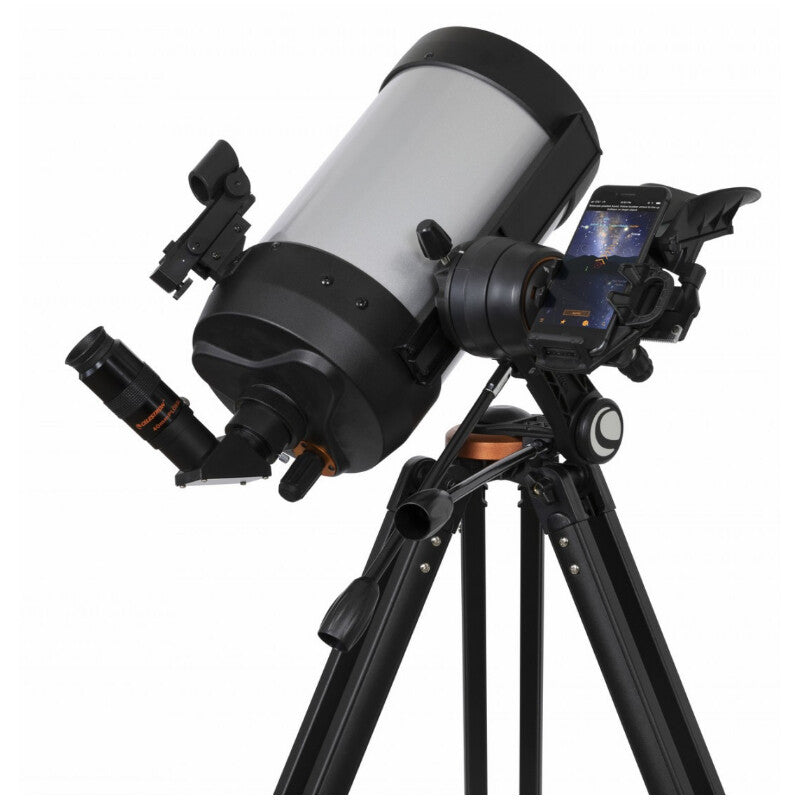
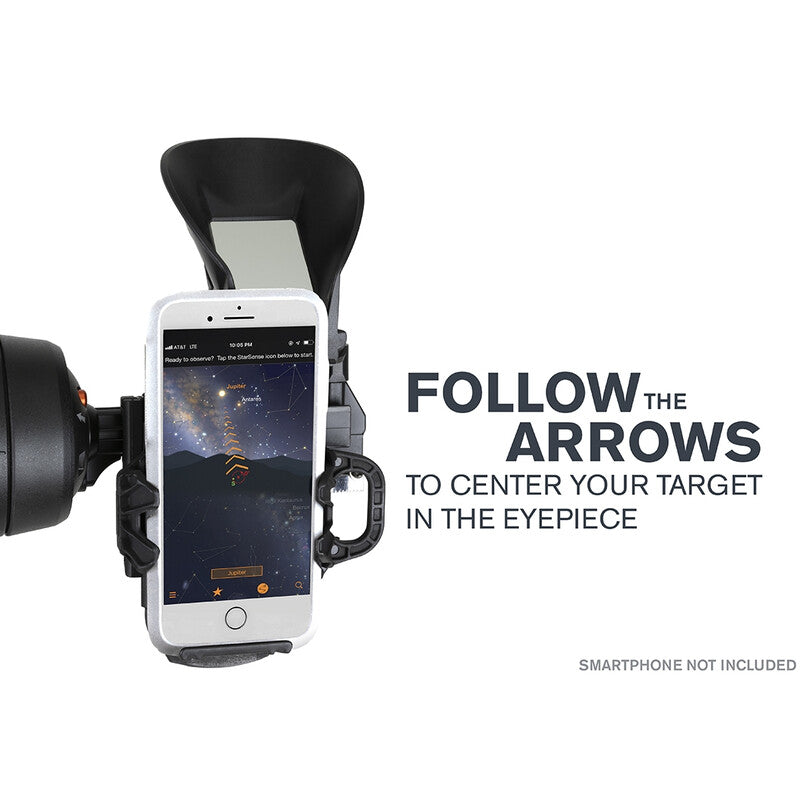
All you have to do is install the free StarSense Explorer app on your phone and place it in the special telescope holder.
After a brief procedure, the software will have learned where the telescope is and how it is positioned. To do this, the application uses the GPS from the phone. The app then displays a list of interesting objects that can be seen that night. When you select an object, arrows on your phone's screen show how the telescope should be rotated to align it with the celestial object. Alternatively, you can also scroll freely through the list. planetarium view to identify objects of interest.
No internet connection required During observation, you can't communicate with the telescope via Wi-Fi or Bluetooth. The phone recognizes the sky through the built-in camera and the mount's special mirror system. The app tells you what the camera sees and how to move the telescope to lock onto a desired object (PushTo).
The StarSense Explorer software uses a special algorithm (LISA), which is also used in the space satellites for orientation. Star patterns recorded by the camera are compared to the internal database. These calculations are combined with information from the phone's gyroscope and accelerometer. The result is a very high level of accuracy that no other planetarium app can match. So you can navigate safely at night, even without prior knowledge.
StarSense Explorer technology also works accurately where star maps fail: in the suburban sky with light pollution . Even here, the StarSense Explorer safely guides you to planets, double stars, the Orion Nebula, or other fascinating objects.
StarSense Explorer can be used with the Android and iOS operating systems . The exact requirements and a list of tested phones can be found at this link: starsenseexplorer.simcur.com
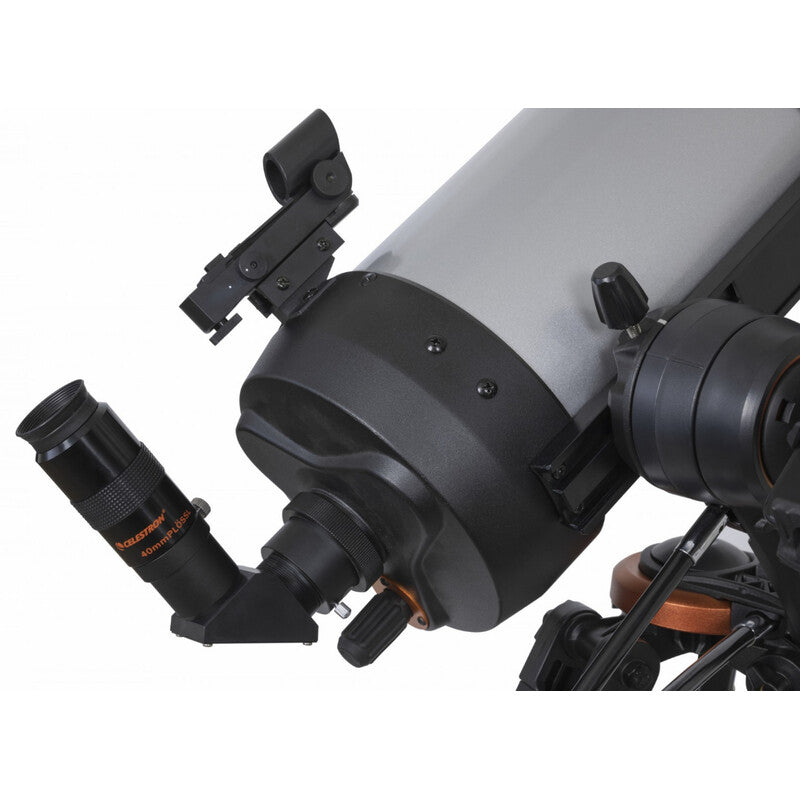
The telescope can also be used without a phone, as a finderscope is included in the scope of delivery.
Celestron Schmidt-Cassegrain Optics:
Despite the long focal length of Schmidt-Cassegrain optics, these telescopes have a very short tube design , resulting in a compact and extremely light or, that It can be easily transported . The light hits an aspherical Schmidt corrector plate and is then projected onto the spherical primary mirror. This reflects it onto a secondary mirror, which in turn reflects it back onto the primary mirror. The light beam passes through the hole in the center of the primary mirror. The light is then projected onto the focuser at the lower end of the tube. the system is closed and is free from air turbulence, which could damage the image. Of course, this also provides optimal protection against dust. The Schmidt plate is multi-coated, ensuring bright, glare-free images.
This optic offers a Very good image and the contrast and sharpness are great. to enjoy planetary observation. The Schmidt-Cassegrain system is an all-rounder for observation and photography , and includes a huge range of optional accessories. As seen from the lower end of the tube easy to point the telescope . This instrument is also ideal for occasional terrestrial applications, such as bird watching at short distances. Celestron's SC optics are designed for a diameter ratio of approximately 1:10, so it can also be used for astronomical photography .
He primary mirror focus It guarantees a very wide focusing range, allowing the use of almost any accessory. Two positions are used in the positioning mechanism for focusing the main mirror. preloaded ball bearings to minimize mirror shifting (a typical problem when using single bushings). The use of High-quality materials , such as CNC-machined aluminum, cast steel, and stainless steel components, ensure high stability at a low weight; therefore, a heavy mount is not required, unlike other telescope designs.
Optical features:
- long focal length with a short frame
- lightweight aluminum tube
- high-quality Starbright XLT multi-coating
- closed system
- preloaded ball bearings focus the primary mirror with minimal displacement.
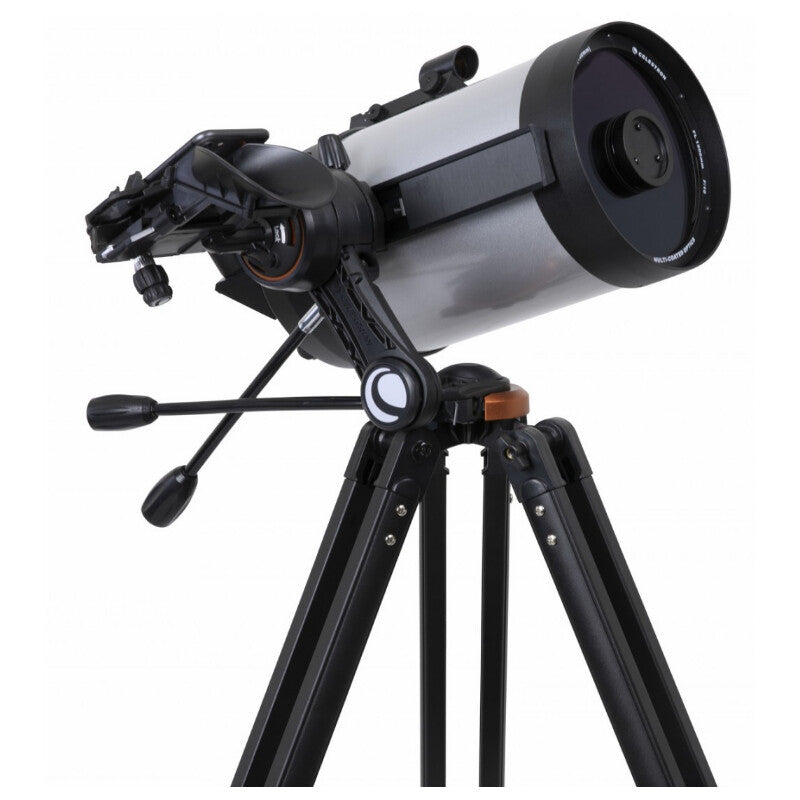
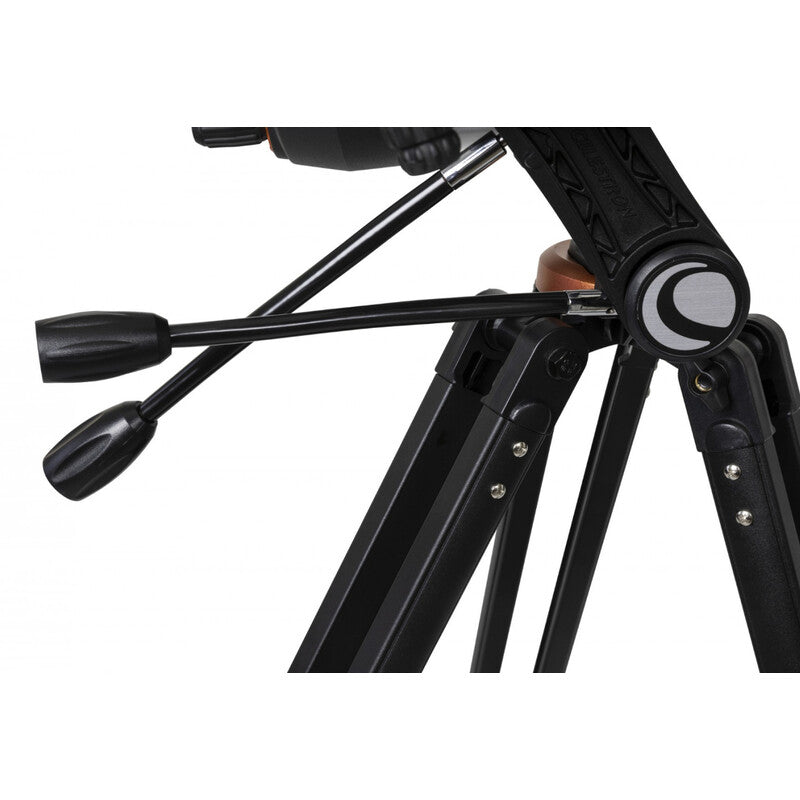
This azimuth mount allows you to move the telescope and align it towards the desired celestial object in a very intuitive way.
Specs
- Type: Reflector
- Construction type: Schmidt-Cassegrain
- Opening (mm): 150
- Focal length (mm): 1500
- Aperture ratio (f/) 10
- Resolution capacity: 0.92
- limit value (mag): 12.7
- Light collecting capacity: 460
- Maximum useful magnification: 300
- Tube weight (kg): 4.54
- Tube diameter (mm): 184.2
- Tube length (mm): 406
- Tube material: Aluminum
- Bonus: Starbright XLT
- Main mirror design: spherical
- Secondary mirror design: spherical
- Secondary mirror obstruction: 37
- Secondary mirror diameter (mm): 56
- Focuser: primary mirror focus
- Connection (eyepiece side) 1.25
- Rotary: Undefined
Mount
- Construction type: one arm
- Mount type: altazimuth
- Mounting easel: Vixen-Style
- Motors: no
- Weight (kg): 4.2
- GoTo: PushTo
- GPS: Yes
- Wi-Fi: no
- Alignment Process: StarSense Explorer
- Type: Tripod
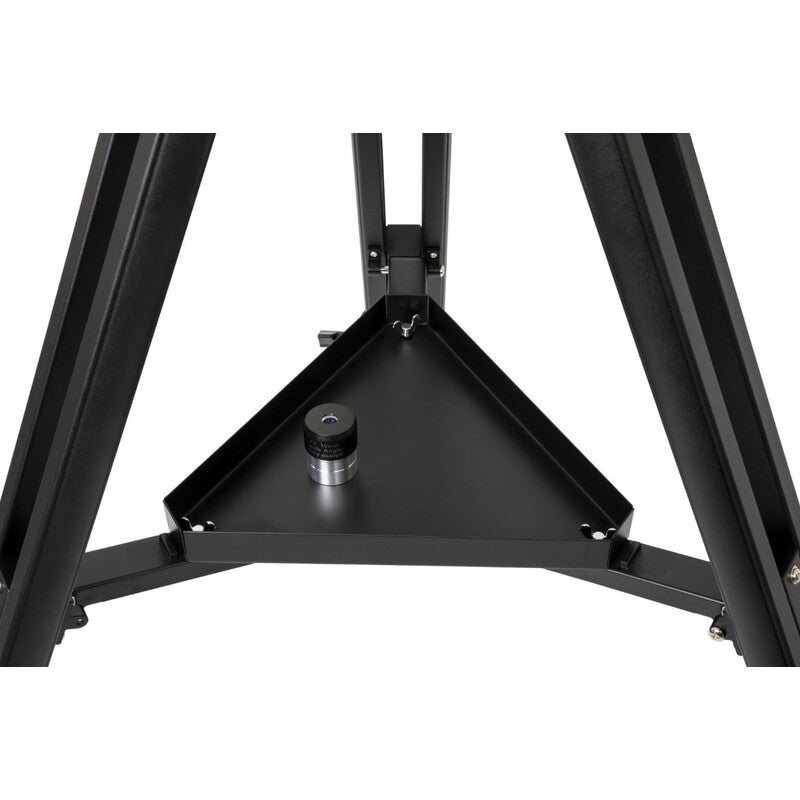
- Accessory shelf: yes
- Weight (kg): 1.72
- Material: Aluminum
Included accessories
- 1.25" eyepieces: 40mm, 10mm
- Viewfinder telescope: Luminous dot viewfinder
- Dew shield: no
- Optical Deflection System: 1.25" - 90° Zenith Prism
- Flexible shaft: 2
Applications
- Professional astrophotography: no
- Moon and planets: yes
- Nature observation: no
- Nebulae and galaxies: yes
- Sun: no (only with appropriate sunscreen)
⚠️ NOTAS DE ADVERTENCIA
GAFAS PARA LA OBSERVACIÓN DE ECLIPSE
- INSTRUCCIONES: Revise antes de cada uso. No utilice ni deseche si está dañado, rasgado, perforado o separado de alguna manera del marco. No lo use con otros dispositivos ópticos. No es un juguete. Los niños deben usarlo solo bajo la supervisión de un adulto. Limítese a 3 minutos de uso continuo, con interrupciones durante varias horas. No se mueva mientras usa este producto, no conduzca un vehículo ni opere maquinaria. No lo use si tiene un ojo enfermo o después de una operación ocular.
- ADVERTENCIA: Nunca mire directamente al sol sin protección ocular especial. Siempre use gafas de eclipse al observar el eclipse solar, especialmente si una parte del sol es visible. Mirar directamente al sol puede causar daños permanentes si no se toman las precauciones adecuadas. Se debe usar protección ocular adecuada, diseñada específicamente para la observación solar, para evitar que los rayos dañinos del sol lleguen a los ojos. Deséchelo después de 3 años y no lo utilice después de ese tiempo.
OBSERVACIÓN SOLAR CON TELESCOPIO
- Nunca mire al sol a través de un ocular/telescopio sin un filtro de protección verificado. Un filtro lunar nunca puede usarse para la observación solar. El filtro lunar solo es adecuado para la observación de la luna. El filtro solar debe montarse en la apertura del telescopio, no en el ocular. De lo contrario, el rayo de luz concentrado por la óptica destruirá inmediatamente la película del filtro, lo que provocará daños oculares graves e incluso ceguera total.
- Revise el filtro solar antes de cada observación solar y asegúrese de que no esté dañado. Manténgalo frente a una fuente de luz intensa para poder detectar posibles grietas y/o agujeros. No use el telescopio para la observación solar, incluso si el filtro solar está solo ligeramente dañado. En este caso, comuníquese con el fabricante para obtener las piezas de repuesto correspondientes.
- Siempre use el filtro solar cuando observe el sol. Asegúrese de que este filtro esté colocado correctamente en el telescopio según las instrucciones. El uso del filtro solar está destinado únicamente para su uso con este telescopio.
- Revise el ajuste del filtro solar antes de cada observación solar. Si se suelta accidentalmente de la abertura del objetivo, esto puede causar daños oculares inmediatos y permanentes, e incluso ceguera.
- Si el filtro solar no puede montarse de manera suficientemente firme en el tubo, mejore el ajuste colocando varias tiras de fieltro autoadhesivas o similares entre el filtro solar y la abertura del objetivo. Nunca use el filtro solar si no puede colocarse correctamente en el telescopio. En tal caso, siempre contacte primero con nuestro servicio al cliente.
- Tenga mucho cuidado al observar el sol. Incluso una mirada corta a través de la óptica sin protección puede causar daños oculares graves e incluso ceguera total.
- Los niños, incluso con el filtro montado correctamente, no deben mirar al sol a través del telescopio. Nunca deje a los niños sin supervisión.
- Nunca deje la óptica sin supervisión. Los niños y los adultos inexpertos podrían dirigir el telescopio hacia el sol sin las precauciones adecuadas y perder la vista.
- No realice observaciones solares sin la consulta previa de un médico después de una operación ocular o cualquier otra enfermedad ocular.
- Las ondas/pliegues en la película son normales y no constituyen un defecto del producto.
- No exponga el dispositivo a altas temperaturas.
ADVERTENCIAS Y SEGURIDAD DE LAS PILAS
- NO USE pilas falsas en los productos. Use solo las pilas proporcionadas. Use la pila EXCLUSIVAMENTE para el propósito previsto.
- Guarde las pilas fuera del alcance de los niños y mascotas.
- NO USE pilas que parezcan tener la carcasa dañada, inflada o modificada. No use pilas que hayan goteado, huelan, estén hinchadas o derretidas o presenten abolladuras, óxido, grietas o rayones.
- La pila NO debe ser desmontada, aplastada, perforada, triturada ni manipulada de ninguna otra forma.
- La pila NO debe exponerse a líquidos.
- No debe intentar secar una pila mojada o húmeda con un dispositivo o fuente de calor.
- El dispositivo o la pila NO deben ser colocados cerca de una fuente de calor o bajo la luz solar directa.
- La pila NO debe tocar objetos metálicos.
- La pila NO debe ser almacenada junto a materiales peligrosos o inflamables. Guarde la pila en un lugar fresco, seco y bien ventilado.
- La pila NO debe insertarse incorrectamente al cargarla.
- La pila NO debe cargarse bajo luz solar directa ni a temperaturas extremas. Cárguela a temperatura ambiente (20 °C – 26 °C).
- Evite dejar caer la pila o el producto. Si sospecha que la pila está dañada, reemplácela.
- Nunca deje su dispositivo conectado a la corriente más de 24 horas. Deje que la pila se agote y luego recárguela.
- Para obtener los mejores resultados, reemplace las pilas según el uso después de 12 meses o antes.
- Siga las regulaciones locales para la eliminación de las pilas usadas. NO arroje la pila al fuego ni al agua.
Telescope accessories
-

Astronomy cameras
Astronomy cameras , specially designed to capture images from space, offer several...
-

Alignment Accessories
Collimation is the exact orientation of the optics within a telescope. It...


