
Planetary alignment of February 28, 2026: six planets visible after sunset
On February 28, 2026, one of the year's most remarkable astronomical events will take place: a rare planetary alignment in which six planets of the Solar System will be visible in the evening sky shortly after sunset. A true planetary parade that combines spectacularity, accessibility, and great interest for both amateur and experienced observers.
What is a planetary alignment?
A planetary alignment occurs when several planets appear to be in the same region of the sky, roughly following the ecliptic, the apparent path of the Sun. This is not a perfect physical alignment in space, but rather an effect of perspective from Earth. Even so, seeing so many planets simultaneously is rare.

This is how the planetary alignment of February 28 looks from above the plane of the Solar System. Credit: Vito Technology, Inc.
Which planets will be visible?
During this event, the following will be visible:
At first glance
- Venus (very bright and easy to identify)
- Jupiter (intense and dominant in the sky)
- Saturn (steady light, yellowish tone)
- Mercury (the most difficult, very low on the horizon)
With optical aid
- Uranus (binoculars required)
- Neptune (powerful binoculars or telescope)
This combination makes the alignment especially interesting, as it brings together inner and outer planets in a single observing session.
When and how to observe it
- Main date: February 28, 2026
- Best time: approximately 1 hour after sunset
- Visibility window: from late February to early March, depending on the location
The event is in the afternoon, which is unusual and very favorable, since it does not require getting up early or watching in the early hours of the morning.
Where to look in the sky
- West / Southwest: Mercury, Venus, Saturn and Neptune
- Higher towards the southwest: Uranus
- East/Southeast: Jupiter, accompanied by a nearly full moon, which will add spectacularity to the scene.
The planets will form a smooth arc across the sky, making it easier to locate them gradually.
Observation tips from Astro Telescopes
- Start observing as soon as it gets dark
- Look for a place with a clear western horizon
- Use astronomical binoculars or a telescope for Uranus and Neptune
- Don't delay the observation: Mercury sets quickly
- Identify the planets because they do not twinkle, unlike the stars.
- For safety, avoid pointing instruments near the sun.
An unmissable astronomical event
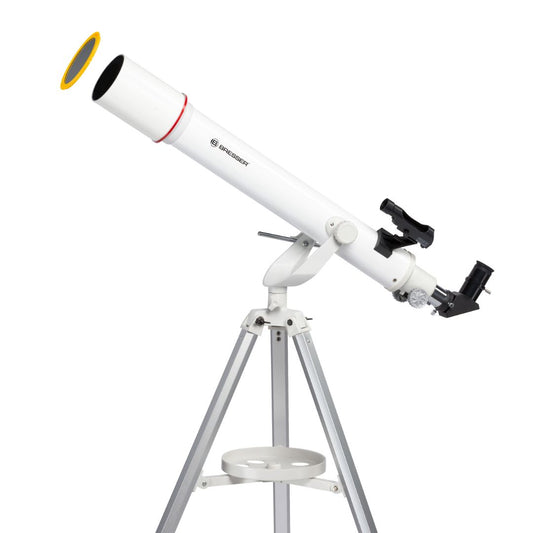
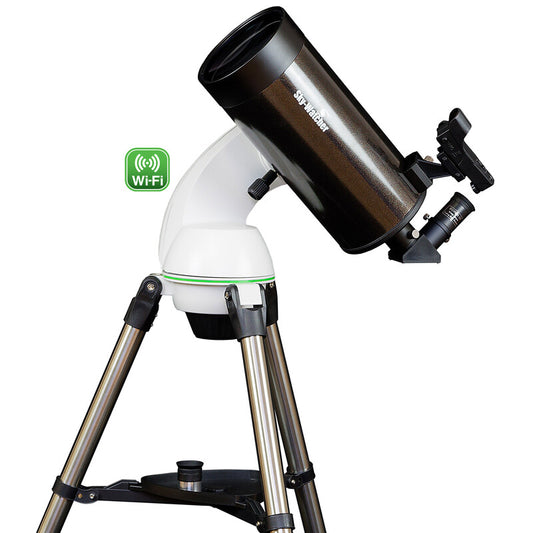
The planetary alignment of February 28, 2026, is an exceptional opportunity to enjoy the sky, learn to recognize the planets, and get the most out of your astronomical observation equipment. At Astro Telescopios, we recommend preparing for your session in advance and, if possible, combining it with a guided observation using binoculars ora telescope .
🌌 Clear skies and good viewing. Events like this remind us why looking at the sky remains a unique experience.