

Hotech
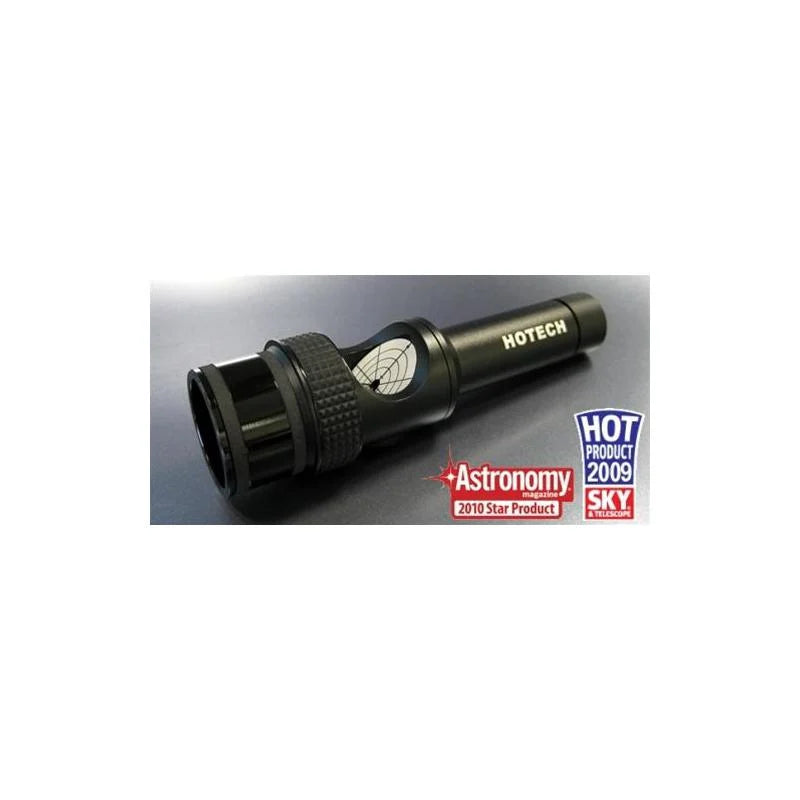
Hotech SCA laser collimator
Hotech SCA laser collimator
Couldn't load pickup availability
- SECURE PAYMENT
- AVAILABLE ON REQUEST
- ESTIMATED DELIVERY: 3 WEEKS
Hotech laser collimator - To collimate the telescope without problems
Imagine this: You are observing the stars through the telescope but you feel that something is not right... What is happening? Why can't the stars be seen clearly? Jupiter... Yes, there is something strange - the images do not have good contrast. Although the night is clear you are not enjoying the observation. Obviously it has to do with the telescope not being perfectly collimated... And to correct this, what better than a laser collimator?
The laser that focuses itself
Some simple laser collimators move inside the eyepiece holder. This does not happen with the Hotech collimator. Thanks to its design, it centers itself, thus avoiding unwanted movements. It also does not have to be screwed to the eyepiece holder. Screwing the collimator to the eyepiece holder may result in damage to the eyepiece holder. This problem is also solved with the Hotech laser collimator
It is possible to collimate the telescope once it is placed on the mount, parallel placement of the collimator is guaranteed.
Advantages:
- Precise collimation: self-centering laser
- the laser remains parallel without moving
- very fine laser pointer
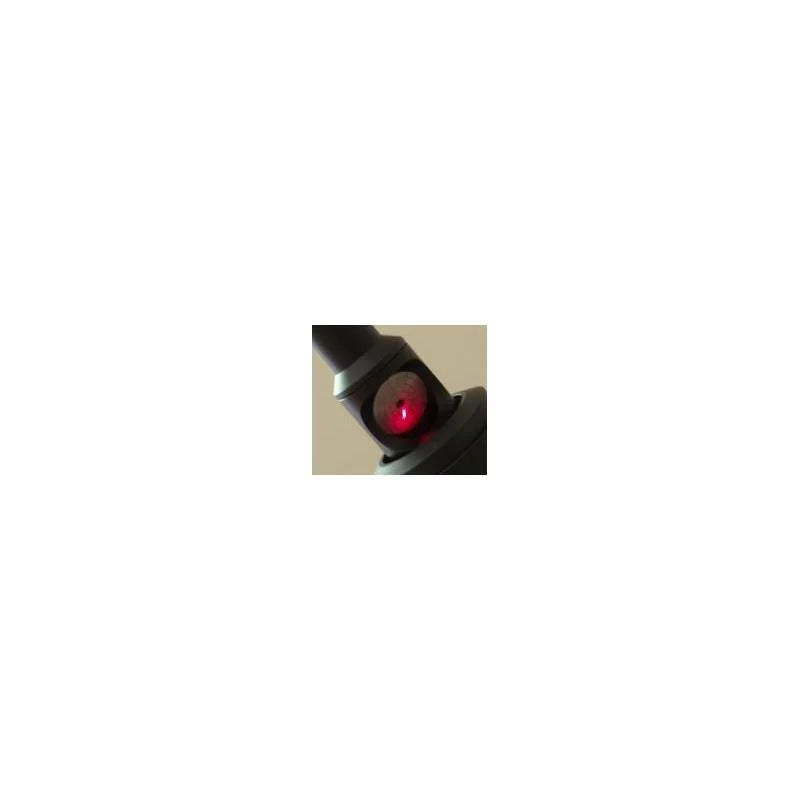
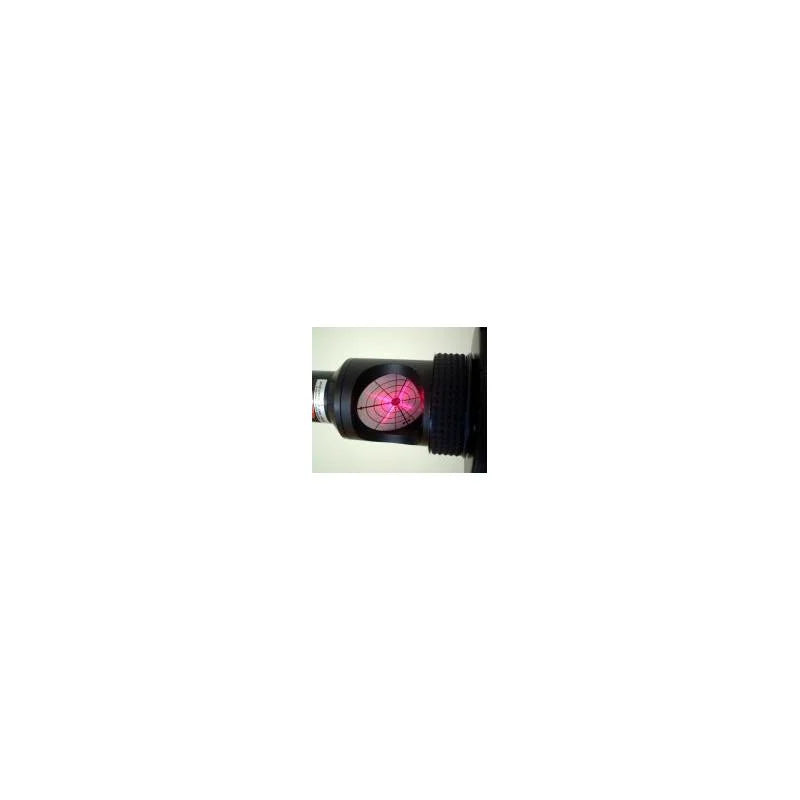
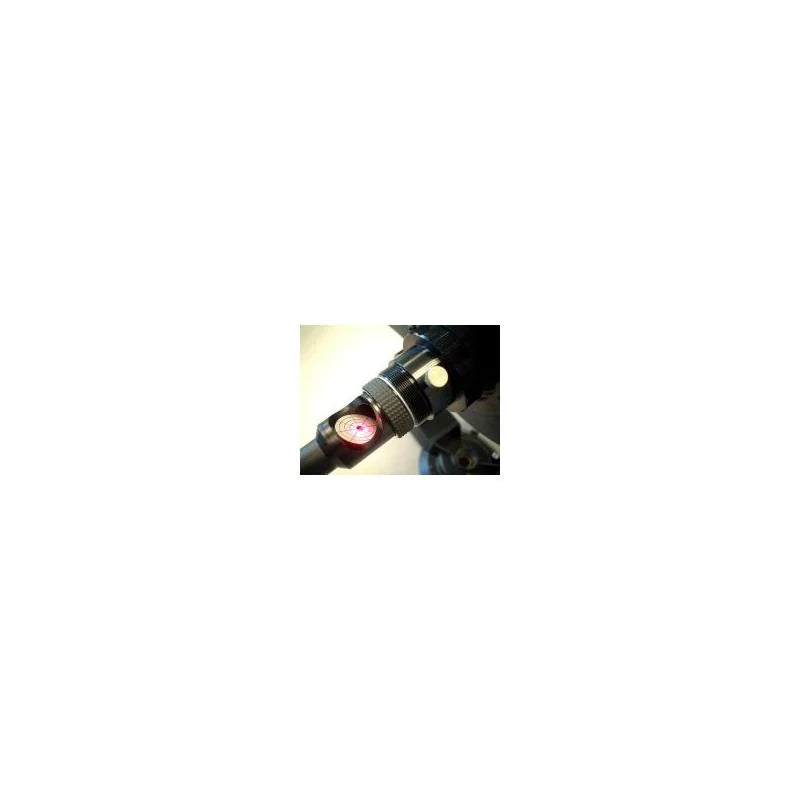
- 45° projection panel for easy collimation
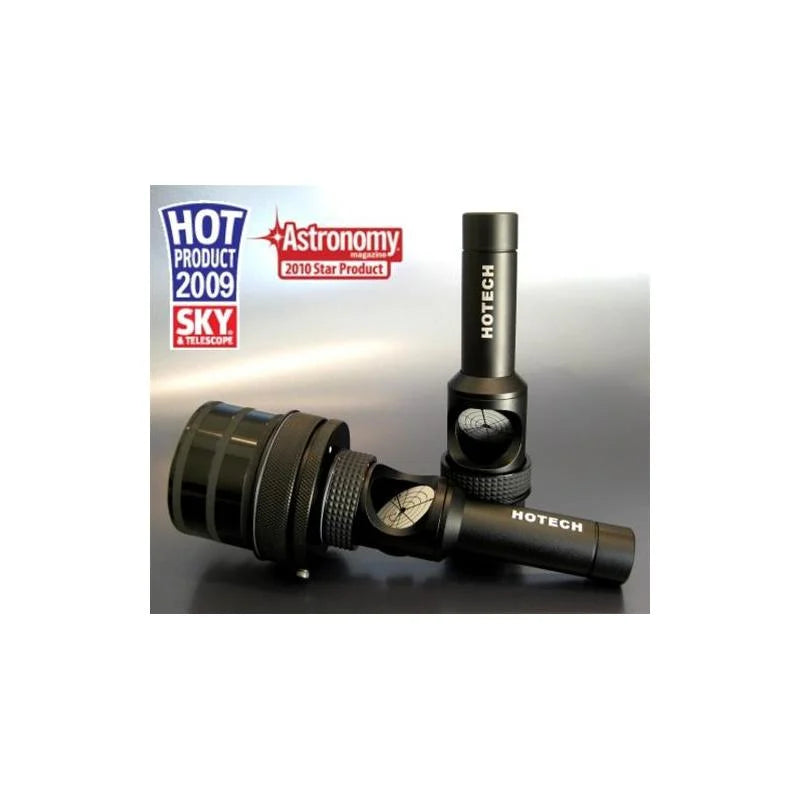
- The 2" version includes a 2" adapter that also centers itself
- Available in two sizes: 1.25“ or 2“ (see product description)
- long lifespan: 3V battery
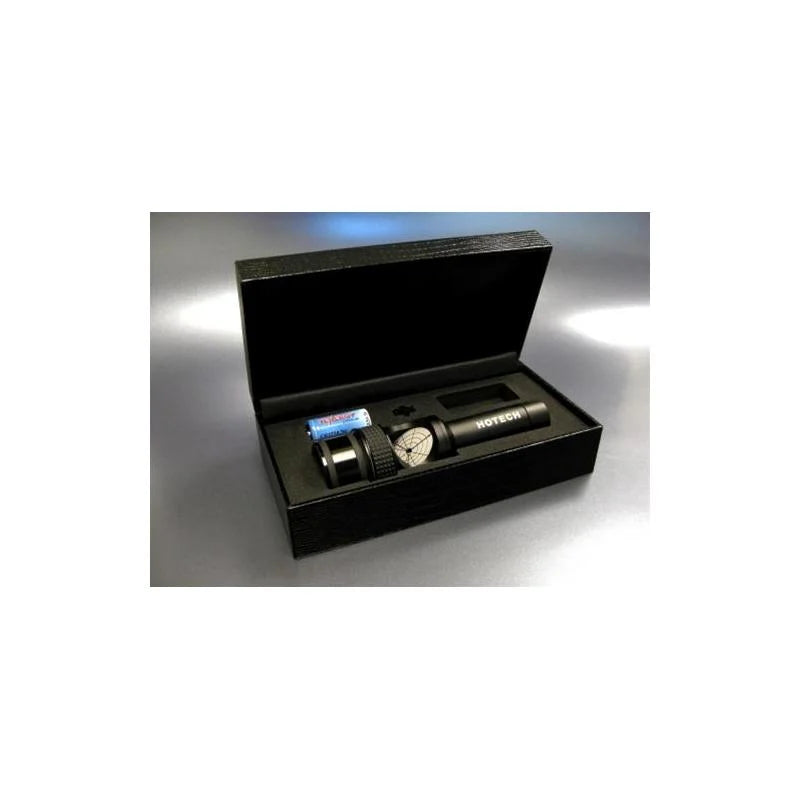
- includes case
Reticle
The Hotech laser has a reticle that is projected on the panel. When the laser pointer disappears into the central hole of the collimator, the reticle allows precise corrections to be made in the collimation.
HOTECH SCA Laser Collimator with Automatic Centering Adapter (SCA)
The HoTech laser collimator is differentiated from its competitors by its automatic centering (SCA) technology. This mechanism can be installed (repeatedly) on any 1.25" and 2" focuser providing precision results. All collimators on the market have a drawback: precision is lost throughout the optical axis when securing the collimator due to the gap necessary for its installation. This problem is known to all astronomers and although it is often a topic of debate, no definitive solution has yet been found. The self-centering adapter eliminates focuser gap or applies linear compression to the integrated rubber rings. In this way, the diameter of the rings expands, compensating for the gap. As the diameter of all the rings expands accordingly, the collimator is centered in the focuser tube. Additionally, the SCA laser collimator can attach firmly to the focuser to provide accurate collimations time and time again.
In summary: The SCA adapter has three main functions: 1st. Their rings are capable of adapting almost all available models. 2nd. Keeps the collimator centered. 3rd. It provides at least two circular support points on the surface of the inner tube of the focuser, thus preventing the laser from rotating or moving, always keeping it parallel to the focuser. Once the gap problem is solved, the telescope can be collimated quickly and always obtaining good results.
Problem solved thanks to SCA technology
- SCA eliminates the gap in the focuser tube
All tubes have a certain factory tolerance. A larger tube diameter is needed to achieve greater compatibility with different models of eyepieces and adapters. When inserting a standard collimator, the gap between the tube and the insert creates a problem. The rubber rings on the SCA adapter expand radially to cover the gap. This keeps the collimator firmly in the tube, integrating into the telescope and being able to provide good results time and time again.
- SCA keeps the laser parallel to the focuser
The patented expander rings provide 360º attachment to the inner surface of the focuser thanks to its competent design. This keeps the laser completely parallel to the focuser tube thus eliminating any unwanted movement present in the conventional fixation method.
- SCA eliminates the problems of unstable fixation
The optical axis moves when the insertion system is secured with a thumbscrew. In other cases, a poorly made compression ring can cause the system to rotate. The SCA system achieves better results without the need for screws or a unified compression ring.
- SCA compensates for the imperfection of the focusing tubes
The small imperfections present in the focuser tubes are compensated by the rubber rings, thus achieving greater centering of the collimator. Even if the diameter of the tube is deformed and not perfectly round. Only a rubber ring can take another shape to compensate for the imperfection.
Specifications
Ability
In general
⚠️ NOTAS DE ADVERTENCIA
GAFAS PARA LA OBSERVACIÓN DE ECLIPSE
- INSTRUCCIONES: Revise antes de cada uso. No utilice ni deseche si está dañado, rasgado, perforado o separado de alguna manera del marco. No lo use con otros dispositivos ópticos. No es un juguete. Los niños deben usarlo solo bajo la supervisión de un adulto. Limítese a 3 minutos de uso continuo, con interrupciones durante varias horas. No se mueva mientras usa este producto, no conduzca un vehículo ni opere maquinaria. No lo use si tiene un ojo enfermo o después de una operación ocular.
- ADVERTENCIA: Nunca mire directamente al sol sin protección ocular especial. Siempre use gafas de eclipse al observar el eclipse solar, especialmente si una parte del sol es visible. Mirar directamente al sol puede causar daños permanentes si no se toman las precauciones adecuadas. Se debe usar protección ocular adecuada, diseñada específicamente para la observación solar, para evitar que los rayos dañinos del sol lleguen a los ojos. Deséchelo después de 3 años y no lo utilice después de ese tiempo.
OBSERVACIÓN SOLAR CON TELESCOPIO
- Nunca mire al sol a través de un ocular/telescopio sin un filtro de protección verificado. Un filtro lunar nunca puede usarse para la observación solar. El filtro lunar solo es adecuado para la observación de la luna. El filtro solar debe montarse en la apertura del telescopio, no en el ocular. De lo contrario, el rayo de luz concentrado por la óptica destruirá inmediatamente la película del filtro, lo que provocará daños oculares graves e incluso ceguera total.
- Revise el filtro solar antes de cada observación solar y asegúrese de que no esté dañado. Manténgalo frente a una fuente de luz intensa para poder detectar posibles grietas y/o agujeros. No use el telescopio para la observación solar, incluso si el filtro solar está solo ligeramente dañado. En este caso, comuníquese con el fabricante para obtener las piezas de repuesto correspondientes.
- Siempre use el filtro solar cuando observe el sol. Asegúrese de que este filtro esté colocado correctamente en el telescopio según las instrucciones. El uso del filtro solar está destinado únicamente para su uso con este telescopio.
- Revise el ajuste del filtro solar antes de cada observación solar. Si se suelta accidentalmente de la abertura del objetivo, esto puede causar daños oculares inmediatos y permanentes, e incluso ceguera.
- Si el filtro solar no puede montarse de manera suficientemente firme en el tubo, mejore el ajuste colocando varias tiras de fieltro autoadhesivas o similares entre el filtro solar y la abertura del objetivo. Nunca use el filtro solar si no puede colocarse correctamente en el telescopio. En tal caso, siempre contacte primero con nuestro servicio al cliente.
- Tenga mucho cuidado al observar el sol. Incluso una mirada corta a través de la óptica sin protección puede causar daños oculares graves e incluso ceguera total.
- Los niños, incluso con el filtro montado correctamente, no deben mirar al sol a través del telescopio. Nunca deje a los niños sin supervisión.
- Nunca deje la óptica sin supervisión. Los niños y los adultos inexpertos podrían dirigir el telescopio hacia el sol sin las precauciones adecuadas y perder la vista.
- No realice observaciones solares sin la consulta previa de un médico después de una operación ocular o cualquier otra enfermedad ocular.
- Las ondas/pliegues en la película son normales y no constituyen un defecto del producto.
- No exponga el dispositivo a altas temperaturas.
ADVERTENCIAS Y SEGURIDAD DE LAS PILAS
- NO USE pilas falsas en los productos. Use solo las pilas proporcionadas. Use la pila EXCLUSIVAMENTE para el propósito previsto.
- Guarde las pilas fuera del alcance de los niños y mascotas.
- NO USE pilas que parezcan tener la carcasa dañada, inflada o modificada. No use pilas que hayan goteado, huelan, estén hinchadas o derretidas o presenten abolladuras, óxido, grietas o rayones.
- La pila NO debe ser desmontada, aplastada, perforada, triturada ni manipulada de ninguna otra forma.
- La pila NO debe exponerse a líquidos.
- No debe intentar secar una pila mojada o húmeda con un dispositivo o fuente de calor.
- El dispositivo o la pila NO deben ser colocados cerca de una fuente de calor o bajo la luz solar directa.
- La pila NO debe tocar objetos metálicos.
- La pila NO debe ser almacenada junto a materiales peligrosos o inflamables. Guarde la pila en un lugar fresco, seco y bien ventilado.
- La pila NO debe insertarse incorrectamente al cargarla.
- La pila NO debe cargarse bajo luz solar directa ni a temperaturas extremas. Cárguela a temperatura ambiente (20 °C – 26 °C).
- Evite dejar caer la pila o el producto. Si sospecha que la pila está dañada, reemplácela.
- Nunca deje su dispositivo conectado a la corriente más de 24 horas. Deje que la pila se agote y luego recárguela.
- Para obtener los mejores resultados, reemplace las pilas según el uso después de 12 meses o antes.
- Siga las regulaciones locales para la eliminación de las pilas usadas. NO arroje la pila al fuego ni al agua.
Telescope accessories
-

Astronomy cameras
Astronomy cameras , specially designed to capture images from space, offer several...
-

Alignment Accessories
Collimation is the exact orientation of the optics within a telescope. It...


