
Levenhuk
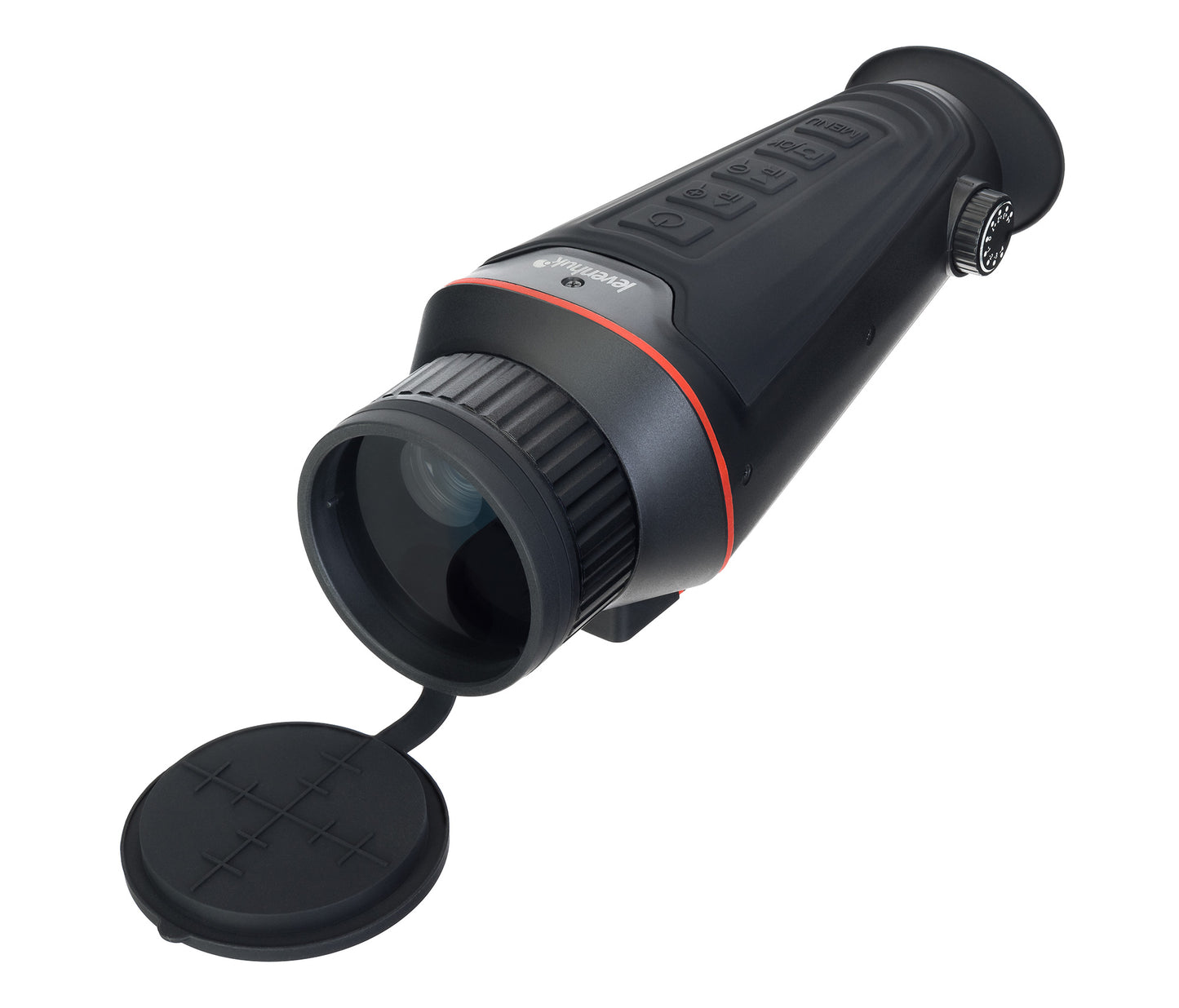
Levenhuk Halo 20x PLUS Digital Night Vision Monocular
Levenhuk Halo 20x PLUS Digital Night Vision Monocular
In stock
Couldn't load pickup availability
Levenhuk Halo 20X PLUS Digital Night Vision Monocular
For day and night observations. With a recorder. Magnification: 1–8x (digital). Objective lens diameter: 15 mm
The Levenhuk Halo 20X PLUS Monocular is designed for day and night observations. This miniature device has a variety of settings and will provide its owner with ample opportunities to work both in daylight and in complete darkness.
In addition to the standard color image in the daytime and black and white at night, you can get two more types of images using special visual effects: bright green and color film. You can also turn on the black and white mode for daytime observations. The monocular has a digital magnification that can be adjusted from 1 to 8x. The viewing angle is 10°; the monocular itself is quite miniature and has a small objective lens. The minimum working distance is 3 m.
The monocular has an enhanced night vision mode, which produces an image that is twice as bright as in the normal night vision mode. There are a total of 7 IR illuminator operating levels. The desired level is adjusted manually, depending on the amount of ambient light. In complete darkness, the operating range of the device reaches 250–300 m; in low light, there are no limits to the observation range.
The monocular has a built-in recorder for taking photos and videos both day and night. You can also apply visual effects to them. The captured results are saved on a microSD card: photos in JPG format and videos in AVI format. They can be viewed on the device itself or on a computer by inserting the memory card or connecting the monocular to the PC via a USB Type-C cable.
For nearsighted or farsighted users, the monocular has a diopter adjustment ring. For focusing at a certain distance, there is a focusing ring: these elements will help keep the image sharp and in focus. The body of this model is made of plastic and metal and covered with a silicone film. The IP54 protection rating means that the device can be used in dusty areas and near water splashes. The monocular can be used at ambient temperatures from –20 to +50 °C; the storage temperature ranges from –30 to +60 °C.
It runs on a built-in rechargeable battery. It is charged via USB Type-C. The charging process will be reflected on the indicator: if the indicator is red, the device is charging, and if the indicator is off, the device is fully charged and ready for use. A full charge will last 13 hours of operation in daytime mode and 5 hours with the IR illumination on. It has an automatic shut-off function.
Observations: IR (infrared radiation) illumination can be detected by photo and video cameras, as well as other similar electronic devices during operation.
Key features:
The night vision device produces a color image during the day and a black and white image at night; there are additional visual effects ("glowing green", "color film")
Variable digital zoom, 1 to 8x
It has 7 levels of IR illuminator operation, depending on the lighting of the working area
The working distance in complete darkness reaches 250–300 m, unlimited in low light
There is a built-in recorder for taking photos and videos
The built-in rechargeable battery provides up to 13 hours of operation during the day and up to 5 hours with the IR illuminator on
The kit includes:
Digital night vision monocular
Rechargeable battery
USB Type-C cable
Pouch
Hand strap
User guide and warranty card
Specifications:
Night vision device type: monocular
Magnification, x: 1–8 (digital)
Objective lens diameter (aperture), mm: 15
Aperture: f/1.2
Angular field of view: 10°
Close focus, m: 3
Eyepiece diopter adjustment, D: +
Focusing mechanism: focusing ring
Detection range, m: 250–300 (in complete darkness); 1~∞ (at dusk and in daylight)
Image intensifier: digital
CCD, CCIR array: color CMOS
Display resolution, pixels: 390x390
Display: 1:01
Diagonal: 1.4"
Built-in recorder: +
Video format: AVI
Video resolution: 4K, FHD, HD, 360P
Photo format: JPG
Photo resolution: 36M, 12M, 8M, 5M, 3M, 2M, 1M, 360P
Memory card: microSD up to 32 GB
IR illuminator: +
Wavelength, nm: 850
IR illuminator range, m: 250–300 (in total darkness); 1 ~ ∞ (in low light)
Voltage: 3.7 V
Power supply: 3600 mAh, 3.7 V lithium battery
Illuminator operating time with one set of batteries, hours: 5 (with IR illumination on), 13 (with IR illumination off)
Optics material: optical glass
Body: plastic, metal
IP protection rating (IEC 60529): IP54, dust and splash proof
Operating temperature range, °C: –20…+50
Threaded hole for tripod: +
Thread: 1/4"
Other features: 2 additional visual effects: bright green, infrared; 7 IR lighting levels; automatic shut-off function; anti-reflective coating based on silicon dioxide
⚠️ NOTAS DE ADVERTENCIA
GAFAS PARA LA OBSERVACIÓN DE ECLIPSE
- INSTRUCCIONES: Revise antes de cada uso. No utilice ni deseche si está dañado, rasgado, perforado o separado de alguna manera del marco. No lo use con otros dispositivos ópticos. No es un juguete. Los niños deben usarlo solo bajo la supervisión de un adulto. Limítese a 3 minutos de uso continuo, con interrupciones durante varias horas. No se mueva mientras usa este producto, no conduzca un vehículo ni opere maquinaria. No lo use si tiene un ojo enfermo o después de una operación ocular.
- ADVERTENCIA: Nunca mire directamente al sol sin protección ocular especial. Siempre use gafas de eclipse al observar el eclipse solar, especialmente si una parte del sol es visible. Mirar directamente al sol puede causar daños permanentes si no se toman las precauciones adecuadas. Se debe usar protección ocular adecuada, diseñada específicamente para la observación solar, para evitar que los rayos dañinos del sol lleguen a los ojos. Deséchelo después de 3 años y no lo utilice después de ese tiempo.
OBSERVACIÓN SOLAR CON TELESCOPIO
- Nunca mire al sol a través de un ocular/telescopio sin un filtro de protección verificado. Un filtro lunar nunca puede usarse para la observación solar. El filtro lunar solo es adecuado para la observación de la luna. El filtro solar debe montarse en la apertura del telescopio, no en el ocular. De lo contrario, el rayo de luz concentrado por la óptica destruirá inmediatamente la película del filtro, lo que provocará daños oculares graves e incluso ceguera total.
- Revise el filtro solar antes de cada observación solar y asegúrese de que no esté dañado. Manténgalo frente a una fuente de luz intensa para poder detectar posibles grietas y/o agujeros. No use el telescopio para la observación solar, incluso si el filtro solar está solo ligeramente dañado. En este caso, comuníquese con el fabricante para obtener las piezas de repuesto correspondientes.
- Siempre use el filtro solar cuando observe el sol. Asegúrese de que este filtro esté colocado correctamente en el telescopio según las instrucciones. El uso del filtro solar está destinado únicamente para su uso con este telescopio.
- Revise el ajuste del filtro solar antes de cada observación solar. Si se suelta accidentalmente de la abertura del objetivo, esto puede causar daños oculares inmediatos y permanentes, e incluso ceguera.
- Si el filtro solar no puede montarse de manera suficientemente firme en el tubo, mejore el ajuste colocando varias tiras de fieltro autoadhesivas o similares entre el filtro solar y la abertura del objetivo. Nunca use el filtro solar si no puede colocarse correctamente en el telescopio. En tal caso, siempre contacte primero con nuestro servicio al cliente.
- Tenga mucho cuidado al observar el sol. Incluso una mirada corta a través de la óptica sin protección puede causar daños oculares graves e incluso ceguera total.
- Los niños, incluso con el filtro montado correctamente, no deben mirar al sol a través del telescopio. Nunca deje a los niños sin supervisión.
- Nunca deje la óptica sin supervisión. Los niños y los adultos inexpertos podrían dirigir el telescopio hacia el sol sin las precauciones adecuadas y perder la vista.
- No realice observaciones solares sin la consulta previa de un médico después de una operación ocular o cualquier otra enfermedad ocular.
- Las ondas/pliegues en la película son normales y no constituyen un defecto del producto.
- No exponga el dispositivo a altas temperaturas.
ADVERTENCIAS Y SEGURIDAD DE LAS PILAS
- NO USE pilas falsas en los productos. Use solo las pilas proporcionadas. Use la pila EXCLUSIVAMENTE para el propósito previsto.
- Guarde las pilas fuera del alcance de los niños y mascotas.
- NO USE pilas que parezcan tener la carcasa dañada, inflada o modificada. No use pilas que hayan goteado, huelan, estén hinchadas o derretidas o presenten abolladuras, óxido, grietas o rayones.
- La pila NO debe ser desmontada, aplastada, perforada, triturada ni manipulada de ninguna otra forma.
- La pila NO debe exponerse a líquidos.
- No debe intentar secar una pila mojada o húmeda con un dispositivo o fuente de calor.
- El dispositivo o la pila NO deben ser colocados cerca de una fuente de calor o bajo la luz solar directa.
- La pila NO debe tocar objetos metálicos.
- La pila NO debe ser almacenada junto a materiales peligrosos o inflamables. Guarde la pila en un lugar fresco, seco y bien ventilado.
- La pila NO debe insertarse incorrectamente al cargarla.
- La pila NO debe cargarse bajo luz solar directa ni a temperaturas extremas. Cárguela a temperatura ambiente (20 °C – 26 °C).
- Evite dejar caer la pila o el producto. Si sospecha que la pila está dañada, reemplácela.
- Nunca deje su dispositivo conectado a la corriente más de 24 horas. Deje que la pila se agote y luego recárguela.
- Para obtener los mejores resultados, reemplace las pilas según el uso después de 12 meses o antes.
- Siga las regulaciones locales para la eliminación de las pilas usadas. NO arroje la pila al fuego ni al agua.