Skip to product information
1 of 8

Sky-Watcher

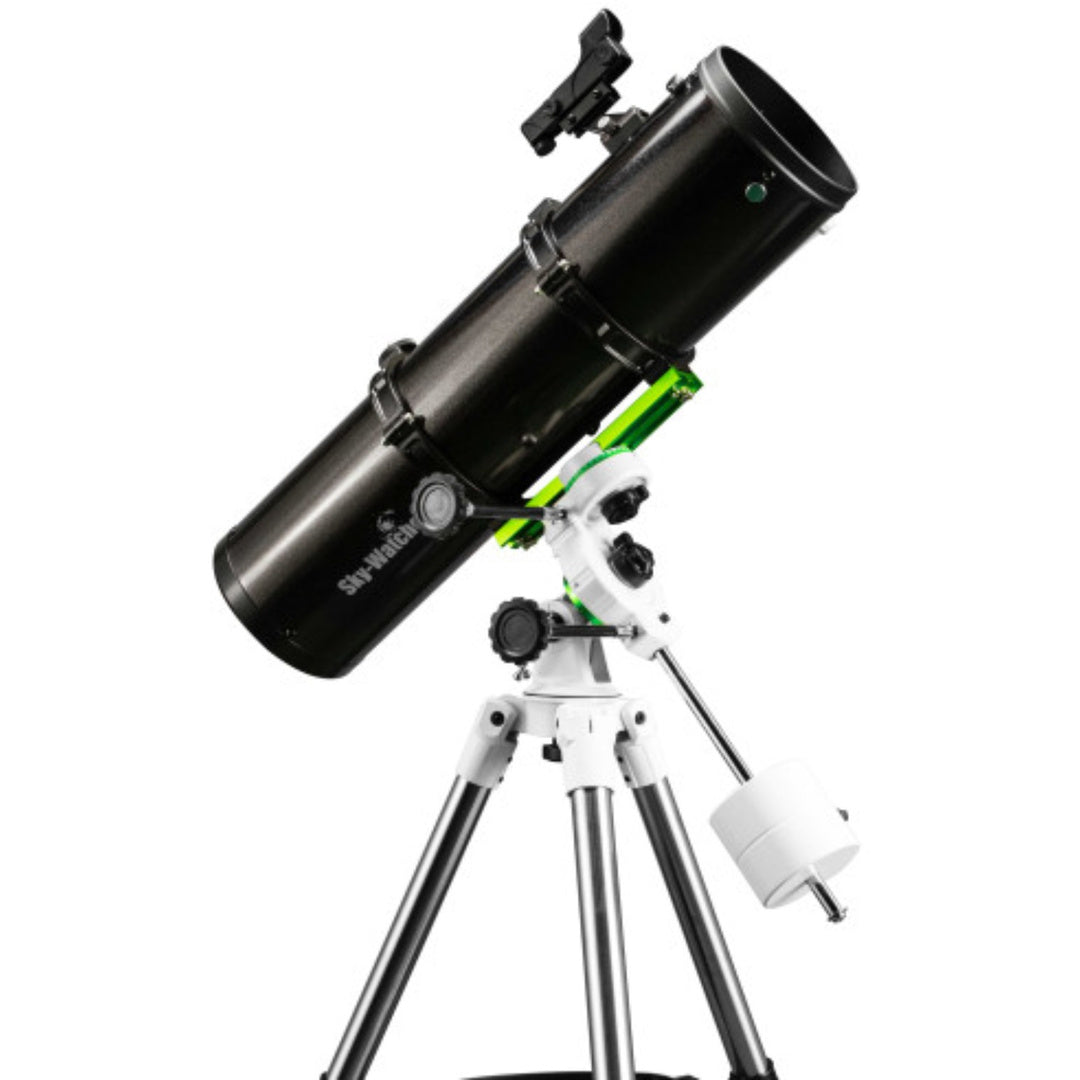
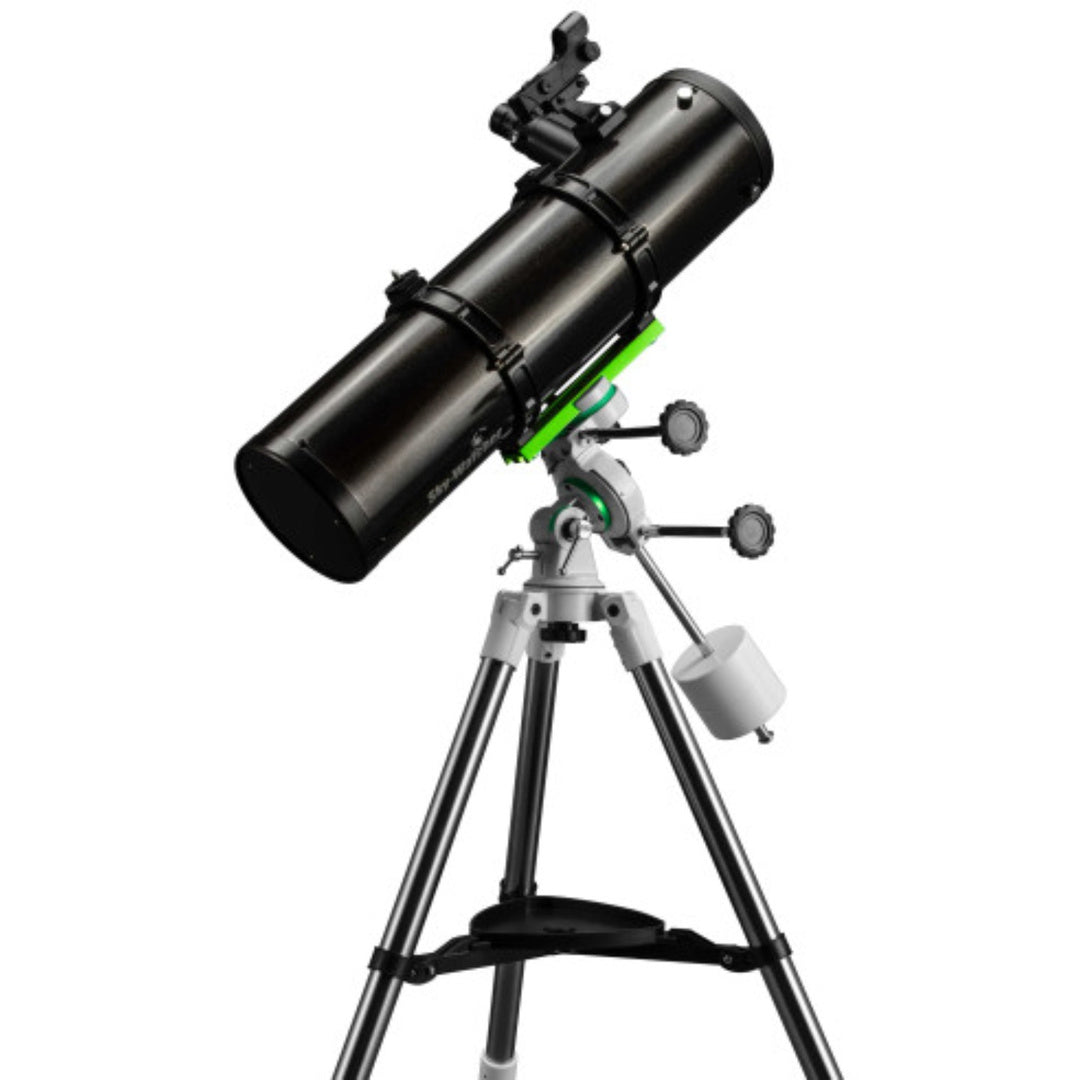
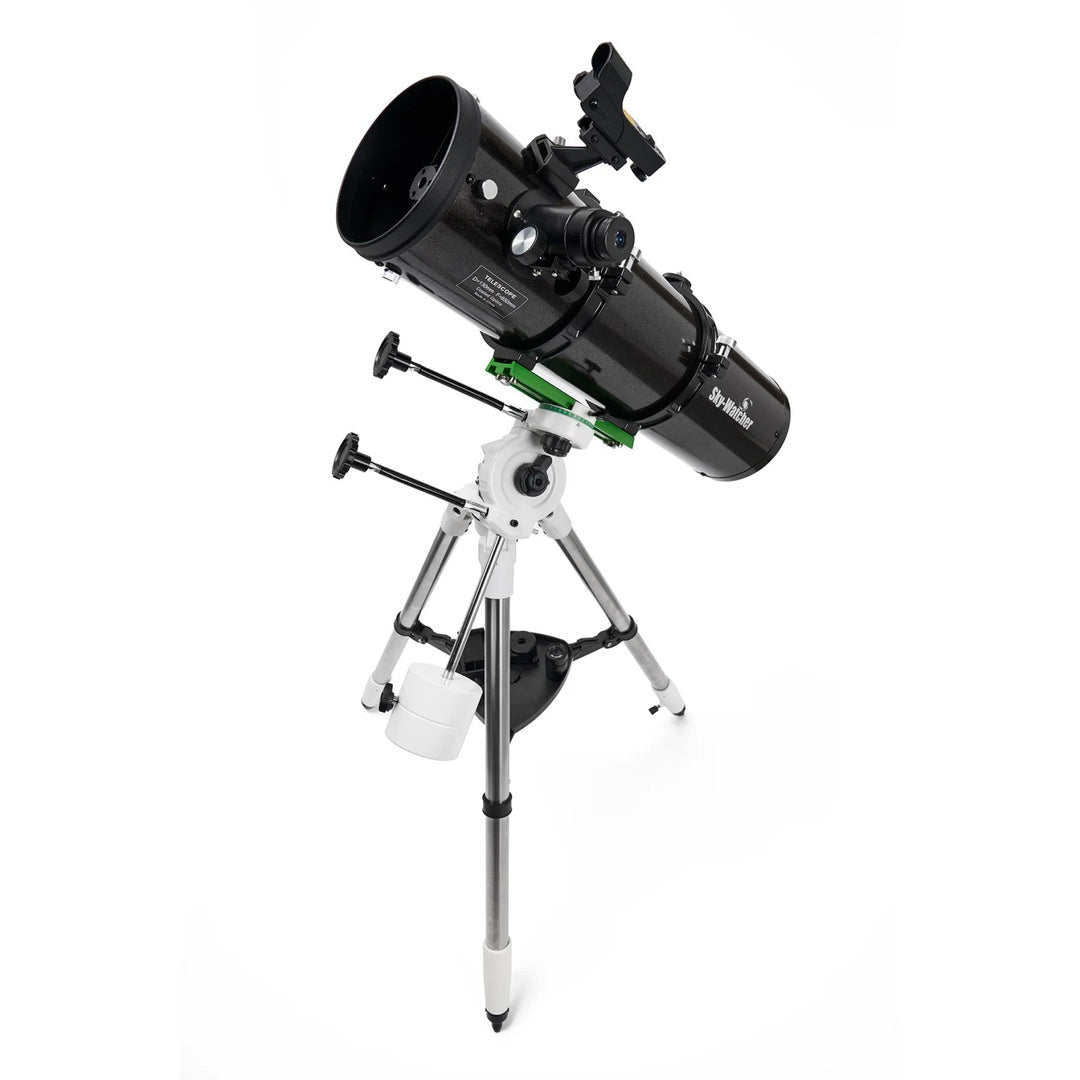
SkyWatcher 130/650 StarQuest DX Telescope

SkyWatcher 130/650 StarQuest DX Telescope

Regular price €338,00
Regular price Sale price €338,00
Sale Sold out
Taxes included. Shipping calculated at checkout.
Quantity
  • SECURE PAYMENT
  • AVAILABLE ON REQUEST
  • ESTIMATED DELIVERY: 3 WEEKS

Product Description

The Sky-Watcher 130/650 StarQuest DX is a very comprehensive entry-level Newton reflector telescope, designed for those who want to take their first steps in astronomy with high-performance optics and a stable, precise equatorial mount.

Its 130 mm diameter parabolic primary mirror offers sufficient light-gathering capacity to enjoy a wide variety of celestial objects. With a focal length of 650 mm and a focal ratio of f/5, it provides a wide field of view that is particularly interesting for observing star clusters, nebulae, and other deep-sky objects, while maintaining good performance on the Moon and planets.

130 mm Newton Optics

The telescope uses a fully collimatable parabolic primary mirror. Its primary and secondary mirrors feature a Radiant Aluminium Quartz (RAQ) coating, designed to provide reflectivity of up to approximately 94% and good durability of the optical surfaces.

The combination of 130 mm aperture and 650 mm focal length makes this model a very versatile piece of equipment for getting started in astronomical observation.

With the two included eyepieces, you get:

- 20 mm eyepiece: 32.5x magnification.

- 10 mm eyepiece: 65x magnification.

Using additional eyepieces, other magnification configurations can be achieved depending on the object observed and atmospheric conditions.

New StarQuest DX Equatorial Mount

One of the main features of this model is its StarQuest DX Deluxe equatorial mount, an evolution of the StarQuest family that provides a more robust and stable platform for astronomical observation.

The mount has a load capacity of up to 5 kg and fine movement mechanisms on the right ascension and declination axes. The flexible controls allow for easy small adjustments and keep objects within the field of view during observation.

Once correctly oriented to the celestial pole, the apparent movement of the sky can be compensated by mainly operating the right ascension axis.

The StarQuest DX also incorporates graduated circles on both axes and a Vixen-style 45 mm dovetail mount.

For those who want to increase ease of use later, the mount supports an optional tracking motor on the right ascension axis, allowing for automated tracking of celestial objects.

Stainless Steel Tripod

The mount is installed on a height-adjustable stainless steel tripod, a particularly interesting improvement over the lightweight tripods commonly used in entry-level equipment.

The tripod can be adjusted approximately between 68 and 116 cm and includes a practical accessory tray.

Ready for Smartphone Photography

The Sky-Watcher StarQuest DX130P includes a universal smartphone adapter, allowing you to take your first photographs of the Moon and other bright objects using the mobile phone camera through the eyepiece.

It is a simple solution to get started in astrophotography without initially needing to purchase a specific camera.

Red Dot Finder

The telescope incorporates a red dot finder, designed to facilitate the initial location of stars, planets, and other visible objects.

When looking through the finder, the illuminated dot serves as a reference to quickly orient the telescope toward the area of the sky we want to observe.

What Can You Observe?

Thanks to its 130 mm aperture, the Sky-Watcher 130/650 StarQuest DX allows you to observe numerous astronomical objects.

On the Moon, craters, mountain ranges, seas, and numerous lunar surface structures can be appreciated.

In planetary observation, it allows you to distinguish the main visible details of Jupiter, its four large Galilean satellites, the rings of Saturn, and other bright objects in the Solar System when observation conditions are favorable.

Its f/5 focal ratio is particularly interesting for wide-field and deep-sky observations, including star clusters, bright nebulae, and some galaxies from sufficiently dark skies.

Technical Specifications

  • Optical design: Newton reflector
  • Primary mirror: Parabolic and collimatable
  • Aperture: 130 mm
  • Focal length: 650 mm
  • Focal ratio: f/5
  • Magnification with 20 mm eyepiece: 32.5x
  • Magnification with 10 mm eyepiece: 65x
  • Maximum practical magnification indicated by the manufacturer: 260x
  • Mirror coating: Radiant Aluminium Quartz (RAQ)
  • Reflectivity: Up to approximately 94%
  • Focuser: Rack & Pinion
  • Eyepiece holder diameter: 31.75 mm / 1.25"
  • Finder: Red dot
  • Mount: StarQuest DX Deluxe
  • Mount type: German equatorial
  • Maximum mount load capacity: 5 kg
  • Fine movement: Right ascension and declination
  • Graduated circles: RA and DEC
  • Motorization: Optional RA tracking motor
  • Dovetail: 45 mm, Vixen type
  • Tripod: Adjustable stainless steel
  • Approximate tripod height: 68–116 cm
  • Mount head weight: approx. 1.4 kg
  • Tripod weight: approx. 2.4 kg
  • Approximate optical tube weight: 4 kg

Included Accessories

- Sky-Watcher 130/650 Newton optical tube

- StarQuest DX Deluxe equatorial mount

- Adjustable stainless steel tripod

- Accessory tray

- Counterweight and counterweight bar

- Flexible fine movement controls

- 20 mm eyepiece (31.75 mm)

- 10 mm eyepiece (31.75 mm)

- Red dot finder

- Universal smartphone adapter

An Excellent First Telescope

The Sky-Watcher 130/650 StarQuest DX stands out for combining a 130 mm aperture, a parabolic primary mirror, and an improved equatorial mount in a package designed for getting seriously started in astronomy.

Its aperture allows you to go considerably beyond basic lunar observations, while its 650 mm focal length offers a compact and versatile instrument for exploring both Solar System objects and numerous deep-sky objects.

The addition of the StarQuest DX mount and its stainless steel tripod also provides a more solid foundation with greater upgrade possibilities than the simpler mounts commonly found in entry-level telescopes.

View full details
SEGURIDAD PRODUCTOS Fabricante Optique Unterlinden, 5 rue Jacques Daguerre, 68000 Colmar (Francia) – www.optique-unterlinden.com
⚠️ NOTAS DE ADVERTENCIA

GAFAS PARA LA OBSERVACIÓN DE ECLIPSE

  • INSTRUCCIONES: Revise antes de cada uso. No utilice ni deseche si está dañado, rasgado, perforado o separado de alguna manera del marco. No lo use con otros dispositivos ópticos. No es un juguete. Los niños deben usarlo solo bajo la supervisión de un adulto. Limítese a 3 minutos de uso continuo, con interrupciones durante varias horas. No se mueva mientras usa este producto, no conduzca un vehículo ni opere maquinaria. No lo use si tiene un ojo enfermo o después de una operación ocular.
  • ADVERTENCIA: Nunca mire directamente al sol sin protección ocular especial. Siempre use gafas de eclipse al observar el eclipse solar, especialmente si una parte del sol es visible. Mirar directamente al sol puede causar daños permanentes si no se toman las precauciones adecuadas. Se debe usar protección ocular adecuada, diseñada específicamente para la observación solar, para evitar que los rayos dañinos del sol lleguen a los ojos. Deséchelo después de 3 años y no lo utilice después de ese tiempo.

OBSERVACIÓN SOLAR CON TELESCOPIO

  • Nunca mire al sol a través de un ocular/telescopio sin un filtro de protección verificado. Un filtro lunar nunca puede usarse para la observación solar. El filtro lunar solo es adecuado para la observación de la luna. El filtro solar debe montarse en la apertura del telescopio, no en el ocular. De lo contrario, el rayo de luz concentrado por la óptica destruirá inmediatamente la película del filtro, lo que provocará daños oculares graves e incluso ceguera total.
  • Revise el filtro solar antes de cada observación solar y asegúrese de que no esté dañado. Manténgalo frente a una fuente de luz intensa para poder detectar posibles grietas y/o agujeros. No use el telescopio para la observación solar, incluso si el filtro solar está solo ligeramente dañado. En este caso, comuníquese con el fabricante para obtener las piezas de repuesto correspondientes.
  • Siempre use el filtro solar cuando observe el sol. Asegúrese de que este filtro esté colocado correctamente en el telescopio según las instrucciones. El uso del filtro solar está destinado únicamente para su uso con este telescopio.
  • Revise el ajuste del filtro solar antes de cada observación solar. Si se suelta accidentalmente de la abertura del objetivo, esto puede causar daños oculares inmediatos y permanentes, e incluso ceguera.
  • Si el filtro solar no puede montarse de manera suficientemente firme en el tubo, mejore el ajuste colocando varias tiras de fieltro autoadhesivas o similares entre el filtro solar y la abertura del objetivo. Nunca use el filtro solar si no puede colocarse correctamente en el telescopio. En tal caso, siempre contacte primero con nuestro servicio al cliente.
  • Tenga mucho cuidado al observar el sol. Incluso una mirada corta a través de la óptica sin protección puede causar daños oculares graves e incluso ceguera total.
  • Los niños, incluso con el filtro montado correctamente, no deben mirar al sol a través del telescopio. Nunca deje a los niños sin supervisión.
  • Nunca deje la óptica sin supervisión. Los niños y los adultos inexpertos podrían dirigir el telescopio hacia el sol sin las precauciones adecuadas y perder la vista.
  • No realice observaciones solares sin la consulta previa de un médico después de una operación ocular o cualquier otra enfermedad ocular.
  • Las ondas/pliegues en la película son normales y no constituyen un defecto del producto.
  • No exponga el dispositivo a altas temperaturas.

ADVERTENCIAS Y SEGURIDAD DE LAS PILAS

  • NO USE pilas falsas en los productos. Use solo las pilas proporcionadas. Use la pila EXCLUSIVAMENTE para el propósito previsto.
  • Guarde las pilas fuera del alcance de los niños y mascotas.
  • NO USE pilas que parezcan tener la carcasa dañada, inflada o modificada. No use pilas que hayan goteado, huelan, estén hinchadas o derretidas o presenten abolladuras, óxido, grietas o rayones.
  • La pila NO debe ser desmontada, aplastada, perforada, triturada ni manipulada de ninguna otra forma.
  • La pila NO debe exponerse a líquidos.
  • No debe intentar secar una pila mojada o húmeda con un dispositivo o fuente de calor.
  • El dispositivo o la pila NO deben ser colocados cerca de una fuente de calor o bajo la luz solar directa.
  • La pila NO debe tocar objetos metálicos.
  • La pila NO debe ser almacenada junto a materiales peligrosos o inflamables. Guarde la pila en un lugar fresco, seco y bien ventilado.
  • La pila NO debe insertarse incorrectamente al cargarla.
  • La pila NO debe cargarse bajo luz solar directa ni a temperaturas extremas. Cárguela a temperatura ambiente (20 °C – 26 °C).
  • Evite dejar caer la pila o el producto. Si sospecha que la pila está dañada, reemplácela.
  • Nunca deje su dispositivo conectado a la corriente más de 24 horas. Deje que la pila se agote y luego recárguela.
  • Para obtener los mejores resultados, reemplace las pilas según el uso después de 12 meses o antes.
  • Siga las regulaciones locales para la eliminación de las pilas usadas. NO arroje la pila al fuego ni al agua.