
Astronomical events in December 2025
December 2025 arrives brimming with exceptional astronomical phenomena: a supermoon that will pass close to the Pleiades, powerful meteor showers, the best time of year to observe Mercury, the solstice, and several comets accessible with amateur telescopes. At Astro Telescopios, we present a detailed summary to help you plan your best nights of stargazing.
🌕 Highlights of the Moon
Lunar phases of the month
- Full moon: December 4, 23:14 GMT
- Waning crescent: December 11
- New moon: December 20
- First quarter: December 27
Last supermoon of the year – December 4
The so-called Cold Moon will also be a supermoon , about 8% larger and 15% brighter than usual. In the Northern Hemisphere, it will rise very high in the sky due to the major lunar standstill , something that won't happen again until 2042.
Occultation of the Pleiades
On the same night, the supermoon will occult the Pleiades star cluster , a spectacle visible from much of Europe, North America, and North Africa. With a telescope or binoculars, you can watch stars disappear and reappear behind the lunar rim.
Moon-Jupiter conjunction – December 7
The Moon at 93% will pass very close to Jupiter (mag. –2.6) , creating a bright pair ideal for observation with binoculars or lunar photography.

🌟 Planets visible in December
The best time to see Mercury – December 7
Mercury reaches its greatest morning elongation (20°42') , making it the best viewing event of the year for observers in the Northern Hemisphere . It will shine at magnitude -0.5 and will be visible a few minutes before dawn.
Other planets in a good position
- Jupiter dominates the entire night, growing ever brighter as it heads towards its opposition in January.
- Saturn visible at dusk in Aquarius, with its very thin rings.
- Uranus and Neptune are visible for much of the night; ideal to use mid-range telescopes to define their disks.
❄️ Constellations of the month
In the northern hemisphere , Orion, Taurus, Perseus and Aries stand out, true winter classics full of deep sky objects such as the Orion Nebula or the Hyades.
In the southern hemisphere, Eridanus , Fornax , and Horologium stand out.
☀️ December Solstice – December 21
At 15:03 GMT the winter solstice will take place in the northern hemisphere (shortest day of the year) and the summer solstice in the southern hemisphere (longest day).
A key moment in the astronomical calendar.
☄️ Meteor showers: Geminids and Ursids
Geminids – December 13/14
- Activity: up to 150 meteors/hour
- Conditions: Excellent this year (Moon at 40%)
- Visible: from dusk in the northern hemisphere; midnight in the southern hemisphere
The Geminids are, year after year, the most reliable and luminous shower of the year.
Ursids – December 21/22
- Activity: 10 meteors/hour
- Best conditions: high radiant in the northern hemisphere
- Recent new moon: very dark sky
🌠 Comets accessible with a telescope
Although none will be visible to the naked eye, December offers several interesting targets for 80–150 mm telescopes.
3I/ATLAS – December 19
- Magnitude: 13
- Location: Leo
- Interest: Interstellar visitor at closest approach
C/2024 E1 (Wierzchos) – December 28
- Magnitude: 10
- Near Mars: separation of 2°04′
- Excellent opportunity for photography with automatic mounts
Other observable comets
- 24P/Schaumasse (mag. 11) – visible from midnight in Coma Berenices
- 210P/Christensen (mag. 12) – observable before dawn in Libra
🔭 Observation recommendations
- 10x50 or 15x70 binoculars for the Pleiades and lunar conjunctions.
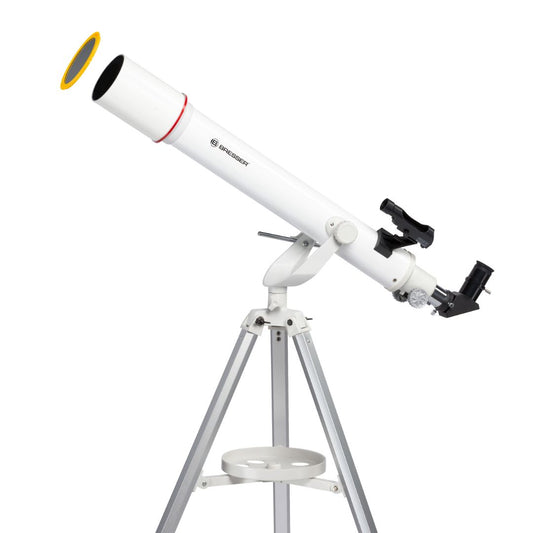
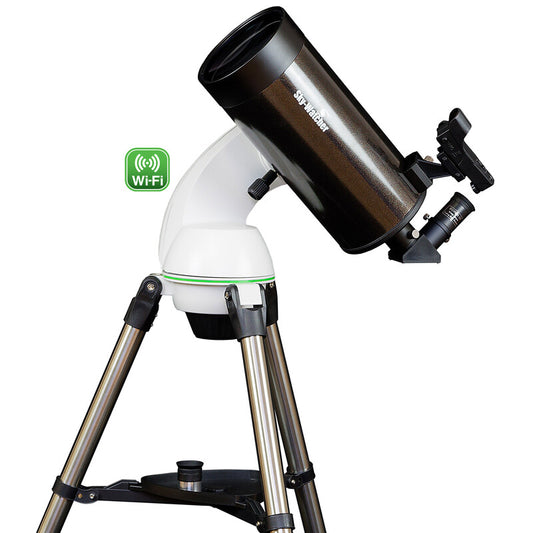
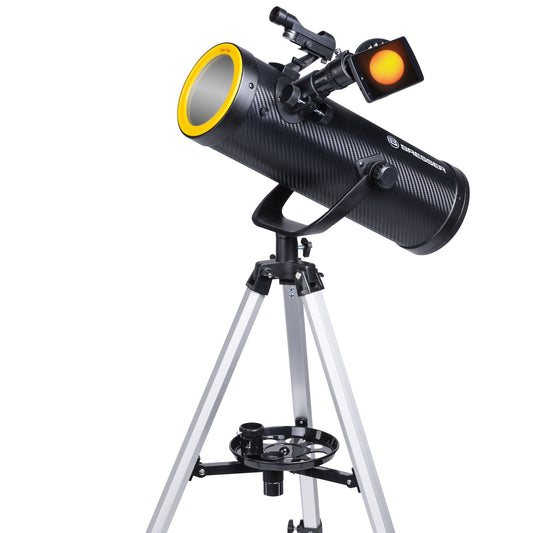
- 80 to 150 mm telescopes for comets and outer planets.
- Recommended lunar filters during the supermoon.
- Astronomical chairs and stable tripods for long meteor sessions.
If you need professional advice on choosing observation equipment, at Astro Telescopios we help you select the ideal instrument according to your experience and objectives .
📝 Monthly Summary
December 2025 offers:
- A spectacular supermoon with occultation of the Pleiades
- Mercury's best appearance of the year
- The Geminids in unbeatable conditions
- The December solstice
- Comets such as 3I/ATLAS and C/2024 E1 (Wierzchos) accessible to small telescopes
A perfect month for astronomy lovers, both beginners and advanced.