
Astronomical events in July 2026: what to see in the sky this month
July is one of the most attractive months of the year for enjoying astronomy. Although the nights are shorter due to summer in the Northern Hemisphere, pleasant temperatures invite you to go out under a starry sky that offers some of the most interesting spectacles of the season. This month, we will be able to observe bright planets, spectacular conjunctions with the Moon, the Delta Aquarid meteor shower, and the Earth will reach its farthest point from the Sun in its orbit.
If you have binoculars or a telescope, July offers excellent opportunities to observe Saturn, Mars, and the Moon in great detail. Even with the naked eye, you can enjoy several of the month's most prominent astronomical phenomena.
The July 2026 sky
Summer nights allow for the observation of some of the most spectacular regions of the Milky Way. From locations far from light pollution, it is possible to see the whitish band of our galaxy crossing the sky, especially towards the south, where the galactic center is located.
Also prominent in the sky are the constellations of the so-called Summer Triangle: Lyra, Cygnus, and Aquila, easily recognizable by their bright stars Vega, Deneb, and Altair.
Days continue to be especially long. In Madrid, for example, on July 15th, the Sun will rise at approximately 06:57 and set around 21:44 (Spanish peninsular time), offering about fifteen hours of daylight.
Planets visible in July
During July, planets will be distributed between the evening and morning skies.
At dusk, Venus will be the great protagonist of the western sky. Its immense brightness will make it the first celestial body visible after sunset. During the first half of the month, Jupiter will also be visible very low on the western horizon, although it will become increasingly difficult to see each day due to its proximity to the Sun.
Early mornings will be dominated by Saturn and Mars. Saturn will be visible for almost the entire second half of the night and will appear earlier and earlier as the month progresses. Mars, for its part, will progressively advance its rising time until it appears approximately an hour and a half before dawn by the end of July.
Towards the end of the month, Mercury will also begin to become visible, very low on the eastern horizon shortly before sunrise.
July 6: Earth reaches aphelion
The first major astronomical event of the month will take place on July 6, when Earth reaches aphelion, the point in its orbit where it is farthest from the Sun.
At that moment, our planet will be located about 152 million kilometers from the Sun, compared to the approximately 147 million kilometers that separate us during perihelion, which occurs in early January.
Although it may seem contradictory, this phenomenon occurs in the middle of summer in the Northern Hemisphere. This demonstrates that the seasons do not depend on the distance between the Earth and the Sun, but on the tilt of the Earth's axis.
July 7: Last Quarter
On July 7, the Moon will reach its last quarter phase.
This is one of the best phases to observe the lunar topography with binoculars or a telescope. The lateral illumination creates long shadows on the surface, highlighting craters, mountains, and valleys with great contrast.
Even a small beginner's telescope can reveal numerous details of our natural satellite during this phase.
July 7-11: Moon meets Saturn and Mars
Between July 7 and 11, the waning Moon will travel across the morning sky, visually approaching Saturn and then Mars.
During the early mornings of July 7 and 8, the conjunction between the Moon and Saturn will be the main event. Both bodies will appear very close in the eastern sky shortly before dawn, offering a beautiful sight to observe with the naked eye or binoculars.
A few days later, around July 11, the Moon will be near Mars and the bright star Aldebaran, forming an attractive and especially photogenic celestial composition.
Furthermore, Saturn will continue to approach the beginning of its retrograde motion, remaining practically stationary in the sky towards the end of the month.
July 14: New Moon
On July 14, the New Moon will arrive, the best phase of the month for deep-sky observation.
The absence of lunar light will allow for the full splendor of the Milky Way and facilitate the observation of galaxies, nebulae, and star clusters from dark-sky locations.
It will also be the ideal time to practice long-exposure astrophotography.
July 16 and 17: Conjunction of the Moon and Venus
During the evenings of July 16 and 17, a slender lunar crescent will accompany Venus above the western horizon after sunset.
It will be one of the most striking phenomena of the month and can be easily observed without the need for optical instruments.
The brightness of Venus and the delicate illumination of the waxing crescent Moon will make this conjunction an excellent opportunity for taking photographs of the sky at dusk.
July 21: First Quarter
The Moon will reach its first quarter on July 21.
As with the last quarter, the side lighting allows numerous details of the lunar relief to be seen. This phase is especially recommended for those who want to start telescopic observation.
July 29: Full Moon
On July 29, the full moon will occur.
The Moon will remain visible throughout the night, intensely illuminating the sky. Although this luminosity makes it difficult to observe faint deep-sky objects, it remains a magnificent opportunity to enjoy lunar observation and take photographs.
July 30 and 31: Delta Aquarid peak
The month will end with the peak activity of the Southern Delta Aquarid meteor shower, expected between the nights of July 30 and 31.
Under ideal conditions, this shower can produce about twenty meteors per hour. However, this year the presence of a nearly full Moon will considerably reduce the number of visible meteors, as its intense luminosity will obscure the fainter ones.
Even so, from places far from light pollution, it will still be possible to observe some shooting stars during the second half of the night.
The Delta Aquarids also mark the beginning of the major summer meteor shower season and serve as a prelude to the popular Perseids, whose peak will occur during the night of August 12-13, a few days after the eagerly awaited total solar eclipse visible from Spain.
Recommendations for skygazing in July
Most of this month's phenomena can be enjoyed without any special equipment. Conjunctions between the Moon and planets, Venus at dusk, or shooting stars are perfectly visible to the naked eye.
If you have 10x50 or 15x70 binoculars, you can better appreciate the conjunctions and comfortably explore the brightest regions of the Milky Way.
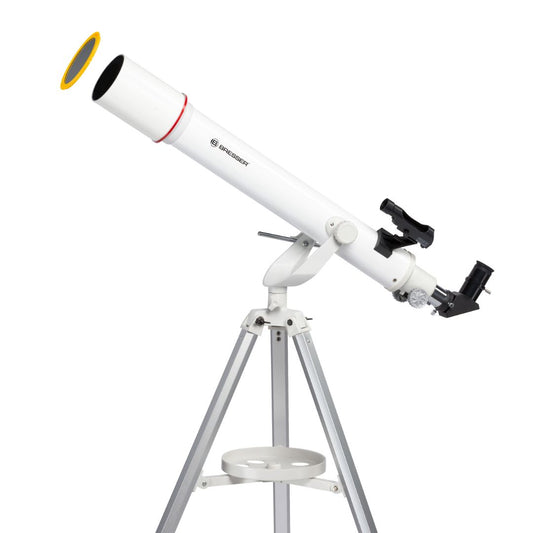
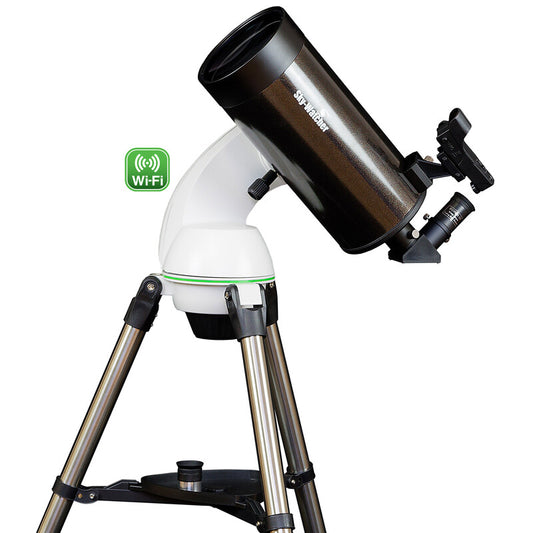
With a beginner's telescope between 70 and 130 mm aperture, you can enjoy Saturn's rings, details of the lunar surface, and numerous star clusters. Larger aperture telescopes will also allow for much greater detail when observing deep-sky objects on nights near the New Moon.
A perfect month to enjoy the sky
July brings together some of the most interesting phenomena of the astronomical summer. Venus will shine brightly at dusk, Saturn and Mars will dominate the early mornings, Earth will reach aphelion, and the Delta Aquarids will offer the first shooting stars of the season.
Whether you observe the sky with the naked eye or with binoculars or a telescope, this month offers numerous opportunities to enjoy the Universe. And if you're eager for more, August will bring two of the most anticipated astronomical events of the year: the total solar eclipse on August 12, visible from Spain, and the peak activity of the Perseids, one of the most spectacular meteor showers on the calendar.