
Astronomical events of March 2026
March 2026 offers us a transitional month between winter and spring, with interesting planetary conjunctions, key lunar phases, and a spectacular stellar occultation. Below, we detail the most relevant phenomena for planning your observations from the Iberian Peninsula.
🌕 Lunar Phases
According to the official astronomical calendar:
- March 3: 🌕 Full Moon.
- March 11: 🌗 Last Quarter.
- March 19: 🌑 New Moon.
- March 25: 🌓 First Quarter.
The month begins with the Full Moon on the 3rd, visible rising progressively later from the east as it wanes until its new phase on the 19th. From then on, it reappears as a thin crescent visible after sunset on the western horizon.
👉 Recommendation: The nights around March 19 will be ideal for deep-sky observation with a telescope, thanks to the absence of lunar light pollution.
🪐 March 8: Venus–Saturn–Neptune Conjunction
On March 8 at dusk, shortly after sunset, we will be able to observe an attractive conjunction between Venus and Saturn with the naked eye, under the constellation of Pisces.
With a telescope, the scene is enriched by the presence of Neptune, forming an interesting triple encounter.
🔭 Technical tip:
10x50 binoculars make it easy to locate Venus and Saturn.
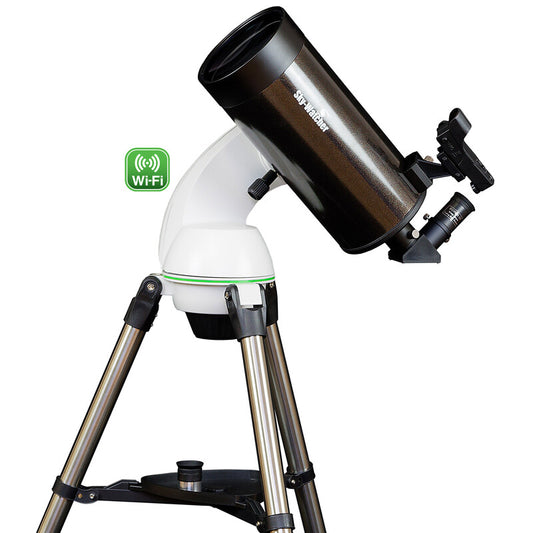
For Neptune, a telescope with an aperture of 100 mm or more is recommended.
🌱 March 20: Spring Equinox
On March 20 at 15:46 (Spanish Peninsular time), the equinox occurs, marking the beginning of spring in the northern hemisphere.
On that day:
The Sun rises exactly in the East and sets in the West.
Day and night have practically the same duration.
Furthermore, in the early hours of March 28-29, clocks in Europe will be moved forward one hour for the switch to daylight saving time.
🌙 March 20–21: Moon and Venus
A very thin crescent Moon will be very close to Venus at dusk on March 20 and 21, very low on the western horizon.
⚠️ It will be essential to have a clear horizon and observe a few minutes after sunset.
🌙✨ March 25–26: Moon and Jupiter
On March 25 and 26, already in its waxing phase, the Moon will visually approach Jupiter, which shines brightly under the twins Castor and Pollux in the constellation Gemini.
Jupiter remains one of the most rewarding objects for medium telescopes, allowing observation of:
- Equatorial cloud bands
- Transits of Galilean moons
- The Great Red Spot (according to ephemerides)
⭐ March 29–30: Regulus Occultation
One of the most interesting events of the month will be the occultation of Regulus by the waxing gibbous Moon on the night of March 29-30.
Visible from the Peninsula (not from the Canary Islands).
In Madrid, the emersion will occur at 21:16 h.
Better visibility the further north one observes.
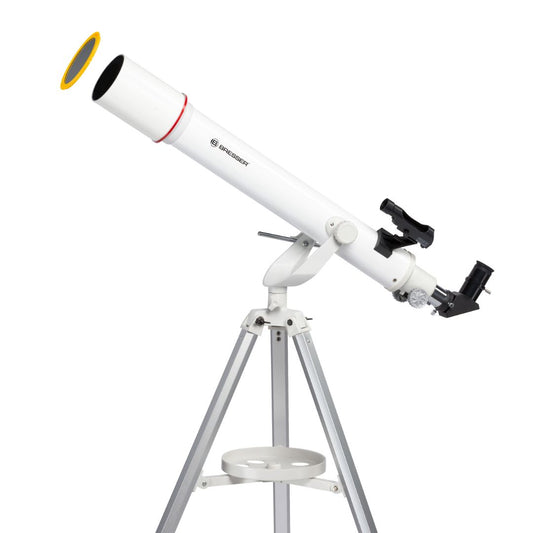
🔭 A small telescope (80–100 mm) is more than sufficient to enjoy the phenomenon with great spectacularity.
🌌 Featured Constellations
Winter constellations such as Orion, Taurus, or Auriga gradually bid farewell, giving way to Leo and Virgo, where the Virgo Cluster region begins to stand out, rich in galaxies and perfect for spring observation with larger aperture telescopes.
🔭 Conclusion
March 2026 combines astronomical elegance and subtlety: accessible planetary conjunctions, a very attractive stellar occultation, and the seasonal change that transforms our night sky.
An ideal month for both visual observers and astrophotographers who want to capture celestial encounters over twilight horizons.
📚 Source: National Astronomical Observatory – IGN
If you need advice on telescopes, binoculars, or accessories to take advantage of these events, at Astro Telescopios we will be happy to help you.