

Levenhuk
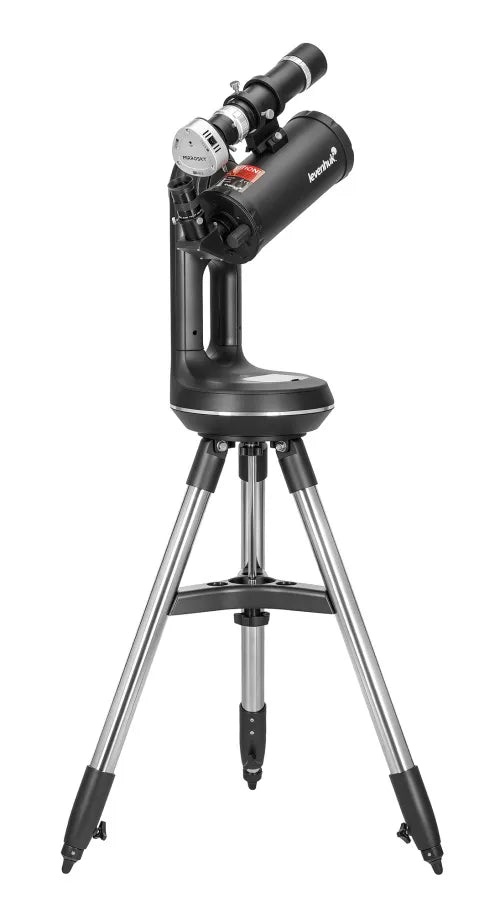
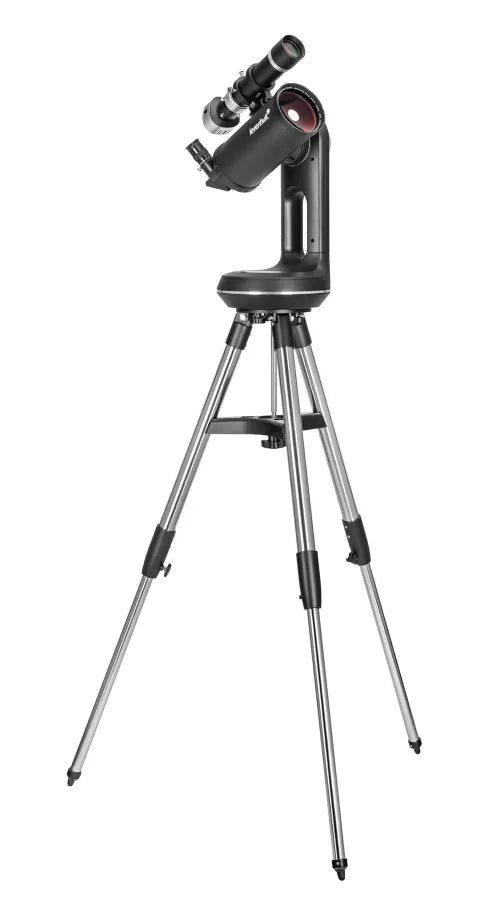
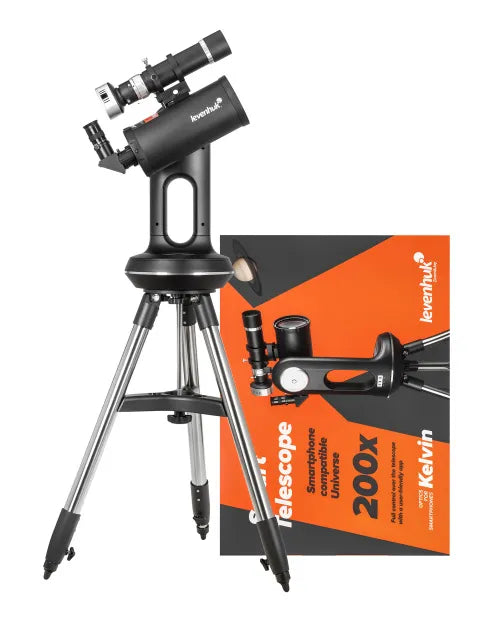
Levenhuk Kelvin Bright STM102 Smart Telescope
Levenhuk Kelvin Bright STM102 Smart Telescope
In stock
Couldn't load pickup availability
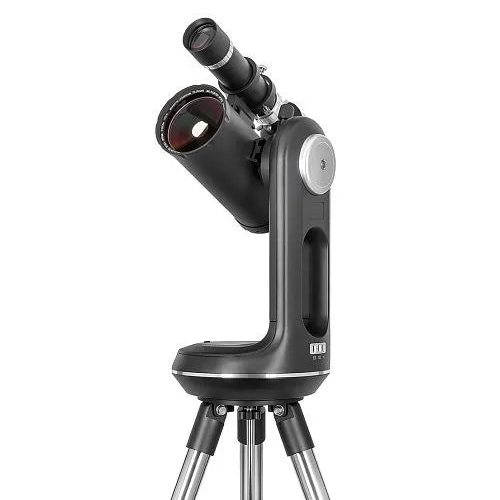
The Levenhuk Kelvin Bright STM102 combines the optics of a 102 mm Maksutov-Cassegrain telescope with an intelligent locating, tracking, and imaging system. An especially interesting solution for those looking to enjoy traditional visual observation while also getting started with smartphone-assisted astrophotography.
Its system allows you to select celestial objects using the MirroSky app, automatically locate the target, track it, and capture images using a Sony STARVIS 2 astronomical camera. It also features real-time image stacking, making it easier to obtain photographs of astronomical objects without having to master advanced astrophotography techniques beforehand.
102 mm Maksutov-Cassegrain optics
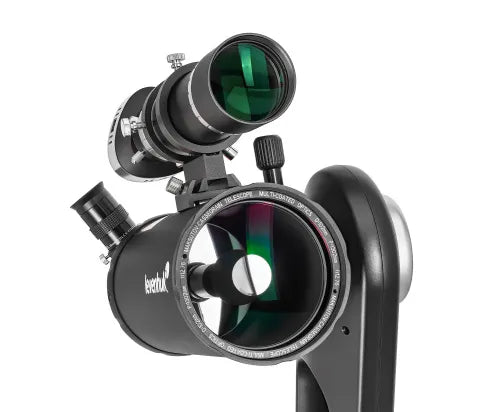
The main optical tube uses a Maksutov-Cassegrain design with an aperture of 102 mm and a focal length of 1300 mm (f/12.7). This configuration provides a long focal length in a compact tube and is especially suitable for observing:
- The Moon and its main features.
- Jupiter and its satellites.
- Saturn and its rings.
- The phases of Venus.
- Mars under favorable conditions.
- Double stars.
- Star clusters and other bright deep-sky objects.
Its specified maximum useful magnification is 204x, although the truly useful magnification will depend on atmospheric conditions and the eyepiece used.
The optics are made of optical glass with a full multi-layer coating designed to improve light transmission and image contrast.
Visual observation and image capture at the same time
One of the most interesting features of the Kelvin Bright STM102 is that it does not completely replace the experience of observing through an eyepiece.
While the guide telescope and astronomical camera track and capture images, you can continue to observe visually through the main Maksutov-Cassegrain tube.
In this way, the STM102 combines two different ways of enjoying astronomy: traditional visual observation and assisted digital astronomy.
To obtain larger-scale images of the Moon or planets, the camera can also be used with the main optical tube.
Sony STARVIS 2 astronomical camera
The system includes a color astronomical camera equipped with a 2.1-megapixel Sony STARVIS 2 CMOS sensor.
Its main specifications are:
- Sony STARVIS 2 CMOS sensor.
- Maximum resolution of 1920 × 1080 pixels (Full HD).
- 1/2.8" sensor size.
- 2.9 × 2.9 µm pixels.
- 12-bit ADC conversion.
- 64 GB internal memory.
- 2.4 and 5 GHz Wi-Fi connectivity.
The system can perform automatic frame stacking, color correction, and exposure time control, allowing faint objects to gradually gain detail on the phone screen.
52 mm ED apochromatic guide telescope
The STM102 also includes a 52 mm ED apochromatic refractor guide telescope, with a focal length of 255 mm and an f/5 focal ratio.
This system works together with the camera and mount to facilitate the locating and tracking of astronomical objects.
Automatic locating of more than 100,000 objects
The computerized alt-azimuth mount allows you to control the telescope from a mobile phone using the free MirroSky app, available for iOS and Android.
Its database contains more than 100,000 astronomical objects. Once the target is selected, the system uses its sensors and the information provided by the app to locate it and subsequently track it.
The mount uses stepper motors and worm gears on both axes, achieves movement speeds of up to 3° per second, and offers different tracking speeds.
Easy astrophotography from your phone
The Kelvin Bright STM102 is designed to considerably reduce the usual complexity of an astrophotography setup.
Instead of using different independent controllers and devices, much of the operation can be managed from the smartphone.
The camera successively captures images of the object, and the system can automatically stack them, progressively improving the signal and revealing structures and colors that are difficult to appreciate in a single exposure.
This makes it an especially attractive option for users who want to start photographing the sky without setting up a conventional astrophotography system from day one.
More advanced users can also connect the system to a computer. The camera offers compatibility with specialized programs such as NINA, SGP, and Maxim DL, among others.
Also for terrestrial observation
The STM102 is not limited to astronomy. During the day, it can be used as a powerful terrestrial observation instrument.
Landscapes, mountains, buildings, birds, boats, and other distant objects can be viewed and captured from the mobile phone.
This gives the equipment interesting versatility for both astronomy and nature and landscape observation.
Smart mount and steel tripod
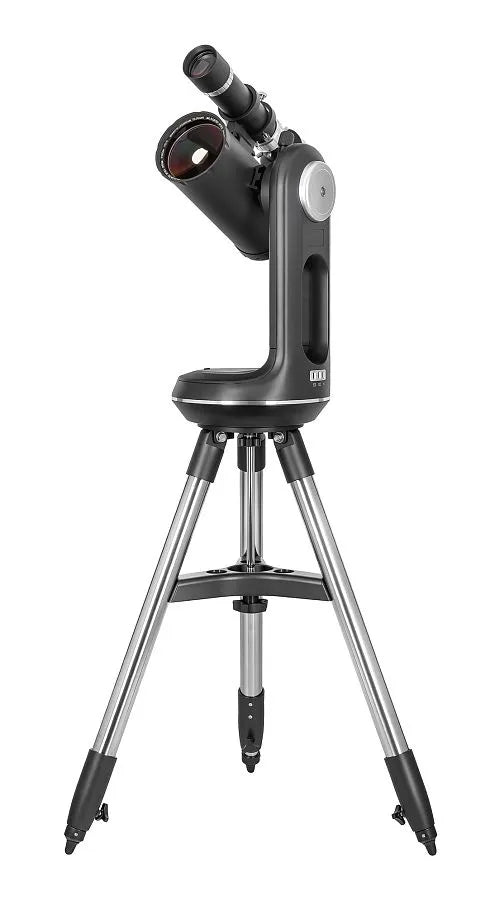
The set comes with a computerized alt-azimuth mount and a sturdy steel tripod.
The mount supports a specified maximum load of 4 kg and features a built-in geomagnetic compass, Wi-Fi connection, and different ports for cameras, autoguiding, computers, and mobile devices.
It can be powered by the included power adapter, a compatible external battery, or 8 AA batteries, thus offering different options for use both at home and during outdoor observation sessions.
Main features
- Smart telescope with automatic locating and tracking.
- Maksutov-Cassegrain optical system.
- 102 mm aperture.
- 1300 mm focal length.
- f/12.7 focal ratio.
- Maximum useful magnification: 204x.
- Optics with full multi-layer coating.
- Simultaneous visual observation and digital capture.
- 52/255 mm f/5 ED apochromatic guide telescope.
- Color Sony STARVIS 2 astronomical camera.
- Full HD resolution of 1920 × 1080 pixels.
- 2.1 MP sensor and 2.9 µm pixels.
- 12-bit ADC processing.
- 64 GB internal memory.
- Automatic image stacking.
- Color correction and exposure time control.
- Computerized alt-azimuth mount.
- Stepper motors and worm gears on both axes.
- Database with more than 100,000 objects.
- Control via the MirroSky app for iOS and Android.
- 2.4/5 GHz dual-band Wi-Fi.
- PC connection capability.
- ST-4 port for autoguiding.
- Compatible with specialized astrophotography software.
- Steel tripod.
- Capability for astronomical and terrestrial observation.
Technical specifications
Feature| Specification
Optical system| Maksutov-Cassegrain
Aperture| 102 mm
Focal length| 1300 mm
Focal ratio| f/12.7
Maximum useful magnification| 204x
Resolution| 1.2"
Limiting magnitude| 11.94
Eyepiece holder| 1.25"
Guide telescope| ED apochromatic refractor
Guide aperture| 52 mm
Guide focal length| 255 mm
Guide focal ratio| f/5
Camera| Color Sony STARVIS 2 CMOS
Resolution| 1920 × 1080 px
Sensor size| 1/2.8"
Pixel size| 2.9 × 2.9 µm
ADC| 12 bits
Memory| 64 GB
Mount| Computerized alt-azimuth
Load capacity| 4 kg
Maximum speed| Up to 3°/s
Wi-Fi| 2.4 GHz / 5 GHz
Database| More than 100,000 objects
App| MirroSky
Mobile compatibility| iOS / Android
PC connection| Yes
Tripod| Steel
Tube material| Aluminum
Reference| 86645
EAN| 5905555028422
Package contents
- Maksutov-Cassegrain optical tube.
- Guide telescope.
- Smart Sony astronomical camera.
- 25 mm Plössl eyepiece.
- 90° diagonal mirror.
- Smart alt-azimuth mount.
- Steel tripod.
- Accessory tray.
- Power adapter.
- USB Type-C to DC cable.
- 2 USB Type-C cables.
- USB Type-C to 5.5 mm adapter.
- User guide.
- Warranty card.
A smart telescope without giving up visual observation
The Levenhuk Kelvin Bright STM102 is especially interesting for those looking for the convenience of a smart telescope but who do not want to give up looking directly at the sky through an eyepiece.
Its 102 mm Maksutov-Cassegrain offers a configuration especially suitable for the Moon and planets, while the Sony camera, guide telescope, computerized mount, and automatic stacking expand its possibilities to image capture and assisted observation of deep-sky objects.
A very complete solution for getting started with smart astronomy and assisted astrophotography while maintaining the classic experience of visual observation.
⚠️ NOTAS DE ADVERTENCIA
GAFAS PARA LA OBSERVACIÓN DE ECLIPSE
- INSTRUCCIONES: Revise antes de cada uso. No utilice ni deseche si está dañado, rasgado, perforado o separado de alguna manera del marco. No lo use con otros dispositivos ópticos. No es un juguete. Los niños deben usarlo solo bajo la supervisión de un adulto. Limítese a 3 minutos de uso continuo, con interrupciones durante varias horas. No se mueva mientras usa este producto, no conduzca un vehículo ni opere maquinaria. No lo use si tiene un ojo enfermo o después de una operación ocular.
- ADVERTENCIA: Nunca mire directamente al sol sin protección ocular especial. Siempre use gafas de eclipse al observar el eclipse solar, especialmente si una parte del sol es visible. Mirar directamente al sol puede causar daños permanentes si no se toman las precauciones adecuadas. Se debe usar protección ocular adecuada, diseñada específicamente para la observación solar, para evitar que los rayos dañinos del sol lleguen a los ojos. Deséchelo después de 3 años y no lo utilice después de ese tiempo.
OBSERVACIÓN SOLAR CON TELESCOPIO
- Nunca mire al sol a través de un ocular/telescopio sin un filtro de protección verificado. Un filtro lunar nunca puede usarse para la observación solar. El filtro lunar solo es adecuado para la observación de la luna. El filtro solar debe montarse en la apertura del telescopio, no en el ocular. De lo contrario, el rayo de luz concentrado por la óptica destruirá inmediatamente la película del filtro, lo que provocará daños oculares graves e incluso ceguera total.
- Revise el filtro solar antes de cada observación solar y asegúrese de que no esté dañado. Manténgalo frente a una fuente de luz intensa para poder detectar posibles grietas y/o agujeros. No use el telescopio para la observación solar, incluso si el filtro solar está solo ligeramente dañado. En este caso, comuníquese con el fabricante para obtener las piezas de repuesto correspondientes.
- Siempre use el filtro solar cuando observe el sol. Asegúrese de que este filtro esté colocado correctamente en el telescopio según las instrucciones. El uso del filtro solar está destinado únicamente para su uso con este telescopio.
- Revise el ajuste del filtro solar antes de cada observación solar. Si se suelta accidentalmente de la abertura del objetivo, esto puede causar daños oculares inmediatos y permanentes, e incluso ceguera.
- Si el filtro solar no puede montarse de manera suficientemente firme en el tubo, mejore el ajuste colocando varias tiras de fieltro autoadhesivas o similares entre el filtro solar y la abertura del objetivo. Nunca use el filtro solar si no puede colocarse correctamente en el telescopio. En tal caso, siempre contacte primero con nuestro servicio al cliente.
- Tenga mucho cuidado al observar el sol. Incluso una mirada corta a través de la óptica sin protección puede causar daños oculares graves e incluso ceguera total.
- Los niños, incluso con el filtro montado correctamente, no deben mirar al sol a través del telescopio. Nunca deje a los niños sin supervisión.
- Nunca deje la óptica sin supervisión. Los niños y los adultos inexpertos podrían dirigir el telescopio hacia el sol sin las precauciones adecuadas y perder la vista.
- No realice observaciones solares sin la consulta previa de un médico después de una operación ocular o cualquier otra enfermedad ocular.
- Las ondas/pliegues en la película son normales y no constituyen un defecto del producto.
- No exponga el dispositivo a altas temperaturas.
ADVERTENCIAS Y SEGURIDAD DE LAS PILAS
- NO USE pilas falsas en los productos. Use solo las pilas proporcionadas. Use la pila EXCLUSIVAMENTE para el propósito previsto.
- Guarde las pilas fuera del alcance de los niños y mascotas.
- NO USE pilas que parezcan tener la carcasa dañada, inflada o modificada. No use pilas que hayan goteado, huelan, estén hinchadas o derretidas o presenten abolladuras, óxido, grietas o rayones.
- La pila NO debe ser desmontada, aplastada, perforada, triturada ni manipulada de ninguna otra forma.
- La pila NO debe exponerse a líquidos.
- No debe intentar secar una pila mojada o húmeda con un dispositivo o fuente de calor.
- El dispositivo o la pila NO deben ser colocados cerca de una fuente de calor o bajo la luz solar directa.
- La pila NO debe tocar objetos metálicos.
- La pila NO debe ser almacenada junto a materiales peligrosos o inflamables. Guarde la pila en un lugar fresco, seco y bien ventilado.
- La pila NO debe insertarse incorrectamente al cargarla.
- La pila NO debe cargarse bajo luz solar directa ni a temperaturas extremas. Cárguela a temperatura ambiente (20 °C – 26 °C).
- Evite dejar caer la pila o el producto. Si sospecha que la pila está dañada, reemplácela.
- Nunca deje su dispositivo conectado a la corriente más de 24 horas. Deje que la pila se agote y luego recárguela.
- Para obtener los mejores resultados, reemplace las pilas según el uso después de 12 meses o antes.
- Siga las regulaciones locales para la eliminación de las pilas usadas. NO arroje la pila al fuego ni al agua.